

Summary:
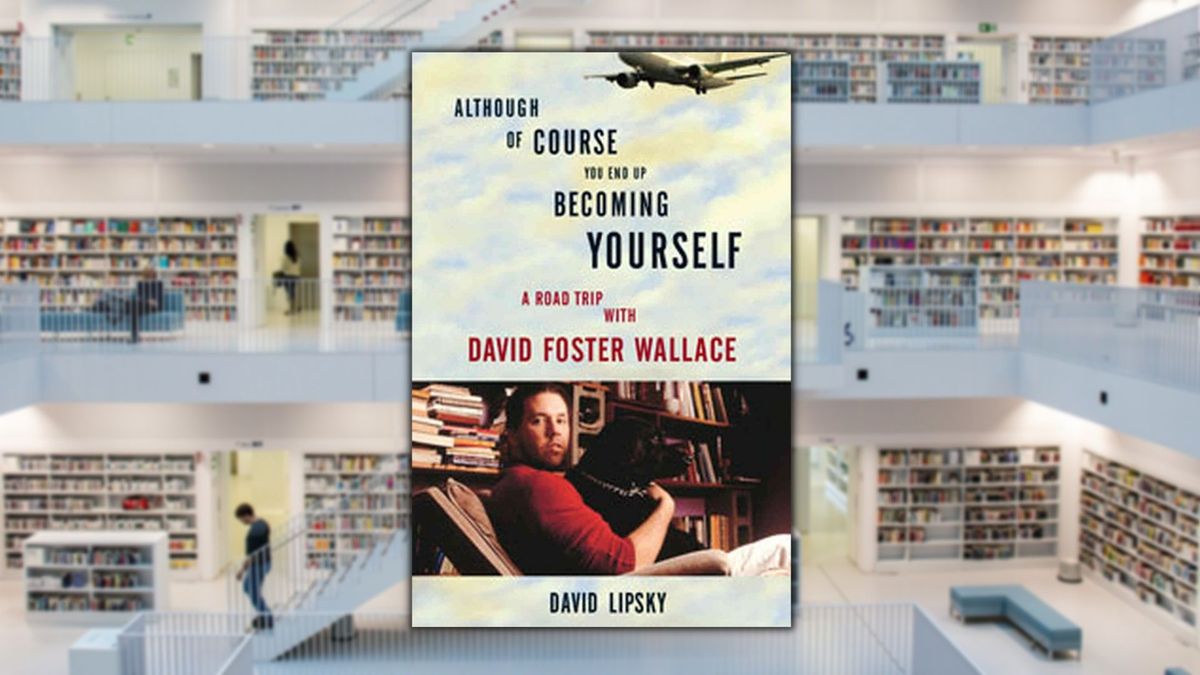
For fans of David Foster Wallace, this is an absolute must-read. Even if you’ve been put off by the length and difficulty of books like Infinite Jest (totally understandable, by the way) or you don’t know much about the guy, Although of Course could be a perfect introduction for you.
Apparently, this is now a movie (you can probably skip it), but the original book is an extended conversation between David Foster Wallace, who was by then part-way through his book tour for his million-copy bestselling behemoth of a novel, Infinite Jest, and David Lipsky, who was sent along to profile him for Rolling Stone.
Over the course of five days, time spent in hotels and in airplanes and while driving hundreds of miles in the cold between tour stops, Lipsky and Wallace talk about how terrifying it is to be alive, why human beings treat each other in despicable ways, the obligations of the writer, how to handle and think about fame, cultivating and protecting self-esteem, treating yourself well, romantic relationships, and everything in between.
According to Lipsky, reading Infinite Jest was “like hearing for the first time the brain voice of everybody I knew: Here was how we all talked, experienced, thought.” The whole book is like that, and I ripped through the whole thing - Although of Course, I mean.
But, I feel as though that was almost a mistake, because as I was nearing the end, I didn’t want them to stop talking! I just wanted the book tour, and their conversation, to go on and on forever.
The book is also really, really funny. Like when they’re talking about relationships and Wallace says, “It’s just much easier having dogs. You don’t get laid; but you also don’t get the feeling you’re hurting their feelings all the time.”
Or when he comments on how having someone follow him around with a tape recorder is an incredible ego boost. “I should hire someone to do that,” he says.
And just like Hal’s mother, Avril, in Infinite Jest, who gets pissed off at the grocery store when she reads things like “10 Items or Less” (it should be “10 Items or Fewer), Wallace gets irked by a flight attendant who says, “Only smoking permitted outside.” “Smoking is only permitted outside; smoking isn’t the only thing that’s permitted outside!” What happens if you’re not a smoker, do you have any other reason to go outside?!
Anyway, grammar snoots will find a kindred spirit in Wallace, but he’s just so like the rest of us too! You’ll find something of yourself in this book, because one of his singular talents was to put into writing the things we all feel but could never articulate.
This book came out in 2010, two years after Wallace’s death, and the fondness that Lipsky had for him comes through on every page, a fondness that was one of Wallace’s gifts to be able to inspire.

Key Ideas:
#1: How others perceive us simply doesn't have enough 'calories' in it - Wallace's phrase - to keep us going, and so we have to find our self-worth elsewhere. He said that, for him, there was nothing external, no achievement or possession, that could assuage this kind of queer emptiness at the core of the self.
#2: Jim Carey expressed a similar sentiment to Wallace’s when he said that he wished that everybody could become rich and famous, so they would discover that it wasn't the answer to all their problems. Indeed, realizing this early gives you enough time to figure out what really is important, and this is an important realization.
#3: A writer's primary obligation is to the reader. A lot of contemporary fiction and recent philosophy seems to be written almost entirely for other academics; writers try to be too smart, too advanced, too "cutting edge, stylistically," all the while sacrificing readability, reader engagement, and pure entertainment value.
Great writing, however, is about connecting to the reader, writing something that makes you say, "Yes! The world is like that!"
Wallace understood this, and even though his work is notoriously difficult, he never once lost sight of the fact that writers need to respect the reader, and to write something that readers want to read.
#4: Writing is all about organizing felt experience, and transmitting to someone else what it feels like to be alive. You can almost think of it like a professionalization of what 'regular' people do every day.
#5: Great fiction is true. Maybe the story never happened and the characters never existed, but it's true nonetheless. It speaks to our collective human experience, and it does this in ways that other, more 'real' writing never could. If nonfiction could ever precisely convey what it's like to have conscious experiences, then we wouldn't need fiction.
#6: People behave in an ugly manner because it's extremely scary being alive, and people are simply afraid. We're kind of just thrown into this place; no one explains to us the rules we're supposed to play by, and we're expected to just "work together" with other people without taking our fears and anxieties out on them. A tall order.
#7: “It’s more like, if you can think of times in your life that you've treated people with extraordinary decency and love, and pure uninterested concern, just because they were valuable as human beings. The ability to do that with ourselves. To treat ourselves the way we would treat a really good, precious friend. Or a tiny child of ours that we absolutely loved more than life itself. And I think it's probably possible to achieve that. I think part of the job we're here for is to learn how to do it. I know that sounds a little pious."

Book Notes:
David Lipsky: “How could he write what he wrote if he wasn’t looking at everything all the time?”
In class, teaching creative writing immediately after the breakout success of Infinite Jest:
Student #1: “Done being famous yet?”
DFW: "Two more minutes."
Student #2: "I knew him WELL, Horatio - a man of Infinite Jest."
DFW: "OK, you're allowed ONE reference."
"So there's a kind of split consciousness that I think makes it difficult to deal with people in the real world. For a writer. But that actually comes in handy."
“Most bright people, something happens in your late twenties, where you realize that this other, that how other people regard you does not have enough calories in it, to keep you from blowing your brains out. That you've got to find, make some other détente."
“The history of fiction represents this continuing struggle to allow fiction to continue to do that magical stuff. As the texture, as the cognitive texture, of our lives changes. And as, um, as the different media by which our lives are represented change.
And it's the avant-garde or experimental stuff that has the chance to move the stuff along. And that's what's precious about it. And the reason why I'm angry at how shitty most of it is, and how much it ignores the reader, is that I think it's very very very very precious.
Because it's the stuff that's about what it feels like to live. Instead of being a relief from what it feels like to live."
“Like if I could articulate it, then there wouldn’t be any need to make up stories about it, you know?”
“What writers have is a license and also the freedom to sit - to sit, clench their fists, and make themselves be excruciatingly aware of the stuff that we're mostly aware of only on a certain level. And that if the writer does his job right, what he basically does is remind the reader of how smart the reader is. Is to wake the reader up to stuff that the reader's been aware of all the time."
“I just think to look across the room and automatically assume that somebody else is less aware than me, or that somehow their interior life is less rich, and complicated, and acutely perceived than mind, makes me not as good a writer. Because that means I'm going to be performing for a faceless audience, instead of trying to have a conversation with a person."
“To the extent that I think of myself as different from other people, then I’m not gonna be having a conversation with the reader.”
“But now maybe you can understand. That period, nothing before or since has ever been that bad for me. And I am willing to make enormous sacrifices never to go back there."
“And I think that the ultimate way you and I get lucky is if you have some success early in life, you get to find out early it doesn't mean anything. Which means you get to start early the work of figuring out what does mean something."
“But what I really remember is the times when working on that book was really hard. And I just gutted it out, you know? And I finished something.
And I did it for the book, not trying to imagine whether David Lipsky would like it, or Michael Pietsch would like it. And that I feel like I've built some muscles inside me that I can now use for the rest of my life. And I feel like, 'All right, like I'm a writer now.'"
“Like, at a certain point, we're gonna have to build some machinery, inside our guts, to help us deal with this. Because the technology is just gonna get better and better and better.
And it's gonna get easier and easier, and more and more convenient, and more and more pleasurable, to be alone with images on a screen, given to us by people who do not love us but want our money.
Which is all right. In low doses, right? But if that's the basic main staple of your diet, you're gonna die. In a meaningful way, you're going to die."
“It’s just much easier having dogs. You don’t get laid; but you also don’t get the feeling you’re hurting their feelings all the time.”
Correcting the lady on the PA system inside the airplane they were traveling on:
“Permitted ONLY outdoors. It’s not the only thing that’s permitted outdoors.”
“If serious reading disappears in this country, it will mean that whatever we mean by the term identity has ceased to exist.”
-Don DeLillo
At a book signing, DFW speaking with the organizer, discussing the arrangements:
Organizer: “Whatever you’re most comfortable with.”
DFW: “You don’t want me to do that, because that would involve my not being here.”
DFW noticing that David Lipsky was repeating some of the things Wallace told him into a tape recorder so he could review it later:
DFW: “Someone repeating my things into the tape is an incredible ego boost. I should hire someone to do it.”
“I guess you could squat on your laurels, right? Or sort of sitting in the vicinity of your laurels and looking fondly AT them."
David Foster Wallace said he went to go see the movie Braveheart "four times, so I could see guys in kilts going 'Wal-lace! Wal-lace!'"
“To have written a book about how seductive image is, and how very many ways there are to get seduced off any kind of meaningful path, because of the way the culture is now. But what if, you know, what I become this grotesque parody of just what the book is about? And of course, this stuff drives me nuts."
“I’ve decided that I need, I really need to find a few things that I believe in, in order to stay alive. And one of them is that this is - that I'm extraordinarily lucky to be able to do this kind of work. And that along with that luck comes a tremendous obligation to do the best, to do the very best I can.
Which means that I have to structure my life, you know, sort of like anybody who's dedicated to something. To maximize my ability to do good stuff. And it's just like, and it doesn't make me a great person. It just makes me a person that's really exhausted a couple other ways to live, you know? And really taken them, taken them to their conclusion.
Which for me was a pink room, with no furniture and a drain in the center of the floor. Which is where they put me for an entire day when they thought I was going to kill myself. Where you don't have anything on, and somebody's observing you through a slot in the wall. And when that happens to you, you get tremendous - you get unprecedentedly willing to examine other alternatives for how to live."
MK: I was getting near the end of the book and I'm thinking: "I don’t want him to go; I want him and Lipsky to keep talking."
“I wonder what George Burns died of: Maybe someone just dispatched him with a club, figuring that was the only way.”
“I remember in college, a lot of even the experimental stuff I was excited by, I was excited because I found reproduced in the book certain feelings, or ways of thinking or perceptions that I had had, and the relief of knowing that I wasn't the only one, you know? Who felt this way. Who had, you know, worried that perhaps the reverse of paranoia was true: that nothing was connected to anything else."
“I think the reason why people behave in an ugly manner is that it’s really scary to be alive and to be human, and people are really really afraid.”
“The job that we’re here to do is to learn how to live in a way that we’re not terrified all the time. And not in a position of using all kinds of different things, and using PEOPLE to keep that kind of terror at bay.”
“The face I'd put on the terror is the dawning realization that nothing's enough, you know? That no pleasure is enough, that no achievement is enough. That there's a kind of queer dissatisfaction or emptiness at the core of the self that is unassuageable by outside stuff."
“It’s more like, if you can think of times in your life that you've treated people with extraordinary decency and love, and pure uninterested concern, just because they were valuable as human beings.
The ability to do that with ourselves. To treat ourselves the way we would treat a really good, precious friend. Or a tiny child of ours that we absolutely loved more than life itself.
And I think it's probably possible to achieve that. I think part of the job we're here for is to learn how to do it. I know that sounds a little pious."
A writer, after sex: “Was it as good for me as it was for you?”
David Lipsky, reflecting on his conversations with Wallace over the last few days:
“He compares raising children to raising books, you should take pride in the work you do inside a family and not from how they make out in the world. 'It's good to want a child to do well, but it's bad to want that glory to reflect back on you,' is what he says."
Acknowledgements Section:
“People were patient and generous with me because of the great affection it was one of David's gifts to inspire - another thing I am grateful for to David."

Action Steps:
So you've finished reading the book. What do you do now?
#1: Treat yourself like someone you’re responsible for helping.
If you stumbled upon a person talking to someone else the way you sometimes speak to yourself, you’d probably call the police! We beat ourselves up all the time, for so many different shortcomings (real or perceived), when, instead, many of us could stand to be much kinder to ourselves. So step outside yourself as much as you can and think about what you might say to a friend whom you wanted to see succeed, or recover, or improve in some way. Then do those things for yourself!
#2: Create something that other people will find valuable.
A writer’s primary obligation is to the reader. It’s a good lesson to keep in mind whether you want to be a writer yourself or if you want to create something else, be it a work of art or a consumer product. Create something with the user - or listener, or customer - in mind, and think about what they would want to get out of whatever it is you’re creating. This isn’t to say you should sell out; rather, you should seek to add value to people’s lives.
#3: List three things that would give you lasting fulfillment.
Money and fame are out, right off the bat, because they won’t last. You could have tons of money right up until the time you die, and you could be famous for thousands of years after you’re dead, but while you’re alive, those things will empty you out.
That’s not to say that you shouldn’t go for those things. Being rich is awesome! It beats the hell out of being poor. But in the end, it’s rather empty. Instead, focus on things like making memories, and making other people’s lives better. Those things don’t diminish in value over time. Once you’ve made someone else’s life better, that beautiful action lives forever.
#4: Read more fiction.
If you think that only nonfiction is true, think again. Fiction says things that nonfiction just can’t say, just like nonfiction serves a purpose almost completely distinct from fiction. So it’s good to split your reading between the two. Don’t think that fiction is somehow infra dig, or a waste of time, and don’t think that nonfiction is stuffy and boring. A well-rounded reader vacuums up both.
About the Authors:
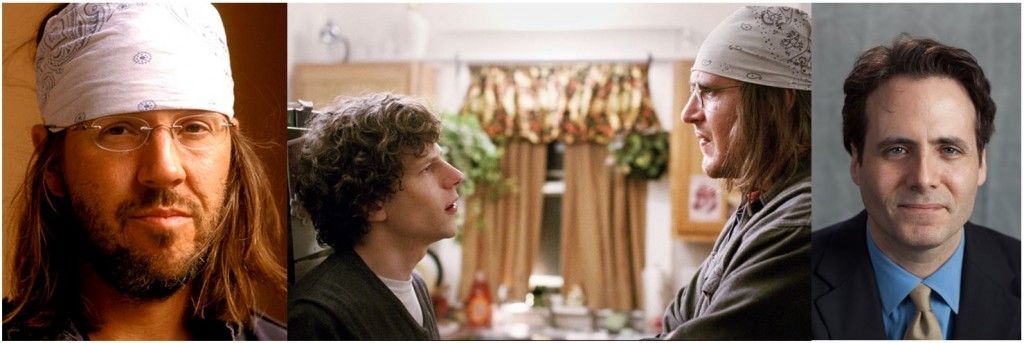
David Lipsky is an American author. His works have been New York Times bestsellers, New York Times Notable Books, Time and NPR Best Books of the Year, and have been included in The Best American Magazine Writing and The Best American Short Stories collections.
David Foster Wallace (February 21, 1962 – September 12, 2008) was an American author of novels, short stories and essays, as well as a university professor of English and creative writing. Wallace is widely known for his 1996 novel Infinite Jest, which Time magazine cited as one of the 100 best English-language novels from 1923 to 2005. His posthumous novel, The Pale King (2011), was a finalist for the Pulitzer Prize for Fiction in 2012.
Additional Resources:
David Foster Wallace - NY Times Obituary
Getting to Know David Foster Wallace - Rolling Stone
The End of the Tour - Imdb (2015)
This Book on Amazon:
Although of Course You End Up Becoming Yourself, by David Lipsky
If You Liked This Book:
Infinite Jest, by David Foster Wallace
Consider the Lobster, by David Foster Wallace
Fear and Loathing at Rolling Stone, by Hunter S. Thompson