
Summary:
Nobody’s suggesting that you think like Julius Caesar, and especially not like Nero. Trajan and Hadrian weren’t bad - who knows what Tiberius was thinking - but the Emperor we can really get behind is one Marcus Aurelius.
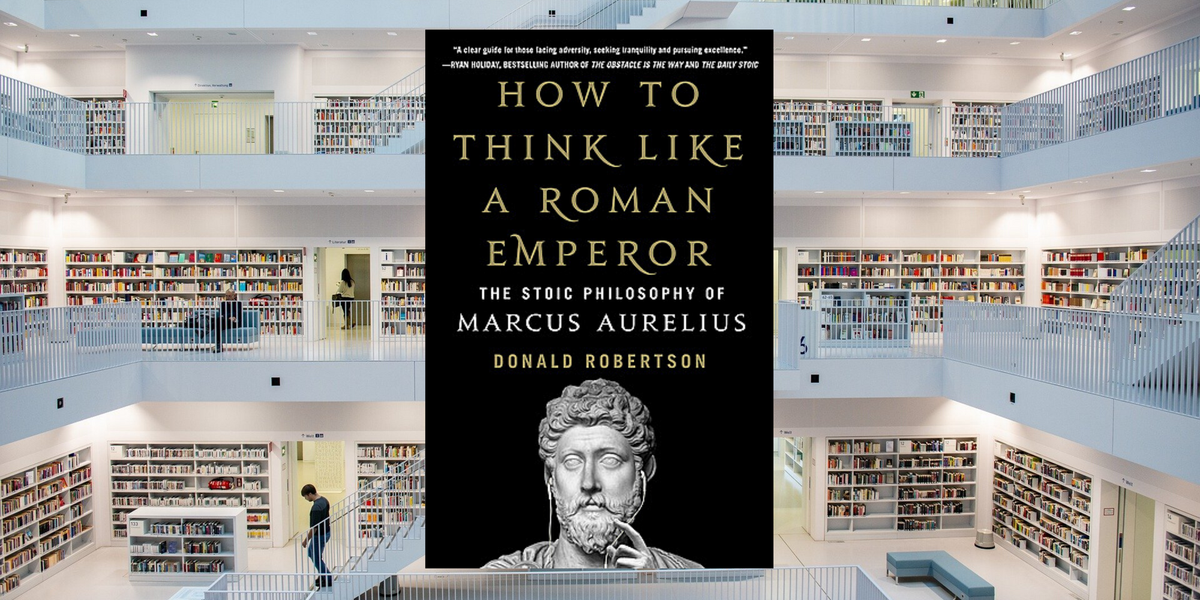
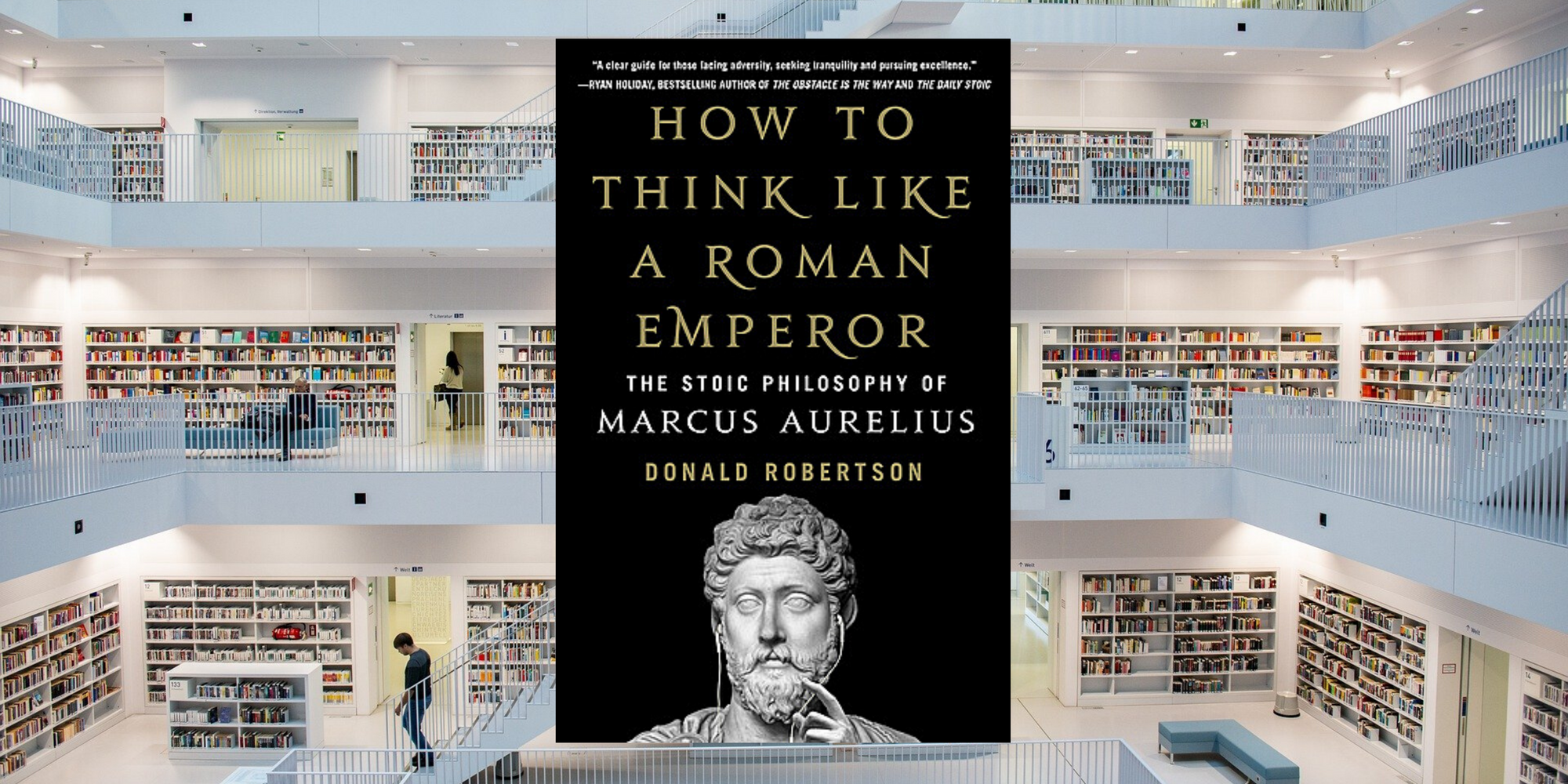
How to Think Like a Roman Emperor is the philosopher and psychotherapist Donald Robertson’s epic contribution to the recent resurgence in the popularity of Stoic philosophy in modern culture. Personally, I’m still waiting for a resurgence in the popularity of existentialism (we desperately need another Camus), but as far as life-affirming, life-enhancing, and life-changing philosophies go, you really can’t go wrong with Stoicism.
Stoicism used to get kind of a bad rap in philosophical circles - and was basically ignored in the popular culture - as people generally thought of the Stoics as these cold, emotionless, joyless individuals who focused too much on the suffering inherent in human existence, rather than on all that was worth living for in the first place. Kind of like a group of ancient Jordan Petersons, they were concerned with how human beings can deal with grief, anger, anxiety, and pain while exhibiting fortitude, dignity, and grace.
Today, however, we have a wealth of simply incredible books, websites, courses, training programs, and who knows what else dedicated to the dissemination of Stoicism, to the great benefit of us all.
One of the main figures of this ancient philosophy, and the focus of Robertson’s book, is the Roman Emperor Marcus Aurelius, who wrote one of the foundational texts of Stoicism (The Meditations) and ruled the Roman Empire from 161-180 AD, one of the most precarious and challenging times in Roman history. He was actually one of the last five so-called “Good Emperors,” and, well, shit - our man Marcus earned it.
Let’s see: he ruled at a time when the Romans were battling one of the worst plagues in history, experiencing a civil war begun by one of Marcus’s own generals, and being challenged by the Germanic tribes from the north. Personally, he outlived 8 of his own children, he had a wife who was unfaithful, he was struggling with various health problems of his own; just on and on and on. The book gets into all these events, but the point is that Marcus Aurelius was dealing with some serious shit. Being an emperor, however, he wasn’t afforded the luxury of indulging in self-pity or succumbing to weakness, laziness, or fear.
That’s where Stoicism comes in.
I won’t rehash its whole history and philosophical justification here, as so much has been written about it in recent years, and much of the modern scholarship is just excellent, How to Think Like a Roman Emperor definitely included. But at the bottom, it’s a philosophy of human resilience and dignity. It’s about anticipating the pain and tragedy attendant upon human existence, planting our feet in the fucking ground, and categorically refusing to be unhappy.
Stoicism has been around for thousands of years, ever since the 3rd century BC when Zeno of Citium and his followers started gathering around a certain porch (Stoa) in ancient Athens to discuss their ideas. He’s not to be confused of course with Zeno of Elea, who, when ordered to be put to death by the tyrant Nearchus, requested the latter lean closer so he could speak his last words - at which point he bit down on Nearchus’s ear until Zeno was stabbed to death...Mike Tyson anyone?
Anyway, bottom line: Stoicism has had a colorful history, and Donald Robertson does a beautiful job of bringing it to life in his book. He’s been writing about and teaching Stoicism for more than twenty years, and he brings his knowledge of modern Cognitive Behavioral Therapy to bear on some of these ancient Stoic principles, showing them to be exactly what the philosopher ordered if we want to become less fearful, to overcome anxiety, and to transcend our own suffering. Moreover, when we dispel fear, anger, and anxiety, we make room for happiness to rise up as well.

Key Ideas:
#1: At its best, philosophy isn't just a set of pretty ideas that have no bearing on our real lives. Rather, it's a way of life, as Pierre Hadot explores in his appropriately titled Philosophy as a Way of Life. It's one thing to be persuaded by the ideas presented in some famous book, but it's quite another to take them for a test drive on the course of our own experience.
#2: A large part of wisdom is found in recognizing which things are within your control, and which things are completely external to you. The thoughts, opinions, and actions of other people are not under your direct control, but you can control your own thoughts, opinions, and actions to a very large extent. Some thoughts arise unbidden within the mind of course, but you can almost always choose your attitude in any given situation.
#3: Many of the techniques used by the Stoics involved a cognitive reframe in some form or another. Interestingly, it's very similar to psychological interventions such as CBT, popularized by practitioners such as Aaron Beck and Albert Ellis. In Stoic terms, we can find out that death is not to be feared, whereas our fear of death does us incredible harm. In the same way, anger is often more harmful to us than whatever it is we were angry about in the first place.
#4: Different actions lead to different futures, and we have a large amount of control over whether we wish to head down either the positive or the negative path. Errors are made by well-intentioned people, of course, but usually we know the correct path to take.
In addition, while the difference in our two futures may be negligible across a limited time horizon, if we keep taking the path of least resistance, of harm, and of negativity, that's how our lives will end up. The way we spend our days is the way we spend our lives, and when enough positive actions and intentions stack on top of each other, we have the opportunity to live an entirely different future.
#5: A lot of the head's thinking activity seems to serve the sole purpose of scaring the ever-living shit out of ourselves, but we are stronger and more resilient than we think we are. Sometimes we're just out of practice.
For every single negative event that befalls us in life, there is a Stoic technique that will enable us to endure it, either completely or with a great deal less suffering. Indeed, the very fact that we're still here, persevering, means that we are capable of enduring a great deal more.

Book Notes:
“The Stoics can teach you how to find a sense of purpose in life, how to face adversity, how to conquer anger within yourself, moderate your desires, experience healthy sources of joy, endure pain and illness patiently and with dignity, exhibit courage in the face of your anxieties, cope with loss, and perhaps even confront your own mortality while remaining as unperturbed as Socrates.”
Since death is the most certain, it should be the least feared.
There's no virtue in enduring what we don’t feel hurt by in the first place.
“From the moment we’re born we’re constantly dying, not only with each stage of life but also one day at a time. Our bodies are no longer the ones to which our mothers gave birth, as Marcus put it. Nobody is the same person he was yesterday. Realizing this makes it easier to let go: we can no more hold on to life than grasp the waters of a rushing stream.”
“The Stoic Sage, or wise man, needs nothing but uses everything well; the fool believes himself to “need” countless things, but he uses them all badly.”
When not everyone views something as a catastrophe, that means that the judgment is in yourself alone. It is up to you to view it as a catastrophe or not. If other people can handle a certain setback or challenge without breaking down, perhaps you can as well.
Learn to see where your present trajectory will take you. When split between two actions, one "good," and the other "bad," examine the possible future attached to both and see the gulf which separates those two futures. Try to see how different your life could become if you stopped taking the easy way out, or consciously derailing your own progress.
“For instance, the majority of people are terrified of dying, but, as Epictetus points out, Socrates wasn’t afraid of death. Although he may have preferred to live, he was relatively indifferent to dying as long as he met his death with wisdom and virtue. This used to be known as the ideal of a 'good death,' from which our word 'euthanasia' derives.”
The fact that we're still here means that we can endure much worse.
“Lameness is an impediment to the leg, but not to the mind.”
“Even the Stoic wise man, therefore, may tremble in the face of danger. What matters is what he does next. He exhibits courage and self-control precisely by accepting these feelings, rising above them, and asserting his capacity for reason.”
“Waste no more time arguing about what a good man should be; just be one.”
“We usually think of rhetoric as something used to manipulate other people. We tend to forget we’re doing it to ourselves as well, not only when we speak but also when we use language to think. The Stoics were certainly interested in how our words affect others. However, their priority was to change the way we affect ourselves, our own thoughts and feelings, through our choice of language. We exaggerate, overgeneralize, omit information, and use strong language and colorful metaphors: “She’s always being a bitch!” “That bastard shot me down in flames!” “This job is complete bullshit!” People tend to think that exclamations like these are a natural consequence of strong emotions like anger. But what if they’re also causing or perpetuating our emotions?”
“If I’m going to see this as trivial twenty years from now, why can’t I shift to seeing it as trivial today?”
We have a tendency when dealing with anxiety to focus on what is outside our control but ignore completely what we can actually do.
Tactic: Worry Postponement. Set aside a specific amount of time to worry about something later, so you don't worry about it now.
Recognize that sometimes you only refrain from doing bad things because of their consequences. So, the inclination is present within you as well as within other people.
No one can harm your character except you.
Your anger is a bigger threat to you than whatever it is that you’re angry about.
It's literally true that human beings are meant to live together.
Before you say, "I can't believe this!" think about how common it actually is. Say someone insulted you. Really? You can't believe that someone would insult someone else? Even though it happens probably hundreds of millions of times a day all over the world?
It's just as crazy to get upset by the fact that nobody will remember your name after you die as it is to get upset by the fact that nobody knew your name before you were born.
As long as we fear death, we'll never be alive.
Our fear of death does us more harm than death itself.
“Nevertheless, philosophy has taught him to be grateful for life and yet unafraid of dying—like a ripened olive falling from its branch, thanking both the tree for giving it life and the earth below for receiving its seed as it falls.”

Action Steps:
So you've finished reading the book. What do you do now?
#1: Distinguish between what’s within your control and what lies outside of it.
Much of our suffering comes from trying to control the uncontrollable. I mean, have you ever tried to change someone else? How’d that go for you? But we always retain power over our own opinions, judgments, and actions. Learn to focus only on those things that you can control, do your best to max out your abilities there, and then move on knowing you did your best.
#2: Name your fears.
Bringing our fears into the light reduces their power. Think about turning on the light in the basement when you were a young child, and the relief you felt when you saw that there was nothing down there to be afraid of. In the same way, it’s easy to let free-floating anxiety and dread wear us down and keep us locked in its grip, but when we precisely name what we’re afraid of, those things lose the power they once had over us. So, tell yourself honestly: are you afraid to die? Afraid to lose your best friend or your job? Afraid of being ridiculed for failing? Whatever it is, name it, and claim your power over it.
#3: Practice prospective retrospection.
Actually, forget it - just pronounce “prospective retrospection.” The technique is actually just a useful way of avoiding regret. It’s when you look ahead to the time when you’re going to be looking back. An example I can give you is last call at the bar, when the man or woman you’ve wanted to talk to all night gets in a cab and disappears from your life forever. Now you’re back at your table and it’s 7pm. You see him or her for the first time. What do you do?
If you’ve been practicing prospective retrospection, you’ll look ahead to last call and you’ll experience that sinking feeling of having missed your one and only chance. If you don’t want to feel that way in the future, you’ll go over to that other table now.
#4: Go without something you love.
There’s another famous Stoic, Lucius Annaeus Seneca, who was one of the richest men in the entire Roman Empire. Dude was like the Elon Musk of Roman antiquity. Anyway, for months at a time, he would sleep on the floor, wear the dirtiest rags, and eat the most barely edible food he could find. Why? To strengthen his resolve! To build his resilience! Just like Socrates at the agora when he exclaimed, “Look at all these things I don’t need!” Seneca purposely gave up his possessions for extended periods of time, just to prove - to himself - that he didn’t need them. You can do this with coffee, alcohol, cell phone games, whatever. Just pick something you love, that you think you could never do without, and then prove to yourself that you can.
#5: Postpone your worries.
This one’s simple. You just take whatever you’re worried about now, and set a time later when you’ll worry about it. Tell yourself that you can worry about whatever it is as much as you want during the time of 4:00pm to 4:15pm, but right now, you’re not going to worry about it. The beneficial effects of this one are obvious.
#6: Pick something that you have already, like a loving family or good health, and think about how much you would want it if you didn’t have it.
It doesn’t have to be anything huge, but you should pick something that you’re grateful to have in your life right now, that you would want if you didn’t already have it. For me it’s coffee, being able to do pull-ups, my car, the books on my shelf; all those things and more! Whatever it is for you, just think: you have those things now! How amazingly lucky and smiled upon by the Stoic gods are you?!
About the Author:
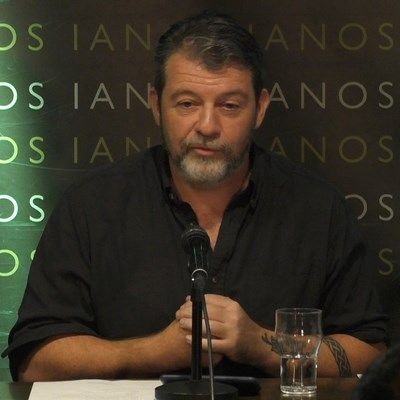
Donald Robertson is the expert of experts when it comes to Stoicism—the ancient blueprint for living the good life. Donald spends his days now residing in Canada writing books and creating online courses on how Roman and Greek philosophy can help us live more wisely. Prior to this, Donald spent over 20 years working in London as a psychotherapist.
Additional Resources:
This Book on Amazon:
How to Think Like a Roman Emperor, by Donald Robertson
If You Liked This Book:
Meditations, by Marcus Aurelius
On the Shortness of Life, by Seneca
Philosophy as a Way of Life, by Pierre Hadot
Letters from a Stoic, by Seneca
The Obstacle is the Way, by Ryan Holiday