
Summary:
I can give you the names of a multitude of books about reading, books about books, books about libraries, etc., but this is one of the absolute best I’ve ever come across. Jacobs basically uses this book to say everything about reading that I’ve always wanted to say about reading, and I think it’s going to feel like a relief to you too.
First off: not everybody reads books...and that’s totally cool. I mean, books completely and totally changed my life for the better, but I don’t think any less of anyone who doesn’t read as many books as I do or hasn’t read some particular book that people think everyone “should” read.
I know how this sounds, but it’s true: the only time you should ever look down on anyone is when you’re helping them up.
The value of an individual human life is infinite, as far as I’m concerned, and you don’t have to “do” anything in order to become a worthwhile person. There’s no dollar amount you have to amass, no standard of physical beauty you have to attain, no level of literary erudition you have to achieve.
I honestly and truly believe that, and in my dealings with other people, I practice what the psychologist Carl Rogers called “unconditional positive regard.”
It basically means that you give people a fucking break, and accept them as they are, without trying to change them or assert your superiority over them.
Sure, I’ll make (really funny) jokes, like when I say that in my hometown, everyone’s so dumb that anyone who could read without moving their lips was considered an intellectual, but I mean that in fun.
There’s always going to be someone smarter than you, or someone who’s “better-read” than you, but people read for different reasons, they’re further ahead or behind in their own personal reading journeys or what have you, and that’s why it was so refreshing to hear Alan Jacobs say that it’s perfectly alright to quit books that you’re not enjoying, and that reading should never feel like an obligation!
The Pleasures of Reading in an Age of Distraction takes a lot of the pressure off of people to tackle these ridiculous “100 Books You MUST Read Before You Die If You Want People to Think You’re Smart and Come to Your Funeral” lists or whatever. It’s nonsense, and Jacobs exposes it for the nonsense that it is. As he says, the world doesn’t need fewer readers, so if books have ever even once ignited your curiosity or your passion, then you have to do whatever it takes in order to keep that fire alive.
What helps the most here is to keep reading fun and enjoyable, and that’s difficult to do if you’re constantly concerned with whether other people “approve” of your book choices or if you’re reading the “right” books in the “right” way. The right way is your way.
Of course, there are ways to read better or worse, depending on your goals and what you want to get out of the books that you read. A classic reading guide that I actually quite liked is How to Read a Book, by Mortimer J. Adler. Jacobs actually cites this particular book as one of the stuffier reading guides - and I certainly get where he’s coming from - but if you’re studying for a degree, or doing some extra reading to help you advance in your career, then books like Adler’s can really help you. What Jacobs and I are saying though is that as a reader, you’re still worthy of unconditional positive regard, even before you achieve that promotion or attain that degree.
The Pleasures of Reading covers a lot of other ground too; for instance, Jacobs refutes the idea that “nobody reads anymore.” His book is part confidence-builder, and part tour of the reading life as populated by millions of eager readers, hundreds of massive bookstores and thousands of smaller, independent bookstores, numerous book clubs, etc.
He also discusses the rise of reading on electronic devices, the rise of silent reading (I just assumed that people had always read silently, but apparently not, for reasons that are obvious now that I’ve read his book), the benefits of re-reading books you’ve already read, etc.
Overall, the tone of Jacobs’ book is warm, supportive, and encouraging, and as I said, I think it’s one of the best books of its kind out there, one that can bring together readers of all genres and ability levels. Jacobs and Adler would even say together that the point isn’t how many books you can get through, but how many of them can get through to you.

Key Ideas:
#1: Reading should never be an obligation. You can drive yourself crazy with "Books You Absolutely Must Read to be Considered Well-Read" lists, but your reading list should never, ever look like a to-do list.
#2: Divorce guilt and duty from your reading at all costs. Not every book you read has to be educational, or a Great Book or some classic that you only read because somebody you've never heard of says that you have to read it in order to be "properly educated." You don't even have to force yourself to look at every word in every book.
The world doesn't need fewer readers, so do anything and everything you can to keep the love of reading alive. If reading feels like some massive obligation or chore, you’re not going to do it. If you have fun reading, if you enjoy reading, you will read more.
#3: Quit every book that you're not enjoying, and do so without any guilt. Some people reason that if you don’t finish a particular book, then it means that all the hours you've put into it so far will have been wasted.
But, you can also choose to focus on all the hours you've just gained by deciding to quit a book that you're not enjoying or finding useful. If you’re 3 hours into a shitty book that’s going to take you 10 hours to finish, quitting now means that you’ve “only” wasted 3 hours, as opposed to the 10 hours you’ll waste if you finish it.
That being said, some books seem to magically get better after the halfway mark, so this can be a minefield. Brave New World was like that for me. Just trust your judgment.
#4: “Books are just dead pieces of paper before they come into contact with your eyes. Thus, all writing depends on the generosity of the reader.”
#5: “Almost everything I have written in these pages assumes something that in the history of reading has rarely been true: abundant and inexpensive books. I have to make an effort to remember what an extraordinary blessing this is."
#6: Learning how to read certain books slower is just as important as learning how to read certain other books faster. Not every book deserves to be read carefully, just like not every book can be read quickly. The difference is something that you'll have to leave up to your own wisdom and judgment.
As an example, you can read a fun mystery novel faster than you would want to read something like Infinite Jest, which gives up a lot more of its secrets and awesomeness if it’s read slowly and carefully.
#7: “What reading teaches, first and foremost, is how to sit still for long periods and confront time head-on.”
#8: Silence is one of the newest forms of luxury, and many people still lack access to it - or willingly deprive themselves of it. Books are, in fact, “a handful of silence;” they’re basically a form of silence that you can hold in your hands and use to slow down time. Silence is like a waterfall inside your brain.
Most people need to be taught how to enjoy the luxury of silence, but once you do, you'll find it exceedingly pleasurable.
Books are one of the greatest ways I know of to transport oneself to this other state of silence and tranquillity.

Book Notes:
Some people just can’t seem to enjoy reading without adding duty or obligation to the mix, and creating all these “must-read” lists that really aren’t necessary for people who just enjoy reading for its own sake. You can read what you want when you want. No one else can tell you what to read unless you ask for their opinion.
“My son is one such person: it was the aroma of Responsibility, Obligation, and Virtue emanating from ‘How to Read a Book’ that sent him fleeing. And there are many people like my son among the ranks of diffident readers, embarrassed non-readers, and guilt-stricken ex-readers.”
Rudyard Kipling: "One cannot prescribe books, even the best books, to people unless one knows a good deal about each individual person. If a man is keen on reading, I think he ought to open his mind to some older man who knows him and his life, and to take his advice in the matter, and above all, to discuss with him the first books that interest him."
“In such a context of friendship and mutual interest, the making of recommendations is a pleasure. Outside of that, it quickly becomes an onerous (and perhaps pointless) duty, and I don't like mixing reading with onerous duties."
“I looked at every word of the text. And by the time I reached the last word, I convinced myself that I had read The Republic. In a ceremony of great pride, I solemnly crossed Plato off my list."
“The critic said that once a year he read Kim; and he read Kim, it was plain, at whim: not to teach, not to criticize, just for love - he read it, as Kipling wrote it, just because he liked to, wanted to, couldn't help himself. To him it wasn't a means to a lecture or article, it was an end; he read it not for anything he could get out of it, but for itself. And isn't this what the work of art demands of us?
The work of art, Rilke said, says to us always: You must change your life. It demands of us that we too see things as ends, not as means - that we too know them and love them for their own sake. This change is beyond us, perhaps, during the active, greedy, and powerful hours of our lives; but during the contemplative and sympathetic hours of our reading, our listening, our looking, it is surely within our power, if we choose to make it so, if we choose to let one part of our nature follow its natural desires. So I say to you, for a closing sentence, Read at whim! Read at whim!"
“Don’t turn reading into the intellectual equivalent of organic greens, or some fearfully disciplined appointment with some elliptical trainer of the mind.”
“Young people often signal through their pretensions what they hope to become.”
“The child who reads with a pure enthusiasm, signaling nothing to anyone, is beautiful.”
Read what gives you delight - at least most of the time - and do so without shame.
At certain times we’re just not prepared to give Great Books the attention they demand, and that’s okay. Some books need to be read more carefully than others in order to get the most out of them. That being said, if you’re not in the mood, or just can’t devote that kind of focused attention right now, that’s totally cool. Come back to the Great Book later, or read something else and don’t look back.
“So the books are waiting. Of this you may be confident: they’ll be ready when the whim strikes you.”
It should be normal for us to read what we want to read, to read what we truly enjoy reading.
“The world doesn’t need fewer readers.”
“When you quit a book, sure, you’re wasting the hours you’ve put in so far, but the hours you would have spent had you continued on are yours to spend as you wish.”
“You can never offload your responsibility of reading onto someone else or any system.”
“Austen became the Austen that we know largely through her reading.”
John O’Hara, after passing some friends in the street who said they had just seen his play a second time: “What was wrong with it the first time?”
“Even more gratifying is a reader who takes your thoughts a step further, who adds thoughts you never had that enrich your understanding of your own project.”
“In a dialogue, the position of primacy is with the one who listens, rather than the one who first speaks.”
Alberto Manguel: "The existence of the text is a silent existence, silent until the moment in which a reader reads it. Only when the able eye makes contact with the markings on the tablet does the text come to active life. All writing depends on the generosity of the reader."
“Almost everything I have written in these pages assumes something that in the history of reading has rarely been true: abundant and inexpensive books. I have to make an effort to remember what an extraordinary blessing this is."
Some people don’t want to read, but to “have read.”
We should all learn how to read slower. Not just to more carefully absorb the more intellectually demanding books, but because we enjoy reading! If we really enjoy something, do we try to just rush through it?
“The possible pleasure of an unread book weighs more heavily on me than the sure pleasure of one I already know.”
“When we’ve had our lives changed by a book, we often feel that the book ended too soon and that we read it too fast.”
Auden: “You need not see what someone is doing to know if it is his vocation, you have only to watch his eyes. How beautiful it is, that eye-on-the-object look.”
Raptness of attention and unmotivated delight is what separates “readers” from “people who read”.
“What reading teaches, first and foremost, is how to sit still for long periods and confront time head-on.”
“To read in this utterly absorbed way I have been describing is to collaborate with a book on the conquest of time.”
Readers have always had difficulty concentrating, even thousands of years before text messages.
“A book is a guest in your home, and you should treat it well. And sometimes, of course, you are the guest.”
“Yes, I know that the word 'school' derives from 'scholia', meaning leisure. I have tried that one on my students, with no more success than anyone else who has ever tried that one on students."
Stefan Zweig: “A book is a handful of silence that assuages torment and unrest.”
A higher percentage of human beings today have regular access to silence than at any time in human history. That being said, there are masses of people who may have this regular access but never take advantage of it!

Action Steps:
So you've finished reading the book. What do you do now?
#1: Keep your reading habit alive.
There’s a behavioral model that I’ve found useful for starting and keeping habits, and it’s from the book Tiny Habits, by B.J. Fogg. He says that in order for a behavior to happen, your motivation has to be high enough, your ability has to be high enough, and you need to have an effective prompt, or reminder.
If you’re having a difficult time sticking to a reading habit, keep in mind that you should want to read more (motivation - make reading fun, only read what and when you want, or have a big reason to read, like getting good grades in school and getting the job you want); you should make the habit easier (ability - make sure you have books close at hand, buy books that you can’t wait to read, and that you feel you are able to read); and set reminders (prompt - have your phone go off at a certain time, or stash books in a place where you’re likely to see them). That’s it.
You want to make more room for reading in your life, so your motivation is already likely pretty high. Increase it if you can, but your problem likely lies in either ability or prompt.
The world doesn’t need fewer readers, so do whatever it takes to keep that habit alive!
#2: Ask someone you respect for the name of a book that changed their life.
There’s a story that Ryan Holiday tells about the time when he was 19 years old and he asked Dr. Drew Pinsky at a public appearance if there were any books that he could recommend. Dr. Pinksy said that he was studying the philosophy of Epictetus recently and that he should probably check that out.
That of course led Ryan to The Meditations, by Marcus Aurelius, and then on and on from there until today, when Holiday has written several bestselling books on Stoicism (the ancient philosophy of Aurelius and Epictetus) and has become a lifelong reader. It all started because he got up in a crowded room and asked a question of someone he respected. You should think about doing this too.
And it doesn’t have to be anyone that lives around you either. They have the internet on computers now (it kills me that some people might not recognize this as a Simpsons reference), and the email addresses of almost any public figure or author or role model you might want to contact are readily available online.
The best part is that these well-known people often want to help those who come to them asking for advice! Just send them a short, courteous email, introducing yourself briefly and asking them if there’s a great book they can recommend.
#3: Quit a book that you’re not enjoying.
You now have all the permission you’d ever need to quit a book that you’re not enjoying, and to do so without guilt.
This used to hold up my reading quite a bit, actually. I’d be struggling to slog through some heavy, convoluted book that I felt guilted into reading, and it was preventing me from reading all those fantastic books that I couldn’t wait to read.
I said above that with some books, it’ll happen that you just haven’t gotten to the good part yet, but follow your instincts. Trust yourself and move on.
#4: Keep a list of what you’ve read.
Some people wouldn’t be motivated to do this at all, but I find it incredibly motivating.
Personally, it’s really cool to look back and scroll (and scroll and scroll and scroll) through all the hundreds and hundreds of books that I’ve read, and think that I did this. Me! With my own effort! I sat down, I opened all these great books, and extracted as much knowledge and enjoyment from them as I possibly could.
The personal satisfaction that I think you’ll derive from doing this is insane. Again, it’s a personal choice, but for me, it was the right one.
#5: Take notes on the books that you read.
This I would recommend to pretty much everyone. First, you never know when these books are going to come in handy. I use my notes in my writing all the time (I mean, you’re reading them right now), and because I’ve taken the time to write down the stuff I never want to forget, I have everything immediately available when I want to access it.
Not only that, but looking over my notes sometimes, I’m constantly amazed at all the great stuff I’ve forgotten! I hate to admit that I don’t remember every single thing that I’ve ever read, but I’m grateful to have my notes, because otherwise all this spectacular wisdom would be lost forever.
So yes, I think pretty much everyone should take notes on the books they read. My favored format is digital, so I can back them all up and never lose them. It’s a personal choice, but I think that the people who write in and highlight the actual books themselves are nuts! I mean, what if there’s a fire? What if you give your books away? Craziness. Anyway, you do you.
#6: Keep a list of favorite books and favorite authors.
When you’re having trouble deciding what you want to read next, having a list of your favorite books and authors can help you immensely. You just go back to your list, and pick out another book by that same author! Or, you can just search online for books that are similar to the favorites on your list.
#7: Donate your old books to a food bank or other book charity.
If you have a lot of old books on your shelf that you’ll likely never read again, think about giving them away to people who might be able to get some use out of them. You might even change that person’s life. There are a multitude of incredible book charities out there, or you could look for some local food banks and ask if they accept book donations. They probably do. Just make sure you’ve transferred your notes from the books you’re about to give away to someplace you’ll be able to access them!
About the Author:
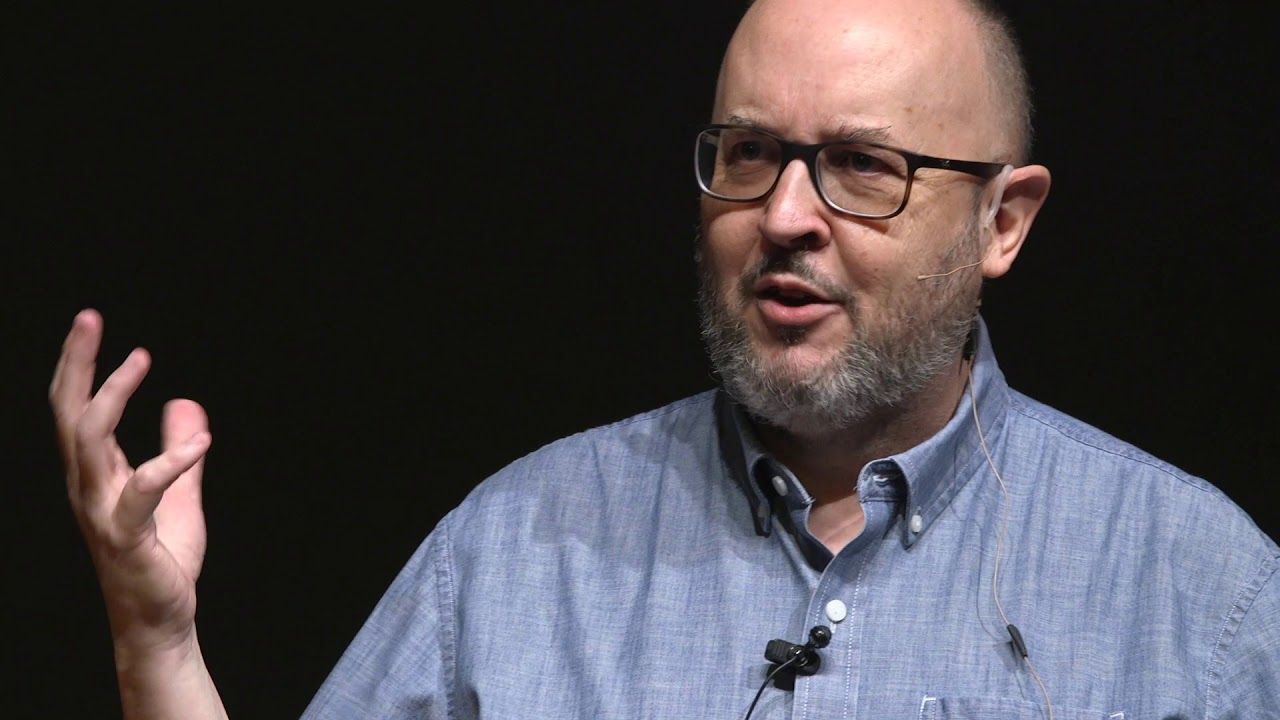
Alan Jacobs is a scholar of English literature and a literary critic. He is a distinguished professor of the humanities in the honors program of Baylor University.
Additional Resources:
This Book on Amazon:
The Pleasures of Reading in an Age of Distraction, by Alan Jacobs
If You Liked This Book:
Fahrenheit 451, by Ray Bradbury
Book by Book, by Michael Dirda
The Year of Reading Dangerously, by Andy Miller
How to Read a Book, by Mortimer J. Adler