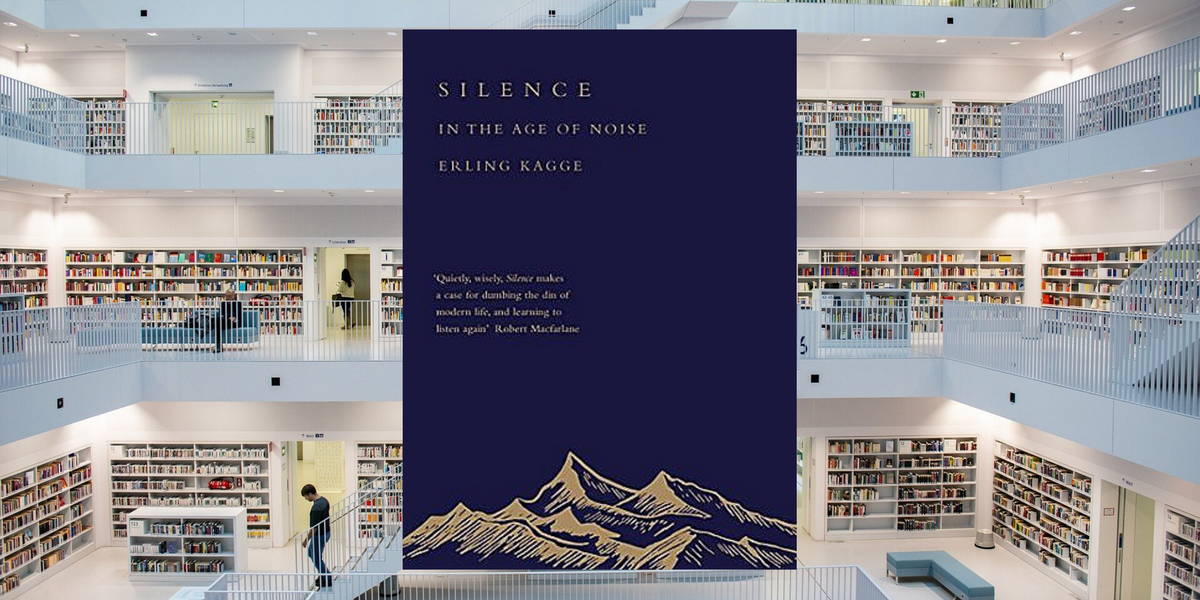

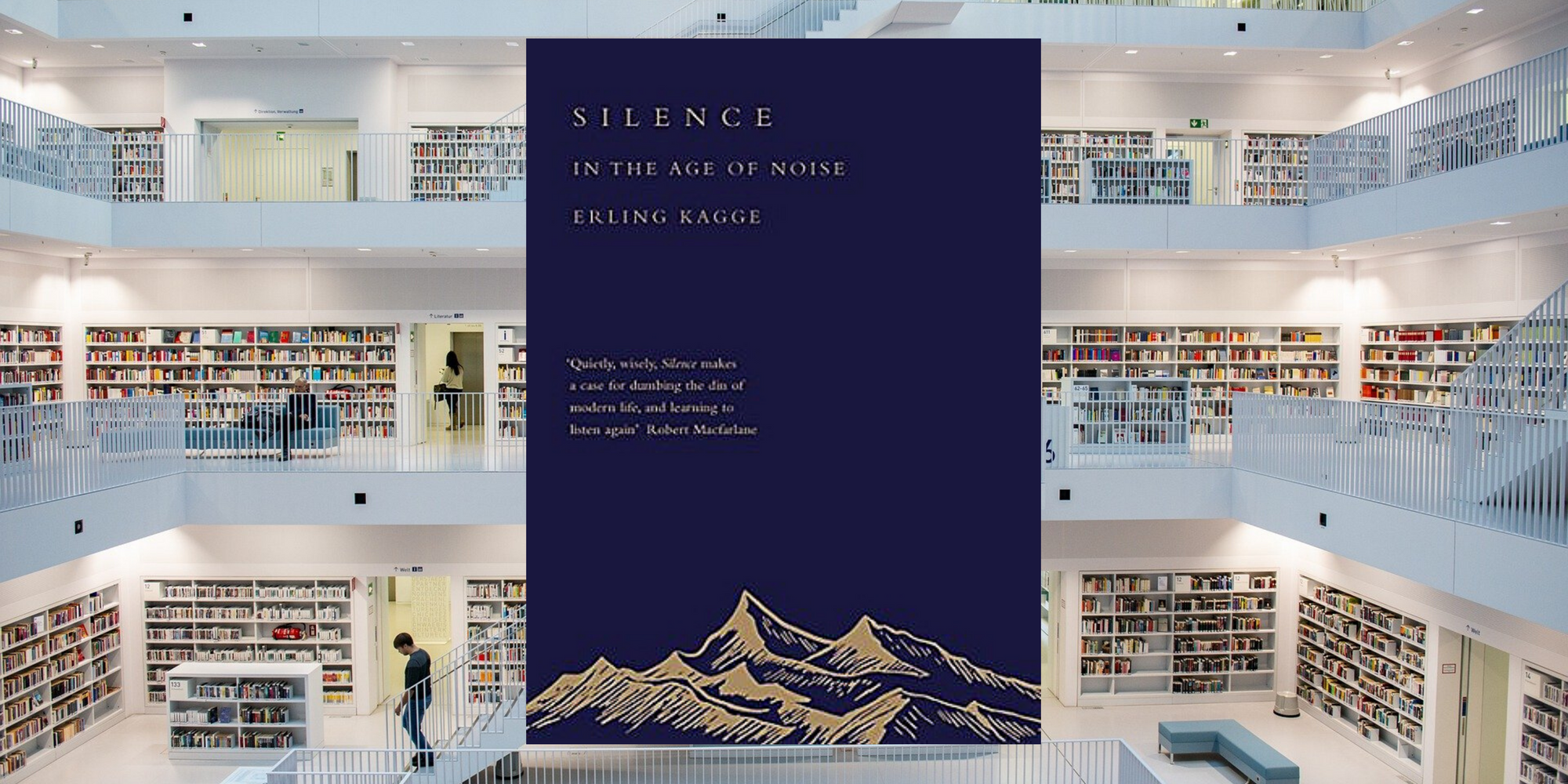
Summary:
“We spend a lot of time looking for happiness when the world right around us is full of wonder. To be alive and to walk on the Earth is a miracle, and yet most of us are running as if there were some better place to get to. There is beauty calling to us every day, every hour, but we are rarely in a position to listen."
You don't have to go all the way to Antarctica to find silence, but Erling Kagge did. Way back in 1993, he became the first person to walk to the South Pole, solo. The airplane company that dropped him off insisted he take a radio with him, but he dumped the batteries in the trash before leaving the plane. Over the next 50 days, he would experience the most profound silence of his life to date.
We don't have to take the same sort of radical action as Kagge did, but we do have to realize that the modern world isn't going to just give us the silence that we crave.
Many times, we're going to have to consciously create these rejuvenating moments of silence, and protect them from incessant intruders such as email notifications, IMs, DM, Netflix trailers, and ceaseless crowd noise.
In a sense, silence is becoming a new type of luxury, in the same way that sleep and time are becoming luxuries. It's actually difficult to imagine that one has control over one's life if silence, sleep, and time is scarce. Achieving this control over your life starts with limiting toxic inputs, and with controlling what you let into your mind in the first place.
Of course, you have some control over this, but hardly complete control. Just do the best you can to limit the negative influences that seep into your life through your senses. You do this via a conscious process of actively choosing your inputs: reading a book like Silence, rather than a gossip magazine; or phasing out that friend of yours who just complains all the time.
In his book, Kagge builds a strong case for silence, and he convinces, eloquently, that silence is essential for listening and communicating at all. Part of the impetus for writing the book was that his three teenage daughters didn't spend much time without an electronic device attached to some part of their bodies. Indeed, Kagge says that before you can listen deeply to someone else, you have to be able to listen deeply to yourself, and we at HighExistence couldn't agree more.
It might even be argued that sitting in silence, listening deeply, and guarding against negative inputs are all moral imperatives, in that their absence leads directly to some of the worst evils ever unleashed upon humanity. How much pain and suffering could be avoided if we simply checked in with ourselves once in a while, listened deeply to the people who were trying to communicate with us, and protected ourselves against the toxic sludge that constantly assaults our eyes and ears as we go about our day?
That being said, human beings exist for each other, and silence shouldn't be a permanent escape. It should allow us to retreat for a time, and return to our societies strengthened, calmed, and revitalized.
It's easy to think silence is about turning your back on the world, but for Kagge, "it’s the opposite. It’s opening up to the world, respecting more and loving life.”

Key Ideas:
#1: The world isn't going to give us the silence that we crave. It is up to us to create those moments for ourselves by intentionally turning inwards, at least occasionally.
#2: Silence itself has a sound. You can actually listen to the silence; you can listen to the space that silence creates in order for sound to be present. The same is true for space itself, the empty space which allows solid matter to be present.
#3: We don't have to go all the way to Antarctica to find silence in our lives. We have all the silence we need within ourselves if only we look for it, and cultivate it and protect it once we've found it.
#4: You would never knowingly ingest some substance you knew to be poisonous, like arsenic or toxic sludge, yet we pay very little attention to the sludge that we let into our thoughts and other senses.
#5: Our thoughts lead directly to our actions, and those actions can be either moral or immoral, according to the quality of our thoughts. Thus, we have a moral responsibility to guard against the negative inputs that can pollute our thoughts over time.
#6: Outer silence is not necessary for inner silence. We can be in a very noisy place and yet still carry silence within us.
#7: If we haven't listened deeply to ourselves, then we will find it impossible to listen deeply to others.
#8: Sitting in silence doesn't have to have a point. It can be perfectly aimless, not pointing towards anything, and it doesn't have to have some goal, some endpoint at which you're trying to arrive.

Book Notes:
“We spend a lot of time looking for happiness when the world right around us is full of wonder. To be alive and to walk on the Earth is a miracle, and yet most of us are running as if there were some better place to get to. There is beauty calling to us every day, every hour, but we are rarely in a position to listen."
Listen for the sound of ‘no sound.’
“Am I doing what I most want to be doing with my life? Do I even know what that is?”
“Shutting out the world is not about turning your back on your surroundings, but rather the opposite: it is seeing the world a bit more clearly, staying a course and trying to love your life. Silence in itself is rich. It is exclusive and luxurious. A key to unlock new ways of thinking. I don’t regard it as a renunciation or something spiritual, but rather as a practical resource for living a richer life.”
“What we are experiencing is experiential poverty. Such poverty may not only be about a lack of experiences, where nothing is happening. An abundance of activities can also create a feeling of experiential poverty. And this last point is interesting. Things just get to be too much. The problem, according to Lars Fr. H. Svendsen, is that we carry on seeking ‘increasingly more powerful experiences’ instead of pausing to breathe deeply, shut out the world and use the time to experience ourselves.
The idea that boredom can be avoided by constantly pursuing something new, being available around the clock, sending messages and clicking further, watching something you haven't yet seen, is naive. The more you try to avoid boredom, the more bored you become. Routine is like that too...Busying oneself becomes a goal in and of itself, instead of allowing that same restlessness to lead you somewhere further.”
“When you’ve invested a lot of time in being accessible and keeping up with what’s happening, it’s easy to conclude that it all has a certain value, even if what you have done might not be important. This is called rationalization."
We don’t deliberately consume actual poisons, but we do this with our thoughts and inputs all the time.
Our thoughts manifest themselves in our words and actions, so we have a responsibility to train our minds to contribute good to the world.
“If there’s a full moon high in the sky and we’re busy thinking about something else, the moon disappears.”
You can become a victim of your own success, but no one ever becomes a victim of their happiness.
Inner silence does not require outer silence.
Silence doesn’t have to be serious. There can be a lightness to it.
“In a way, silence is the opposition to all of this. It’s about getting inside what you are doing. Experiencing rather than overthinking. Allowing each moment to be big enough. Not living through other people and other things. Shutting out the world and fashioning your own silence whenever you run, cook food, have sex, study, chat, work, think of a new idea, read or dance.”
“Silence can have just as much joy in it as a good laugh.”
If we haven’t listened deeply to ourselves, we can’t listen deeply to others.
“Antarctica has a mission as an unknown land. I believe that we need places that have not been fully explored."
“Although you may be sitting down, very often you are still running within.”
The relatives we have outlived are still alive in us, and we cannot take them out of us. When we enjoy peace today, they will have an opportunity to do the same through us.
“Most of the time, we walk and we don’t know that we’re walking.”
“We’re continually losing ourselves.”
“People who are fixated on separating life from work spend the majority of their lives not living.”
“People say it is a miracle to walk on air, on water, or on fire. But for me, walking peacefully on Earth is the real miracle.”
Every time someone anywhere in the world dies, we die a little bit as well. But, we’re still living, so it’s like they’re still living as well.
“Whenever we help people suffer less, our happiness grows.”
“Sitting in silence can be wonderfully aimless.”

Action Steps:
So you've finished reading the book. What do you do now?
#1: Listen to the silence.
None of the sounds we usually hear could exist as we perceive them if not underwritten by the silence that allows those sounds to be present. This is an experience you can create for yourself simply by listening.
Pick a sound in your immediate environment - a bird, a ringtone, a car whizzing by - and listen for the sound of no-sound that exists underneath it. With practice, this will become easier.
#2: Track your sleep, your time, and your silence.
The best way to manage your time is to track where you're spending it now. The same idea can be adapted to sleep and to silence as well. These are luxury items that are worth obsessing over, at least a little bit.
Figure out how much sleep you’re getting per night (an app like Sleep Cycle works wonders), figure out where you're spending your time and how, and figure out how many hours (perhaps only minutes) that you currently spend experiencing silence.
#3: Schedule your sleep, your time, and your silence.
You have to schedule your sleep and your silence first, or else you'll just be trying to "fit it in somewhere," and that rarely works. Indeed, some of the best advice for getting into the habit of going to the gym, say, is to schedule your workouts first, and then schedule everything else around it. Do the same thing with your sleep, your silence, and your uninterrupted time.
#4: Identify 1-3 toxic inputs and replace them with something positive.
Removing negative influences from your life is an excellent start, but to really solidify the changes, it helps immensely to replace them with something positive.
If all your friends are negative and full of resentment, the solution isn't to just have no friends. Rather, (gradually) replace them with people who want the best for you, and who are going to add something to your life (and you to theirs), instead of just taking, taking, taking.
#5: Turn off all your notifications.
I did this, and it's such an easy, effective fix. Go to the Settings on your phone, and go along app by app, disabling all the notifications and alerts. You may want to keep one or two (I still receive text notifications, but turned off almost everything else), but for the most part, you don't want your phone or other devices telling you what to do.
I even went so far as to remove all my social media apps from the home screen, so I'd have to expend extra effort in order to access them. Funny enough, it turns out that I'm even lazy about being lazy! I won't even go out of my way to access my time-wasting apps.
#6: Go on a tech fast.
A friend of mine goes for entire days without using her phone at all. I have other friends who take entire Untouchable Days, where they are absolutely unreachable, for any reason whatsoever. A few people have his number for emergencies, but other than that he spends his day writing, creating, or spending time with his family.
#7: Go on a day trip with no destination whatsoever in mind.
Have you ever done this? Take a walk in the forest without any plans, no specific time you have to return? What about flying one-way to a country you've never been to before and going wherever the adventure takes you?
You don't even have to go extreme with this; you can go walking (somewhere safe) in your city you've never explored before or take a mini road trip to the next town over. Bonus points if you leave your phone off.
About the Author:
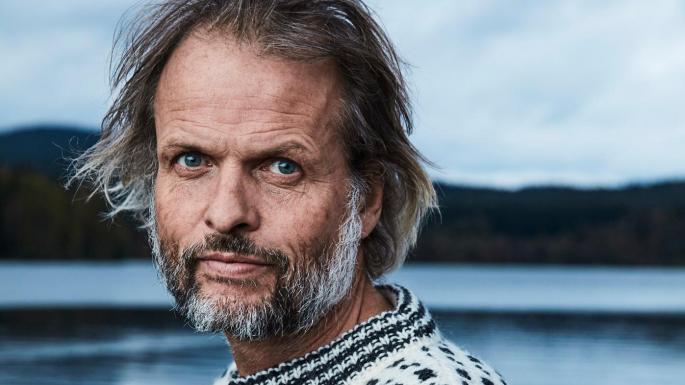
Erling Kagge is a Norwegian explorer, publisher, author, lawyer, art collector, entrepreneur, and politician. He was one of the first people ever to reach the North Pole unsupported, he completed the first unsupported and solo expedition to the South Pole, and he summitted Mount Everest, thus becoming the first person to complete the Three Poles Challenge.
Additional Resources:
Erling Kagge - If Life Feels Too Short
Erling Kagge - The Adventure of Silence
This Book on Amazon:
If You Liked This Book:
Stillness is the Key, by Ryan Holiday