

Summary:
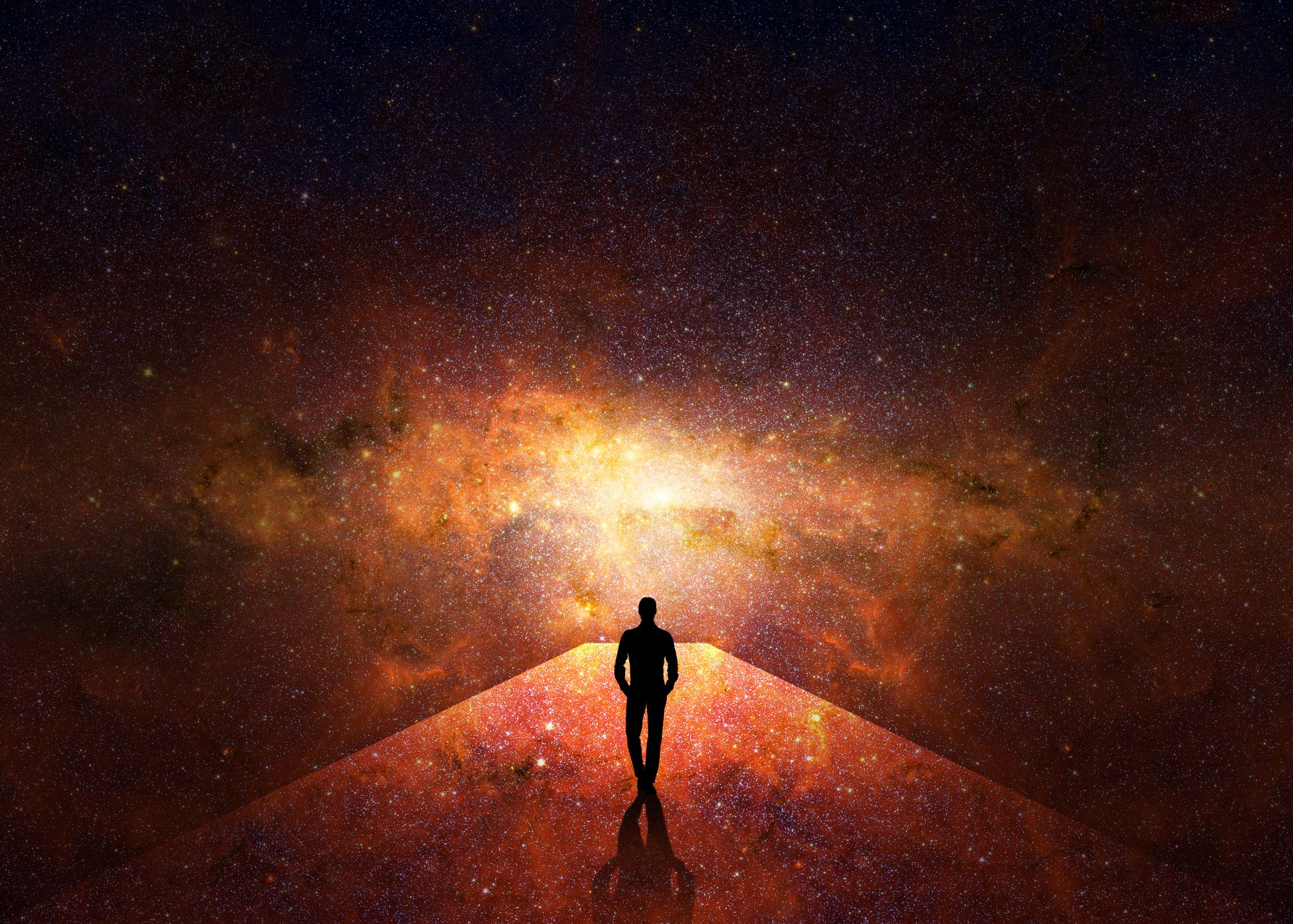
You didn't come into the world, you came out of it. This should be the simplest, most obvious thing in the world, but it flies so directly in the face of our normal way of experiencing the world that we don't tend to notice it.
It's almost as if it were an unspoken taboo, something kept secret, yet vaguely known; that we are not separate from the universe, but are instead intimately bound up with it. You can think of it almost like a costume party where, although it's obvious that, just as the ocean creates waves, the universe creates people, no one wants to or is able to give up the game.
Ordinary experience leads us to believe that we are somehow like visitors on this earth, something contingent and that we don't quite belong. This way of thinking, Alan Watts teaches us, is an illusion.
Watts himself envisions some book, The Book, perhaps, that could be slipped from parents to children, that would explain all this - in ways they could understand - without all the baggage and abstractions and room for misinterpretation present within the traditional religious belief systems.
As he explains, religion has very little to do with faith. Faith is, above all, an openness, a trust in the unknown, an inner certainty that the essence of Existence Itself is Basic Goodness, that we all belong here, and that we are all an essential part of everything which exists. There are no "extra" people present within Creation.
Yet, The Book is not meant to itself become scripture, something that is dogmatized and endlessly discussed, leading to the fractionation of adherents into all sorts of rival groups, and all the pointless violence that that would necessarily eventuate. Rather, The Book is a point of departure, an invitation to experience for oneself what the universe is all about.
The nature of existence isn't something that can be grasped by the rational mind, something that can be fossilized in words. It is flowing, always creating and destroying and creating again, and we are all It.
That being said, it often doesn't feel like we're It. Because of our normal way of experiencing the world, we tend to think of ourselves as outsiders, individual egos trapped in bags of skin, where everything on the inside of our skin is Us, and everything - and everyone - on the outside is Not-Us (insert your Zoolander references here). But as Eastern philosophy teaches - Western science backs up - that simply is not the case.
You are something that the universe is "doing," in the same way that a wave is something that the whole ocean is doing. When we don't feel that to be the case, however, we start to feel hostile, to destroy our natural environment, and to pick fights with each other, whom we see as Not-Us.
Alan Watts explains that although we can use the word "God," we have to do so with the complete knowledge of what we are doing. It's not as if God is something external to us, something "out there," who created us and who judges us as Good, or Bad.
Rather, the word "God" is a narrative device - since language can never directly point to itself, just like a knife can never cut itself - that we can use to explain the universe and its fundamental truth.
More accurately, yet in a spirit of fun, we can see it as a kind of game, similar to Hide and Seek, where God "hides" in the faces of our enemies, our friends and family, strangers in the street. "Each of them is Jesus in disguise," said Mother Teresa.
No one wants to play a boring game. Watts invites us to imagine how terribly bored God would get if all He did was sit around being Himself all the time, having no one to talk to, nothing to accomplish, nothing to set out in search of.
Lastly, there is the question of why there is Something, rather than Nothing. Indeed, the philosopher Sidney Morgenbesser once got tired of answering this question and is reputed to have said, "Oh, even if there were nothing, you still wouldn't be satisfied!" So it's a persistent one.
But Watts invites us to remember that without Dark, there would be no Light. Death creates Life, just like East creates West (and vice versa of course), Up creates Down, and it's impossible to have Something without Nothing.
It would be like trying to keep the mountains while getting rid of the valleys.
The Book can offer you an utterly transformational reading experience, and we at HighExistence highly, highly recommend it. It's the kind of book that easily and fruitfully stays with you for your entire life, challenging your normal perceptions, and serving as inspiration to really enjoy your life, completely and fully.
Because it follows from all this that there's nothing you have to do or become (although striving to accomplish big goals IS fun, and IS worth going for, if that’s something you want to do, and it’s a goal chosen by yourself alone), there's no one you have to impress, and there's most certainly no one you have to fight or destroy. You are the Self, you are Everything, you are It.
Key Ideas:
#1: There is an unspoken taboo operating in modern society; it's stronger than death, or sex, or money, and that is discussion of the illusory idea that the personal ego is separate from the universe itself.
#2: The Book was intended to serve as a point of departure, a spur to thinking and experiencing, not as some sort of dogma or scripture to be argued and fought over. We're dealing with a truth that cannot be grasped by the rational mind, so no words or holy text will ever be able to capture the truth.
#3: You didn't come into the world, you came out of it. Just like the ocean creates waves, the universe creates people. That means that we are intimately bound up with everything that exists. You are something that the universe is "doing," in the same way that a wave is something the whole ocean is doing.
#4: However, we mostly experience ourselves as separate, not only from other people but also from the universe at large. There are even parts of ourselves that feel alien to us, so there is a multitude of things and people we feel disconnected from. The natural response to such a perception is, of course, hostility, as evidenced by our attempted control over nature and over each other.
#5: God has no "shape," no "outside," but it is a convenient fiction that we have recourse to when we want to explain the universe and its fundamental truth. God has no existence "external" to us, but rather we are all manifestations of the eternal Self.
#6: No one, not even God, wants to play a boring game. Imagine, if you will, how boring it would be to be perfect all the time, unchanging, with no challenges to overcome, achievements to strive for, friends to make, lovers to meet.
Now imagine a game like Hide and Seek, wherein the object of the game would be to pretend that You are not It; a game where God would "forget" who He is. In such a game, you would have all sorts of planets and galaxies stretching out forever and forever, you'd have strange animals and stunning landscapes, and you'd have good people and bad people, heroes and villains, every kind of person who ever inhabited the earth, and they would all pretend that they weren't It.
#7: The universe is an On/Off system, where the opposites create each other. Just like you can't have High without Low, or White without Black, it's impossible to have Life without Death, Joy without Suffering, Success without Failure, Something without Nothing. In the same way that East is impossible without West, trying to completely eliminate evil, tragedy, suffering and death is like trying to keep the mountains and get rid of the valleys.

Book Notes:
“How is it possible that a being with such sensitive jewels as the eyes, such enchanted musical instruments as the ears, and such fabulous arabesque of nerves as the brain can experience itself anything less than a god?”
“We suffer from a hallucination, from a false and distorted sensation of our own existence as living organisms. Most of us have the sensation that "I myself" is a separate center of feeling and action, living inside and bounded by the physical body—a center which "confronts" an "external" world of people and things, making contact through the senses with a universe both alien and strange. Everyday figures of speech reflect this illusion. "I came into this world." "You must face reality." "The conquest of nature." This feeling of being lonely and very temporary visitors in the universe is in flat contradiction to everything known about man (and all other living organisms) in the sciences. We do not "come into" this world; we come out of it, as leaves from a tree. As the ocean "waves," the universe "peoples." Every individual is an expression of the whole realm of nature, a unique action of the total universe. This fact is rarely if ever, experienced by most individuals. Even those who know it to be true in theory do not sense or feel it, but continue to be aware of themselves as isolated "egos" inside bags of skin.”
“Our normal sensation of self is a hoax, or, at best, a temporary role that we are playing, or have been conned into playing — with our own tacit consent, just as every hypnotized person is basically willing to be hypnotized. The most strongly enforced of all known taboos is the taboo against knowing who or what you really are behind the mask of your apparently separate, independent, and isolated ego.”
“The person, from the Latin persona, was originally the megaphone-mouthed mask used by actors in the open-air theaters of ancient Greece and Rome, the mask through (per) which the sound (sonus) came.”
“Problems that remain persistently insoluble should always be suspected as questions asked in the wrong way.”
“Society is our extended mind and body. Yet the very society from which the individual is inseparable is using its whole irresistible force to persuade the individual that he is indeed separate! Society as we now know it is therefore playing a game with self-contradictory rules.”
“Irrevocable commitment to any religion is not only intellectual suicide; it is positive unfaith because it closes the mind to any new vision of the world. Faith is, above all, openness - an act of trust in the unknown.”
"One might say that if religion is the opium of the people, the Hindus have the inside dope."
“No considerate God would destroy the human mind by making it so rigid and unadaptable as to depend upon one book, the Bible, for all the answers. For the use of words, and thus of a book, is to point beyond themselves to a world of life and experience that is not mere words or even ideas. Just as money is not real, consumable wealth, books are not life. To idolize scriptures is like eating paper currency.”
"I am not saying that you ought to awaken from the ego illusion and help save the world from disaster, but simply that it is part of things taking their course that I write."
"The less I preach, the more likely I am to be heard."
“Real travel requires a maximum of unscheduled wandering, for there is no other way of discovering surprises and marvels, which, as I see it, is the only good reason for not staying at home.”
“Unless one is able to live fully in the present, the future is a hoax. There is no point whatever in making plans for a future which you will never be able to enjoy. When your plans mature, you will still be living for some other future beyond. You will never, never be able to sit back with full contentment and say, “Now, I’ve arrived!”
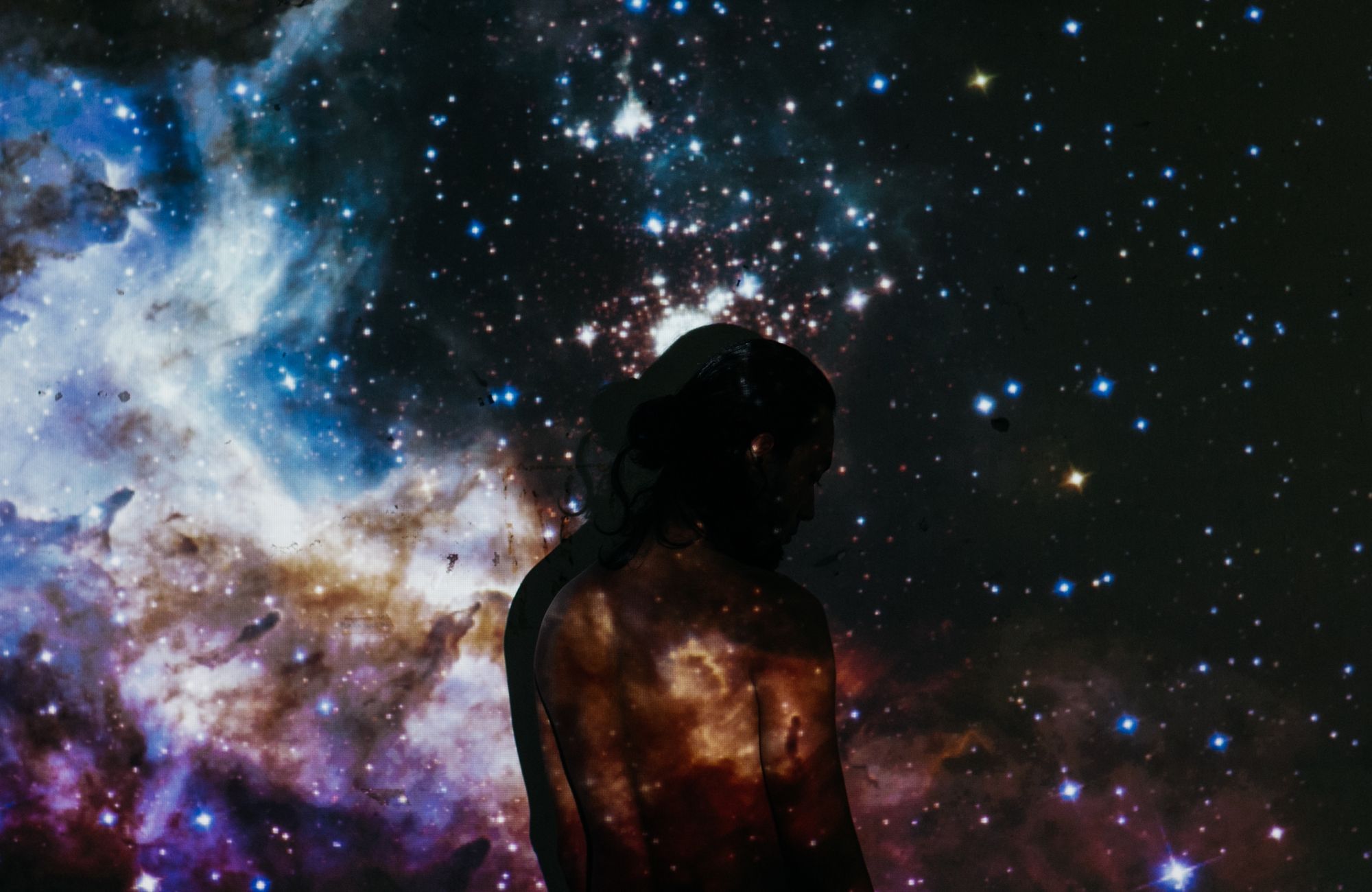
“Once you have seen this you can return to the world of practical affairs with a new spirit. You have seen that the universe is at root a magical illusion and a fabulous game and that there is no separate “you” to get something out of it, as if life were a bank to be robbed. The only real “you” is the one that comes and goes, manifests, and withdraws itself eternally in and as every conscious being. For “you” is the universe looking at itself from billions of points of view, points that come and go so that the vision is forever new. You do not ask what is the value, or what is the use, of this feeling. Of what use is the universe? What is the practical application of a million galaxies?”
Action Steps:
So you've finished reading the book. What do you do now?
#1:Walk slower for a day, and notice three things that were always there, but which you were in too much of a rush to see before:
As Alan Watts said elsewhere, the purpose of life is simply to be alive. It is so plain, so simple, and so obvious, yet most people are rushing around as if it were necessary to accomplish something beyond themselves.
You don't have to earn the right to exist! You don't have to impress anybody or become anyone else. In fact, the universe would be impoverished if it (We?) didn't have you. So yes, do your best and have fun, but don't beat yourself up so much, don’t take things too seriously, and try to take it easy on other people as well.
#2: Identify three amazing things that wouldn’t exist without their opposites:
Life is beautiful, complex, tragic, astounding - and it's so much more than we could ever individually conceive. Life is Good, the universe is Good, and while yes, suffering and death and tragedy exist, we also exist for each other. So help as many other people enjoy life as you can. Positive can’t exist without negative, happiness can’t exist without sadness, and mountains can’t exist without valleys.
#3: Check in with your body, examine all your senses in turn, and see if you can feel, intimately and personally, the truth of your interconnectedness:
Now that you know how hard it is to see the nature of reality clearly, what with all of our senses telling us that we're separate, see if you can shift your perception a little bit. Maybe, as you start to play with these ideas and test their validity for yourself, you can start to feel more connected to everything that is.
Maybe you can feel this intimately, personally, rather than just reading about it in a book. Consider how this would change how you treat others, or even yourself.
About the Author:
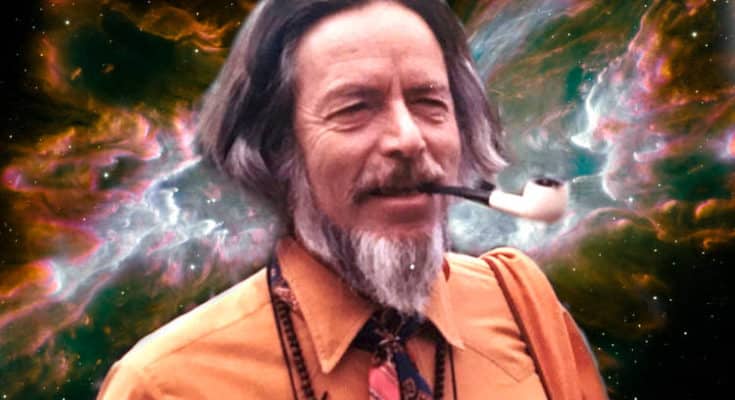
Alan Wilson Watts (6 January 1915 – 16 November 1973) was a British writer and speaker known for interpreting and popularizing Buddhism, Taoism, and Hinduism for a Western audience. Born in Chislehurst, England, he moved to the United States in 1938 and began Zen training in New York. He received a master's degree in theology from Seabury-Western Theological Seminary and became an Episcopal priest in 1945. He left the ministry in 1950 and moved to California, where he joined the faculty of the American Academy of Asian Studies.
Additional Resources:
Alan Watts - Top 5 Videos - HighExistence
Alan Watts - 50 Quotes - HighExistence
This Book on Amazon:
If You Liked This Book:
Finite and Infinite Games, by James Carse