

Summary:
I admire - and wonder at - anyone who is able and willing to go to such extreme lengths to construct a biography of an intellectual giant who’s been dead for thousands of years. And not just any biography; this was one of my absolute favorite reads of 2019. Socrates has always been a clear guiding light in my life and so I’m exceedingly grateful to Armand D’Angour for giving me (and you) even more to love.
It wasn’t easy either; Socrates never wrote anything down himself, so there are varying accounts of his life and utterances, coming from people like Plato, Xenophon, Aristophanes (who wasn’t always charitable) and so many others. Consequently, there’s a lot of varied material to sift through, from all over the place, and I think D’Angour did an excellent job. Just thinking about all the research involved - I’d rather not.
Fortunately for us, however, Socrates has influenced virtually every single great thinker in the subsequent history of philosophy, and for damn good reason. Thus, you see him mentioned by Michel de Montaigne, Nietzsche, Pierre Hadot, and untold numbers of others. Socrates is everywhere, and every time I come across his name I think of how much he’s done for me, and how much I learned about him from Socrates in Love.
The book is a fast read, but certain passages forced me to stop short and consider what I’d just read that made me think about ol’ Soc in a completely different way. For instance, you never really think of Socrates as ever having been a teenager, do you? I always picture him as an older, heavier, apparently rather ugly dude who was always challenging people in the streets of Athens to think through the implications of what they said they believed. I’ve never thought of him as ever having been young, ever being unwise, or ever having been unlucky in love.
A little backstory that I think is important, and that has shaped my thinking for years: Socrates was considered the wisest man in all of ancient Greece because he knew that he knew nothing. Here you had all these supposedly wise people running around, extremely confident in their opinions, and yet who were positively stymied by Socrates when he got through with them using his eponymous method of questioning, the Socratic method.
Years earlier, the Oracle at Delphi had told him that he was the wisest man in the world, but Socrates refused to believe it. He didn’t think that that could possibly be true. But then, of course, he would go around asking people who he believed were wiser than he, and they all clung to flimsy beliefs that Socrates invariably proved to be false or incomplete, regardless of the absolute certainty with which they were held!
This attitude has become so fundamental to my reading and my questioning, and I’m eternally grateful to people like Socrates and Jiddu Krishnamurti (who said that having beliefs prevents one from learning what’s true because everything gets filtered through what you already believe) for strengthening my intellectual humility (I’m so humble - seriously, there’s no one more humble than me; I’m the best at humility).
Anyway, you might know how this story goes: apparently, going around challenging people’s most strongly held beliefs and making them seem stupid doesn’t win ya too many friends, and so Socrates was charged with some bullshit offense like “corrupting the youth of Athens” or some nonsense. He was sentenced to death.
In his case, the method of execution was the drinking of hemlock, a deadly poison. What resounds through the entire history of philosophy though, is Socrates’s response to the offer to reverse the order of his execution if only he would go back on what he said and renounce his beliefs.
Um, no.
Instead, Socrates said that he would rather die a thousand deaths than renounce what he believed to be true - and then he drank the fucking hemlock. My. Man.
Of course, there’s much, much more to this book than I’ve managed to pass along in this brief summary, such as his wildly profitable intellectual exchanges with a brilliant woman named Aspasia, who was the lover and partner of the great statesman, Pericles. Socrates kinda had a little thing for Aspasia, but she let him down easy and gave our man some incredible dating advice that has withstood the test of time. More on that below.
There’s also some fascinating discussion about Socrates’s habit of becoming lost in thought for hours and hours on end, sometimes standing in the middle of the road all night, just thinking. Some say that this was actually due to a medical condition that caused him to experience temporary paralysis, giving him ample time to think - and garnering him a few incredulous stares.
I forget the name of the medical condition, but then again I’m not even half the researcher that D’Angour is, and you’ll find the answer to this question and dozens of others inside the pages of this spectacular book.
Key Ideas:
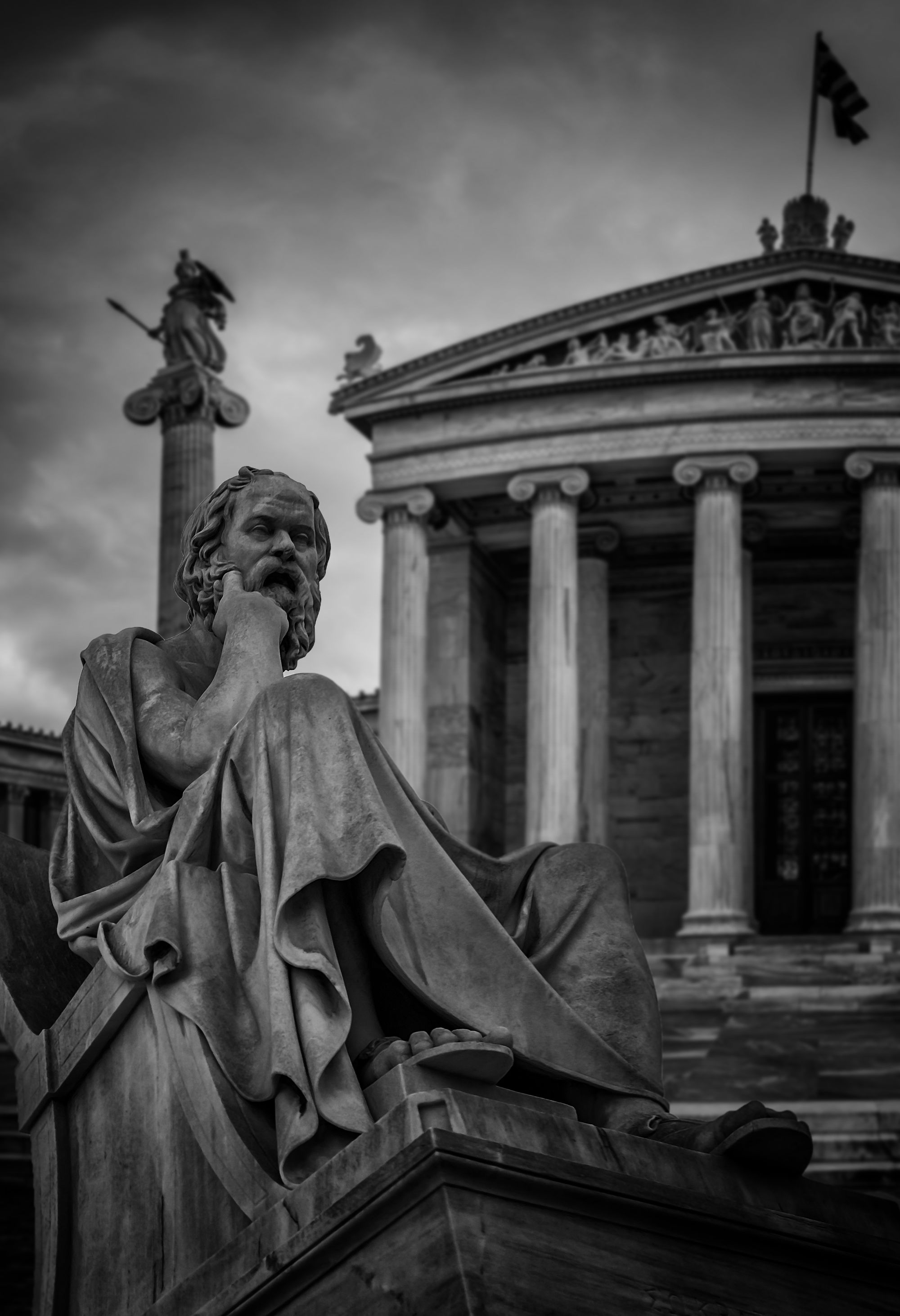
#1: Socrates assumed his own ignorance, rather than believing he was wise and knowledgeable. It was this spirit of radical inquiry that changed the course of Western philosophy. To realize that we don't know is the very beginning of finding out.
#2: Socrates feared committing an unjust action more than he feared death itself. Before his execution, he was given the chance to renounce his views and save his own life, but instead, he told his executioners that he would rather die a thousand deaths than renounce what he believed to be true.
#3: Whenever his contemporaries asked Socrates how to get to Mount Olympus (Heaven, to dwell with the gods), he responded that they should "make sure every step you take is in that direction." Maintaining a vision of goodness, virtue, and justice that we never stray from, and that we base all our actions on, is how we "get to Mount Olympus," whatever that means to us.
#4: Socrates never wrote anything down because he believed that since writing never changes, dialogue with another living person was always going to be superior and more effective at coming to the truth.
#5: Rather than pursuing philosophy at the expense of athletics, the ancient Greeks took physical education seriously as well. Plato is named for the width of his shoulders, and Socrates said that it is "shameful for a man to grow old without seeing the beauty and strength of which his body is capable."
#6: If you want to get married to a fantastic partner, you have to be a fantastic partner for them too. Become the kind of person you would like to attract, or become the kind of person that whoever you're attracted to would want to be with.
#7: “What is undeniable is that in dying he fulfilled the aspirations of the young Socrates who had set his heart on being a hero and had sought to learn the truth about love; for, in the end, it was for the love of wisdom and justice that Socrates died, a moral and intellectual example to posterity, and philosophy's first and greatest hero."

Book Notes:
Socrates never wrote anything down because he believed that since writing never changes, dialogue with another living person was always going to be superior and more effective at coming to the truth.
We don’t often think that Socrates was ever a young man, but of course he most certainly once was.
“It might appear that, given the dearth of evidence for the young Socrates, we are doomed to ignorance or speculative fantasy about his early career. Why should this matter? Simply because it seems likely that Socrates' early experiences and close relationships hold a vital clue to why, some time in his early middle age, he inaugurated a style of philosophizing that was to shape the direction of Western philosophical thought."
“What made him end up pursuing with single-minded urgency and persistence, at the cost of social acceptance and ultimately of life itself, a whole new way of thinking about the meaning of human existence? What intellectual and emotional obstacles did he encounter and overcome in order to do so? What personal experiences as a younger man, including perhaps falling and failing in love, might have shaped his outlook and altered the course of his life?"
Once, Myrto and Xanthippe were fighting with each other, and it’s said that they stopped only to scold Socrates, who was laughing the whole time.
Socrates feared committing an unjust act even more than he feared dying.
“No Greek could forget the names or deeds of Patroclus, Hector and Achilles. It was only by allowing himself to be executed that Socrates was able to remain in control of his own biography."
The Travel Journey, by Ion of Chios, is the earliest known example of the genre of autobiographical travel writing.
“Socrates would have been an intellectually precocious as well as a physically impressive teenager.”
Socrates, at the marketplace: “Look at all these things I don’t need.”
Aspasia gave excellent dating advice thousands of years ago when she advised that in order to attract the best possible spouse, you should become such a spouse yourself. Thousands of years later I read the same excellent advice in books by Mark Manson and, of all people, Tucker Max.
“True love aims to bring out the goodness in another person, and then to produce goodness that goes beyond that particular individual and makes an impact that lasts beyond one's own lifetime."
“What is undeniable is that in dying he fulfilled the aspirations of the young Socrates who had set his heart on being a hero and had sought to learn the truth about love; for in the end, it was for the love of wisdom and justice that Socrates died, a moral and intellectual example to posterity, and philosophy's first and greatest hero."

Action Steps:
So you've finished reading the book. What do you do now?
#1: Drop your beliefs.
The spirit of radical inquiry that Socrates championed requires that you be ready at any time to give up what you already believe. Jiddu Krishnamurti’s right, as well, that if you choose to hold beliefs, you’ll never learn anything new; everything you “learn” will get filtered through what you already believe! So be ready to give up your beliefs. Or, maybe more practically, develop strong beliefs, loosely held. That way you’re willing and able to drop them when you encounter conflicting, yet more accurate, information.
#2: Make sure every step you take is in the right direction.
The “right direction” can mean many things, of course, but if you’re walking a path you’ve deemed important, don’t stray from it! If you want to build a world-class physique, don’t just get drunk every day. If you want to be a morally upstanding individual, a hero to others, don’t do immoral things. Don’t stray from the path.
#3: Get active.
The Greeks believed that the development of our physical capabilities was at least as important as the training of our minds. We should never neglect one in favor of the other. It’s fine if you’re more bookish, or more athletic, but you should be more than a body, and more than a brain. Remember, your body is more than just a way to get your head to meetings!
#4: Drop at least three things from your wishlist.
Take a lesson from Socrates who, while at the marketplace, would point to the various trinkets on offer and exclaim, “Look at all the shit I don’t need!” I’m paraphrasing, of course, but the point stands. You don’t need as much “stuff” as you might think you do. Nobody says that you have to give up all your worldly possessions and move to the mountains, but you don’t have to let yourself get caught up in the endless pursuit of “more.” As they say, more will never be enough.
#5: Become the kind of partner you’d want to be with.
Heed Aspasia’s excellent advice to Socrates about how to get girls (or marry them): Become the kind of man that the type of woman you’re attracted to would want to date! Needless to say, this goes for everyone. Instead of going around asking, “How do I get him to like me?”, you should be asking how you can develop yourself into the kind of person who would make an attractive partner. This is the best dating advice that’s been given in over two thousand years.
About the Author:
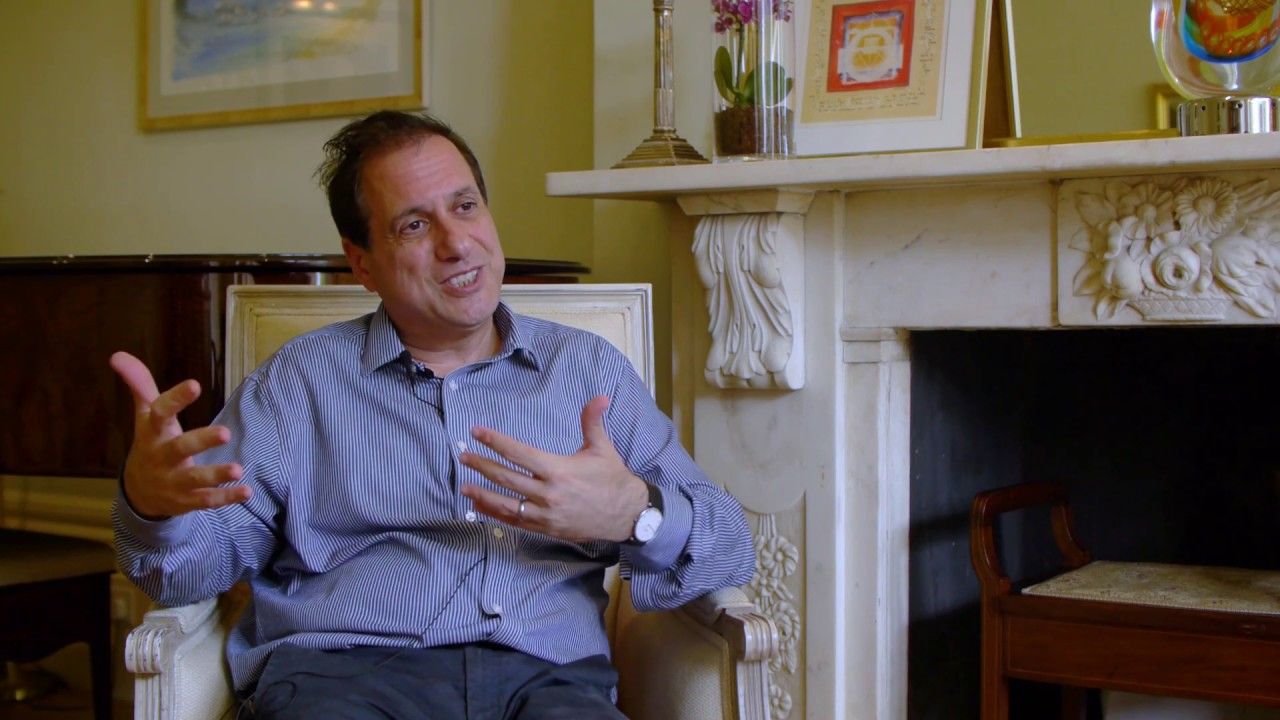
Armand D'Angour is a British classical scholar and classical musician, Professor of Classics at Oxford University, and Fellow and Tutor in Classics at Jesus College, Oxford. His research embraces a wide range of areas across ancient Greek culture and has resulted in publications that contribute to scholarship on ancient Greek music and metre, innovation in ancient Greece, and Latin and Greek lyric poetry. He has written poetry in ancient Greek and Latin and was commissioned to compose odes in ancient Greek for the 2004 and 2012 Olympic Games. His research into the sounds of ancient Greek music is considered ground-breaking in establishing connections between the earliest notated Greek music and the Western musical tradition. His book Socrates in Love presents new evidence for a radically revisionist historical thesis regarding the role of Aspasia of Miletus in the development of Socrates' thought.
Additional Resources:
Armand D’Anjour - Ancient Origins of the Olympics
This Book on Amazon:
Socrates in Love, by Armand D’Anjour
If You Liked This Book:
Lives of the Eminent Philosophers, by Diogenes Laertius
The Good Book, by A.C. Grayling
Meditations, by Marcus Aurelius