
Summary:
If you can tolerate enough boredom, you can achieve pretty much anything. Almost everything that’s worth achieving isn’t going to be the result of one single exciting event, but rather the sum total (or sometimes, the exponential total) of relatively unexciting actions, repeated over and over and over again until your personal summit is reached.
For example, you reach the Mr. Olympia stage by lifting the same heavy weights up and down, up and down, over and over again, day after day after day. You don’t even take them anywhere! It’s also chicken and rice, chicken and rice, chicken and rice, until one day, in the stillness of the night, you get bored of chicken of rice...and then you cook some more chicken and rice anyway because you know that that’s what it takes to be successful in the sport of bodybuilding.
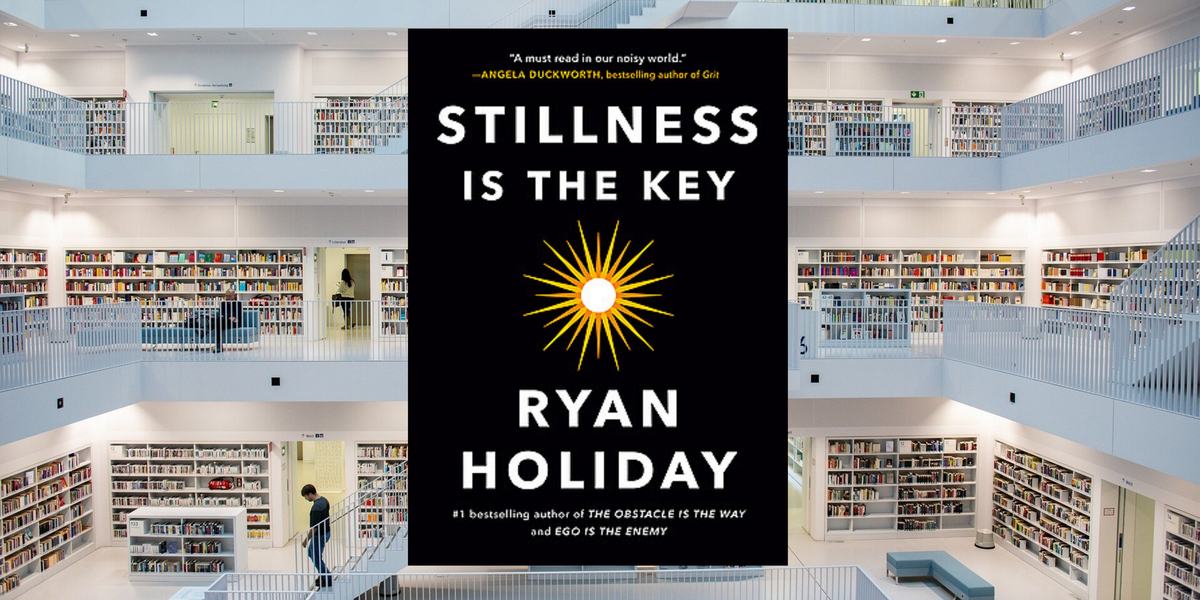
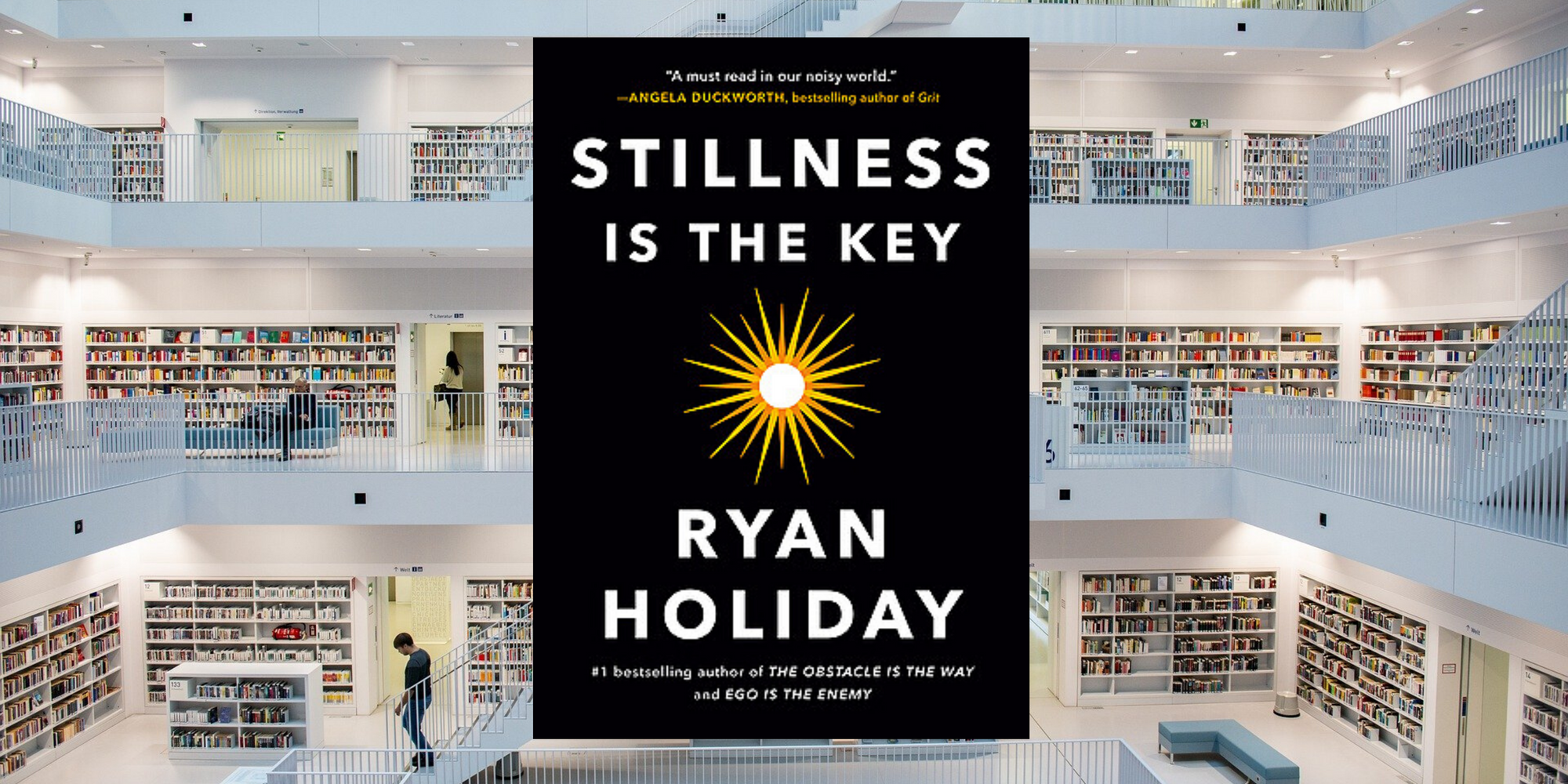
So the realms of stillness and achievement are inextricably linked, and Ryan Holiday makes that abundantly clear in Stillness is the Key. As an aside, it only seems like a trite title for a book until you know that Stillness is part of a trilogy: The Obstacles is the Way; Ego is the Enemy, and Stillness is the Key.
Moving on, I’d invite you to consider that boredom can actually be interesting! When you lift a weight and put it back down again, there is a universe of observable phenomena available to you, possible subjects of your attention when you put your mind inside the muscle, really feeling the contraction of every muscle and tendon you’re working, and experiencing directly the perfect, synchronous functioning of the human body doing exactly what it was designed to do.
Or take the example of writing a book. It’s lonely, it’s hard, you’re not sure whether anyone is going to read it or even notice it, but there you are by yourself anyway, slaving away. You put your mind inside the page, recognize the miracle of creativity, how one sentence emerges and not another, how a simple typo can lead you down a trail of thought that would never have even appeared otherwise. How did your prefrontal cortex do that?
Clearly, there’s a lot more to stillness than boredom, and indeed, whenever such a wide range of societies, belief systems, and successful individuals all converge on one idea as being of singular importance - in this case, stillness - then you know that it’s important and that you overlook its significance at your peril.
There’s so much untapped power in stillness, and this book is like a powder keg.
Through the stories of people like Confucius, Seneca, Marcus Aurelius, Thich Nhat Hanh, Nietzsche, Fred Rogers, Anne Frank, Winston Churchill - and on and on - Ryan Holiday’s book will show you that stillness isn’t just “sitting still,” or silence, but a superpower that will lead directly to self-mastery, discipline, focus, achievement, and, indirectly, to personal fulfillment.
You’ll learn how to become like a deep lake, capable of cultivating stillness and serenity, while the waves crash and break above you on the surface. While the rest of the world is like a tiny sailboat being thrashed about in a storm, you’ll be as solid as the ocean floor.
But you don’t need a bunch of famous names thrown at you to understand why stillness is important. Just look around you. It doesn’t matter when you’re reading this, people are rushing around trying to get ahead of themselves; they’re fearful, anxious, stressed, and helpless to stem the ceaseless flow of time.
While they’re rushing around trying frantically to achieve something beyond themselves, death is rushing to meet them as well. Unconsciously we all know this, but the wider culture makes it impossible to see. Unless we consciously make time for stillness.
Once we start to see, we start to notice a few things. For example, it becomes obvious that radical simplicity and radical focus - stillness - is the key to meaning and fulfillment. You have to say “no” to enough of the wrong things so that you can full-heartedly say “yes” to the right things. That’s basically the essence of Mark Manson’s mega-bestseller The Subtle Art of Not Giving a Fuck.
A related idea is Ramit Sethi’s exhortation to cut costs mercilessly on the things you don’t care about, and spend extravagantly on those things you do care about - what he calls the constituents of your Rich Life.
Stillness is the Key is all about identifying and building your own Rich Life, but this is emphatically unrelated to the mindless acquisition of “more.” More can never be enough.
All of this can seem rather obvious, and judging from some of the reactions I’ve seen to this book, it’s clear that some people find it all too easy to say, “Well, yeah obviously. I knew that already. I read something similar like nine years ago!” Read this book anyway. Saturate your mind with these timeless ideas from the most effective, peaceful, and powerful individuals who have ever lived. Let some of their stillness, tranquillity, and equanimity become yours.
Lastly, importantly, learn how to stop while the getting’s good. Stop to appreciate how rich you are already; rich in time, experiences, love, stillness, and personal power. Start to notice all the natural riches we already possess - billionaires, all of us - and perhaps learn to say, aloud, alongside Kurt Vonnegut: “If this isn’t nice, what is?”

Key Ideas:
#1: What's essential in life - to your happiness, to your success, to your overall well-being - isn't always what's directly in front of your eyes. You have to be intentional about what you choose to pursue in life and what you pay attention to, and the larger society isn't going to make it any easier for you.
There's always going to be someone telling you what you should want, what you should do, but Ryan Holiday contends - and I agree - that you need to go inward, in silence, in order to find out what it is that you really want out of life. Not only that but staying in stillness is what’s going to help you achieve it as well.
#2: Prioritize stillness, placing it before everything else. Only when you're centered in who you are and what you truly believe to be important can you engage meaningfully with the world.
#3: If you want to be able to come up with better ideas, or to achieve creative insights and breakthroughs, you're going to have to make room for them. You do this by cultivating stillness.
If your life is cluttered with stuff, your environment is cluttered with noise, and your mind is cluttered with thoughts, you’re not going to have room for what you’ve previously identified as most important.
#4: Slow is smooth, smooth is fast. Instead of rushing around, trying to finish everything quickly - thereby having to go back and fix all the mistakes you made as a result of your carelessness - commit to working slower and more intentionally from the beginning.
It’s much faster to engage mindfully with the task in front of you than it is to rush through, make a ton of stupid mistakes, and have to go back, look for them, and waste time fixing them. Do it right from the beginning.
#5: Total freedom would be chaos. You need at least some structure, some order in your life to help you cultivate a rounded personality. Hold the line between too much freedom and too much structure, leaving room for spontaneity and surprise, yet maintaining a base of support from which you can operate effectively. As Aristotle said, “discipline equals freedom.”
#6: “Always think about what you're really being asked to give. Because the answer is often 'a piece of your life', usually in exchange for something you don't even want."
#7: “You can’t escape - with your body - problems that exist in your mind and soul.”

Book Notes:
“The call to stillness comes quietly. The modern world does not.”
We can accomplish more, and yet need it less. Achievement is a fantastic motivator, but it can consume one’s entire life if it’s not kept within its proper bounds. It’s entirely possible to be “happy, but not satisfied,” and this attitude helps make achievement a fun game, rather than a crippling obsession.
If the leader doesn’t take the time to lay out the full picture with all its possible complications, who will?
“Who is so certain that they will get another moment that they can confidently skip over this one?”
Napoleon used to forbid his assistants to wake him up with good news, so highly did he prioritize his sleep.
The important stuff will still be important by the time you get to it.
“How different would the world look if people spent as much time listening to their conscience as they did to chattering broadcasts? If they could respond to the calls of their convictions as they answer the dings and rings of technology in their pockets?”
“Nope. Not interested.”
“What’s essential is invisible to the eye.”
If we want more big ideas and stunning insights, we have to make room for them.
Tolstoy: “I don’t understand how some people can live without communicating with the wisest people who ever lived on earth.”
“It was with Crates' help that Zeno overcame his crippling focus on what other people thought of him, in one case by dumping soup on Zeno and pointing out how little anyone cared or even noticed."
“What’s so shameful about working for a living?”
Work done for a reward should be much lower esteemed than work done simply because one enjoys it.
“Slow is smooth, smooth is fast.”
Epictetus: "Most of us would be seized with fear if our bodies went numb and would do everything possible to avoid it, yet we take no interest at all in the numbing of our souls."
Emerson: “The essence of greatness is the perception that virtue is enough.”
“Give more. Give what you didn’t get. Love more. Drop the old story.”
“Of the seven deadly sins, only envy is no fun at all.”
The person we’re so jealous of could very well be jealous of us. It’s notoriously difficult to know what’s actually going on in someone else’s life, behind the appearances. We could in fact have it much better than whoever it is that we’re jealous of, except it just doesn’t look like it. In any event, we’re causing ourselves unnecessary pain.
“We are immersed in the ocean of peace and plenty, and yet pitifully we extend our hands for water.”
We work so hard “for our families”, but we don’t realize that it’s because of our work that we never see them.
What kind of deity would want the world to live in fear?
“At the purest level, the only thing that matters to any father or mother - or any creator - is that their children find peace, find meaning, find purpose. They certainly did not put us on this planet so we could judge, control, or kill each other."
“Even if we are the products of evolution and randomness, does this not take us right back to the position of the Stoics? As subjects to the laws of gravity and physics, are we not already accepting a higher, inexplicable power? We have so little control of the world around us, so many inexplicable events created this world, that it works out almost exactly the same way as if there was a god."
“By ourselves, we are a fraction of what we can be.”
“No one is alone, in suffering or in joy.”
Churchill’s last words: “The journey has been enjoyable and well worth making - once!”
“Always think about what you're really being asked to give. Because the answer is often 'a piece of your life', usually in exchange for something you don't even want."
"You were born free—free of stuff, free of burden. But since the first time they measured your tiny body for clothes, people have been foisting stuff upon you. And you’ve been adding to links to the pile of chains yourself ever since.”
Complete freedom is a nightmare. You need structure.
Freedom is the opportunity for self-discipline.
Don’t use your money to purchase loneliness, headaches, or status anxiety.
“You can’t escape, with your body, problems that exist in your mind and soul.”
Eleanor Roosevelt: “You must do the thing you cannot do.”
“Do kindness where you can. Because you’ll have to find a way to live with yourself if you don’t.”

Action Steps:
So you've finished reading the book. What do you do now?
#1: Schedule stillness.
Stillness doesn’t just “happen.” You have to be intentional about it, and you have to make it happen. The rest of life has a tendency to crowd out all of our most important concerns unless we actively, aggressively take back our time (without being a jerk, of course), and assert the importance of our own priorities.
So take a look at your schedule, and seek out spaces to include stillness. You have to schedule stillness first, and then schedule everything else around it.
Whether that means quiet time for yourself to read a book or a solitary jog with headphones in (stillness doesn’t have to be silent), it’s up to you; but make sure that you carve out a special spot for whatever it is on the calendar and then rigidly adhere to the schedule you’ve created for yourself.
#2: Buy stillness.
Smart people spend money to buy time. What’s the point of making more money if it doesn’t make your life better? My advice is to make a list of everything you do each day and see whether there’s someone that you can pay to do it for you, thereby affording yourself more time for stillness.
Myself, I pay someone to cook all my food for me (and someone else makes my meal plans) so I don’t have to spend time cooking. Maybe cooking is meditative for you, and if so, don’t offload it onto someone else. Use your cooking time for the purposes of stillness.
But there are so many things that you hate to do, and that other people will do for you, as long as you pay them. Laundry pickup, booking flights, designing a training program, simple routine tasks of all descriptions.
Importantly, when you free up time for stillness by buying more time, don’t fill it up with extra, useless shit! Stick to your original intention and use your newfound time to make your life better.
#3: Simplify all your environments.
Even the things you’re not consciously aware of drain your attention. For example, having your phone in your field of vision distracts you, even though you might be consciously focused on reading a book. It still drags on your attention, albeit unconsciously. A cluttered environment will do this to you every single time.
I realize “environments” is a broad category, but I just mean things like your desk (clear it off, including organizing the contents of the drawers), your phone (delete all the apps you never use, take your social media apps off the home screen so they don’t keep calling to you), your house (don’t buy shit you don’t need, keep your counters clear, etc) and basically any place you spend a lot of time in.
Clear away all the unnecessary garbage. Simplify! Get rid of everything that doesn’t serve a readily identifiable purpose, or otherwise makes your life better.
#4: Examine the true costs of your commitments.
Whenever you say “yes” to something, you’re implicitly saying “no” to everything else that you could be doing with that time. When you agree to take on any extra commitments whatsoever, look at what it’s really costing you in time, energy, and wasted opportunities.
Sometimes saying “yes” is the right answer, but for many of us, it’s a default reaction borne of our desire to please, or our desire not to offend, etc. Pleasing people is great, not offending people is a worthy goal, but not at the expense of what’s most important to you in your one and only life.
#5: Drop at least one commitment.
You’re probably overcommitted already. A helpful exercise here is to list every single commitment that you have now, and see what you could drop today without feeling any guilt, or without feeling like you’re missing out on anything. Work, family, community, everything. List them all out, and see if anything jumps out at you. If there’s nothing completely superfluous that you can just drop immediately, weigh them against each other and see which ones are more important to you.
I always lean towards working less and spending more time with the people I love most in the entire universe, but your list is yours alone. I’m just asking you to drop one of those commitments. Not so you can spend more time in front of the TV, but so you can give more of your everything to those commitments you’ve just deemed more important.
#6: Focus on one aim above all others.
I think that most people can do almost anything they want in life, but nobody can do everything. Trying to be great at 5 different things is just going to result in you being average in all of them.
This sucks for me because I love reading, bodybuilding, volunteering, writing, and about a dozen other things. My TBR pile is insane, I would love to make it to that Mr. Olympia stage, I have about a dozen books in me to write...you get the idea. But you have to focus.
If your energy is dispersed all over the place, where is your power? I mean, you can be Great at something, but you have to be a fucking laser. So be a laser. Pick one major thing that you want to dedicate your life to, and make sure that nobody else works harder at it than you do. That’s how you use stillness to become great.

About the Author:
Ryan Holiday is the bestselling author of Trust Me, I’m Lying; The Obstacle Is the Way; Ego Is the Enemy; Conspiracy and other books about marketing, culture, and the human condition. His work has been translated into over 30 languages and has appeared everywhere from the New York Times to Fast Company. His company, Brass Check, has advised companies such as Google, TASER, and Complex, as well as multiplatinum musicians and some of the biggest authors in the world. He lives in Austin, Texas.
Additional Resources:
This Book on Amazon:
Stillness is the Key, by Ryan Holiday
If You Liked This Book:
The Obstacle is the Way, by Ryan Holiday
Ego is the Enemy, by Ryan Holiday
The Daily Stoic, by Ryan Holiday