
Summary:
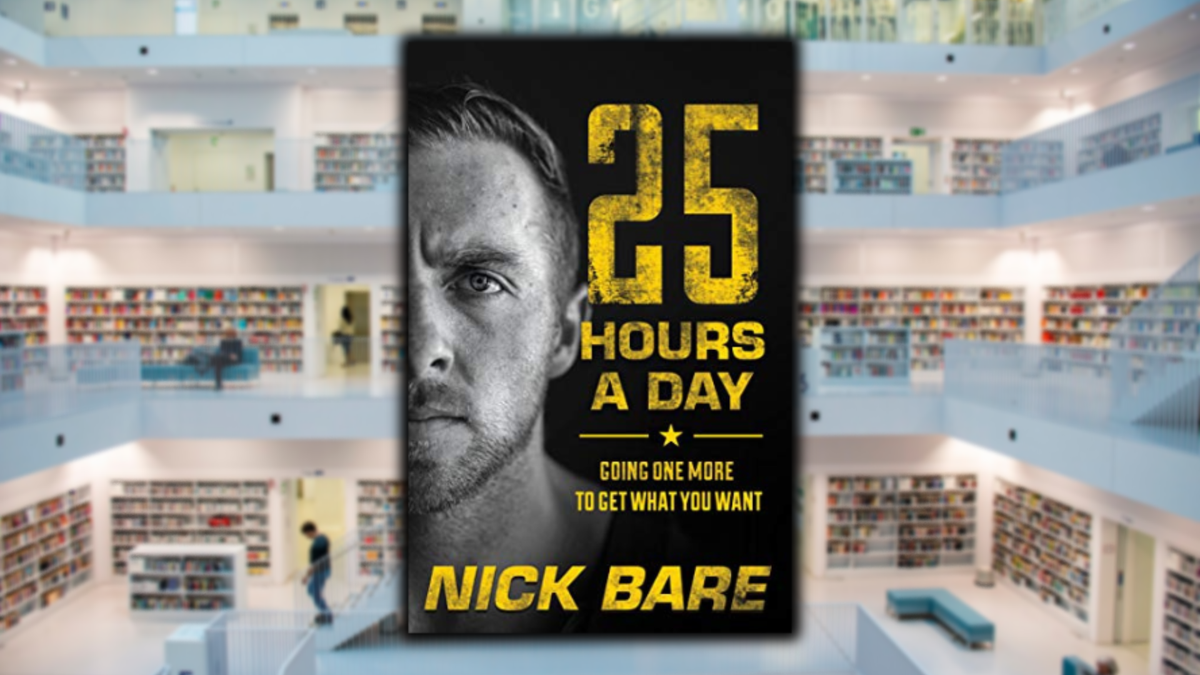
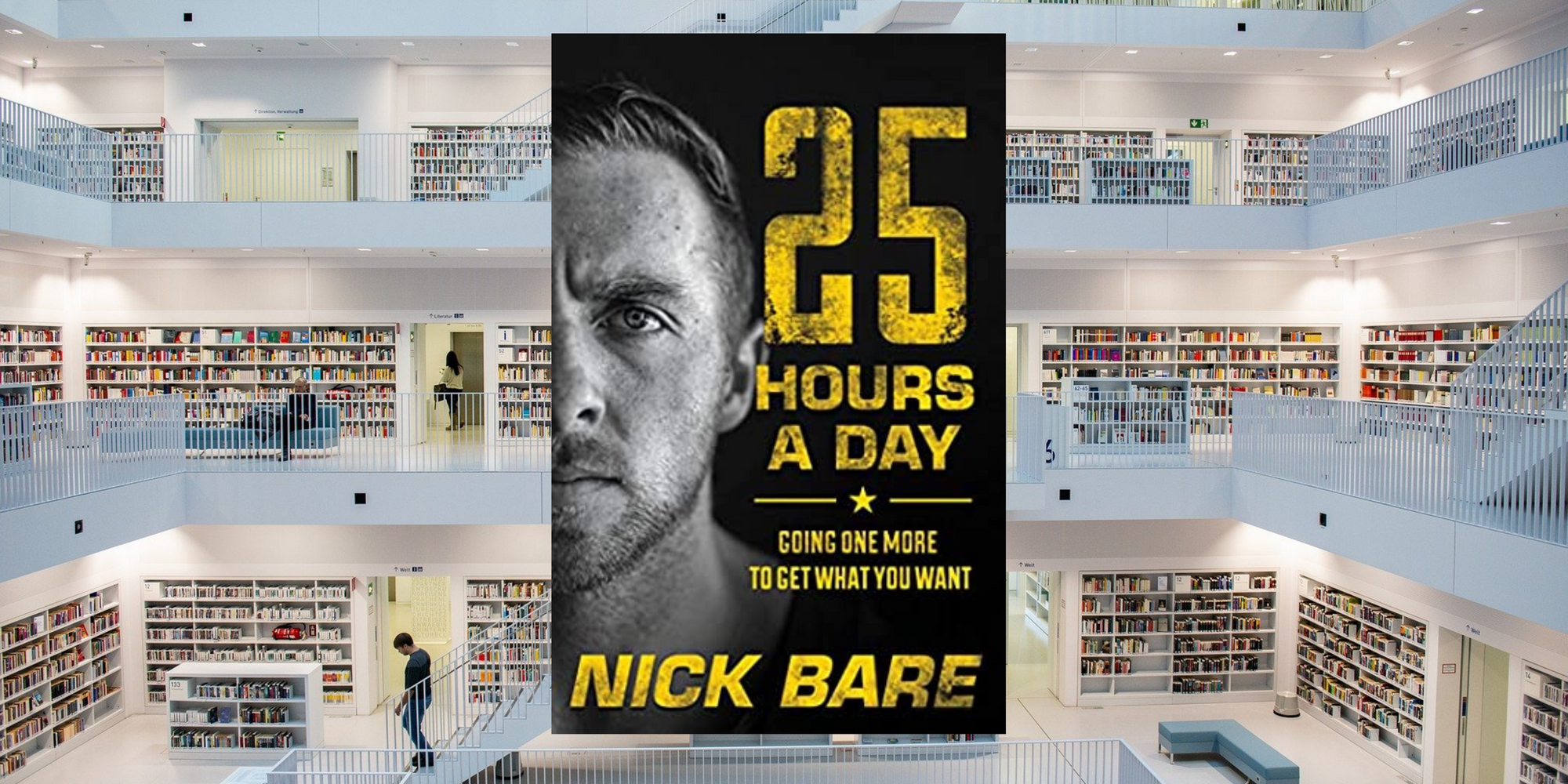
I had never heard of Nick Bare, never heard of Bare Performance Nutrition (his company, perhaps obviously), never followed him on social. His book started popping up everywhere on Bookstagram though, so I took the $10 leap and finished it in just a few hours. The rest, as they say, is history.
Alright, so not quite. I don’t want to oversell this book - it’s hardly The Iliad, or Infinite Jest - but it was a very good use of my time, and maybe it’ll be the same for you. See, many people, including myself, have a love-hate relationship with time. We’re always wishing that time would go faster, or that we could slow it down and have more time.
25 Hours a Day is about slowing time down, living as though we have an extra hour, and going “all in” on our vision. It’s about doing whatever it takes to reach our goals, and it’s about being grateful for the limited time we are given - the very limited time we are given.
Even if you’re thinking something like, “Yeah, I knew that already,” learn it again. Place it front and center in your mind by spending time with books like this. You need to saturate your psyche with messages like this so that it becomes your default operating system. Keep reminding yourself again and again and again that you have zero time to waste, and that if you don’t spend it wisely now, it will be gone forever.
The main messages in this book, such as “Winning the day is never an accident,” “Don’t let anyone or anything take the day away from you,” and “Your mind will take you places your body won’t,” are easy to read once or twice and then forget about them, but you have to apply this stuff, day after day after uncomfortable day, until it becomes you. Until your mind could stop a freakin’ bullet. That’s what living on 25 Hours a Day is all about.
Nick Bare himself started his company while he was serving overseas with the US Army and it’s now a seven-figure supplement company, thanks to his sickening work ethic and unrelenting drive to succeed No Matter What. He also once completed a 150-mile march(!) to raise money for hurricane victims in his home country, and he continues to inspire hundreds of thousands of people on Instagram to go all in, to live as though they have an extra hour, and to squeeze every drop out of the wet towel that is every day of our lives.
This is a short book - you can probably read it in just a few hours. And like I said, it’s not going to win any National Book Awards or anything, but it kicks the ever-living shit out of a Netflix binge-session any day of the week.

Key Ideas:
#1: Time is constantly slipping away from us, and we have to aggressively protect the time that we have. Politely, courteously, of course - but aggressively. Proactively.
Our time is something that we will never, ever be able to recoup once it's spent or lost, so we need to get serious about where exactly we allocate this infinitely precious resource.
#2: The answer to the question of how we get it all done is not to move faster, but to slow down. In fact, 'How do I get it all done?' is probably the wrong question.
Slowing down will help you realize which commitments are worth your limited time in the first place, and it will help to clarify your thinking while you're making these choices.
#3: Your mind will take you places your body simply refuses to go. There are going to be times when you have to realize that your body needs some help, and you're going to have to let your mind take over. See, your body can never be stronger than your mind, and just because you think you can't go on doesn't mean that you actually can't.
#4: There is a difference between being hurt, and being injured. An injury will take you out of the game completely, whereas being hurt is simply a temporary condition of the body that your mind doesn't have to pay attention to for the moment.
I mean, if it's serious, by all means step off to the sidelines, or leave work early, but being hurt doesn't mean you can't finish.
There's a mental component here as well, like when Marcus Aurelius said that if you don't consent to feeling harmed, you won't feel harmed. And if you don't feel harmed, then you haven't been.
#5: Society doesn't expect you to succeed. Most businesses fail, most college athletes never get drafted, and most bands don't fill stadiums. Perhaps even more insidiously, society expects you to become a quitter if things don't immediately go your way.
Most people give up, and unless you show us that you're not like most people, we're going to assume that you are. The broader society relies on competition to allow the strongest competitors to emerge, but we haven't seen much from you yet. What have you got?
#6: When everything is figure-out-able, and most questions can be answered by a Google search, you have no excuse for not knowing how to do something. Odds are, there is someone out there who is able to teach you what you need to learn, or who is able to do it for you if you pay them.
If you're an artist and you want to start selling your pieces online, don't let the logistics of e-commerce stop you; there is someone out there who can help you figure it out. It might be free, or you might have to pay for their advice or assistance, but don't sit back and do nothing, assuming that there's no answer to your problem.
#7: Success has causes, and if you want the "effect" of success, you have to repeat the causes, again and again and again. Moreover, lasting success is never an accident. Sure, people get lucky sometimes, but for the most part, it's easy come, easy go.
You need a plan for success - whatever success looks like to you - and you need to work your plan, consistently over time. Otherwise, any success you're lucky to achieve may turn out to be ephemeral.

Book Notes:
Don’t let anyone or anything take your day away from you.
“The goal isn’t to rush, but to slow things down as much as possible, even time itself.”
“Be ready for bad advice from people you love and respect.”
“The mind will take you where your body won’t.”
“Life is nothing if not a workout on a grand scale.”
There is a clear difference between being hurt and being injured.
You need to consciously be aware that “yes, this does in fact suck,” and then happily go on, without complaining to anyone, especially not yourself.
Sometimes, you have to realize that your body is not going to be able to push through, at which point you have to let your mind take over.
“Society expects you to be a quitter if things don’t instantaneously go your way.”
“The more I learned, the more valuable I became to my own company.”
There are enormous resources available online to anyone who wants to look.
Today, there’s no excuse for not knowing how to do something. There's someone out there who can either teach you to do it yourself, or whom you can pay to have it done for you.
“I don’t want to be comfortable. I want to be hungry. I want to be tired. And then I want to do it all again tomorrow.”
“Winning the day is never an accident.”
“The day is already slipping away from me and I’ve only been awake for ten minutes.”
Remove your expectations of the limits of your mental and physical capabilities.
Most people’s expectations of themselves are far lower than their actual potential.

Action Steps:
So you've finished reading the book. What do you do now?
#1: Slow down time.
This is both easier and harder than it sounds. The first step is to realize how insanely valuable your time is, and then commit to never wasting another second of your one and only life. Next, fully commit to this moment, no matter how painful or boring. Viewed mindfully, boredom can be interesting! I’m serious. Practice putting your mind inside this moment, and increasing the depth of your life, not just its length or speed.
#2: Edit your commitments.
Everything that you do takes time, and once that time is spent, you’ll never get it back. So where you commit to spending your time makes such a massive difference. If you’re just kinda-sorta on the fence about whether you want to do something, dump it. It’s either a “Hell, yes!” or it’s a “No.” This sounds harsh, but say there’s some casual friend that’s just “kind of okay” to hang out with, dump them. A group you’re a part of whose meetings you dread? Stop going. List every place you currently spend your time and then drop those that you aren’t excited about. It’s all in or all the fuck out.
#3: Always go one more.
Just because you think you can’t go on, doesn’t mean that you actually can’t. Whether it’s in the gym, or at work, or with your kids, go one more. Do one more rep, work one more hour, play catch with them one more time. When you want to quit, that’s when you need to keep going. You’re building your mental muscles, fortifying your mind.
#4: Expect it to be hard, but expect to win.
It’s not over until you win! Everyone expects you to give up when it gets hard. Maybe not everyone, but certainly most people. Because that’s what they would do in your place. Most of society couldn’t be bothered to try again once they fail, and that’s why they’re never going to make it. But you’re different. You know it’s going to be hard, you know it’s going to take longer than you thought at first, you know that it’s going to be more of a struggle than you signed up for, but you expect to win eventually, so you don’t care. Most people in your place would quit, but if you keep going, you can make it to a place they’ll never get to.

About the Author:
Nick Bare is the founder and president of Bare Performance Nutrition, a seven-figure supplement company. Nick has a Bachelor of Science in Nutrition, served four years active duty as an infantry officer in the United States Army, and completed US Army Ranger school. He completed a 150-mile ruck march to not only raise money for Hurricane Harvey victims but also test his mental and physical strength. He lives in Austin, Texas.
Additional Resources:
This Book on Amazon:
If You Liked This Book:
Can’t Hurt Me, by David Goggins