
Summary:
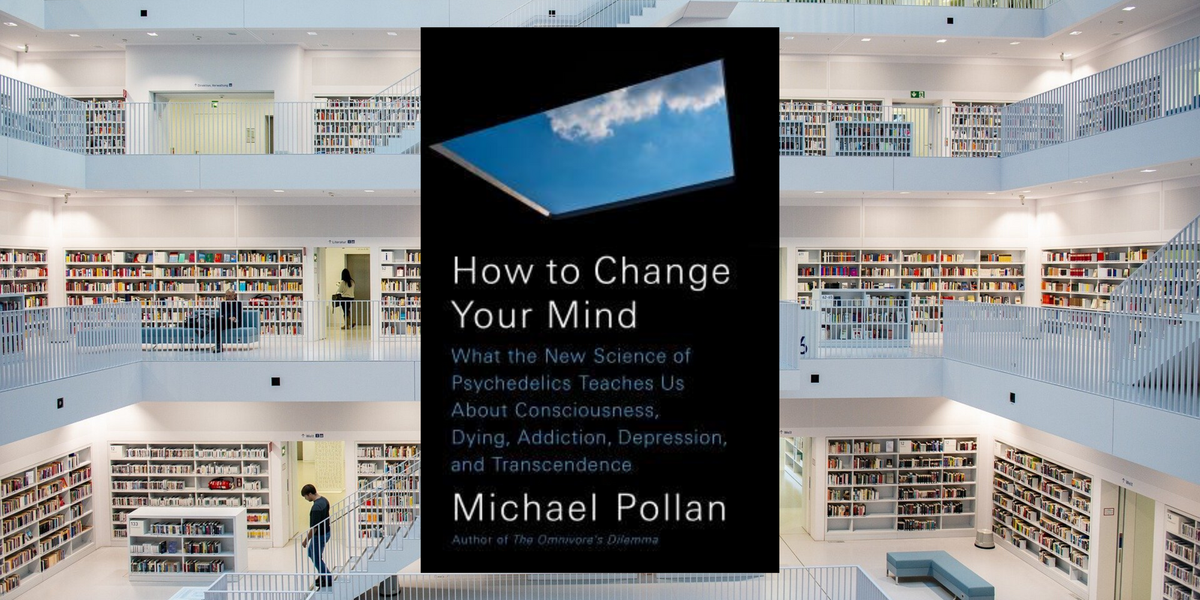
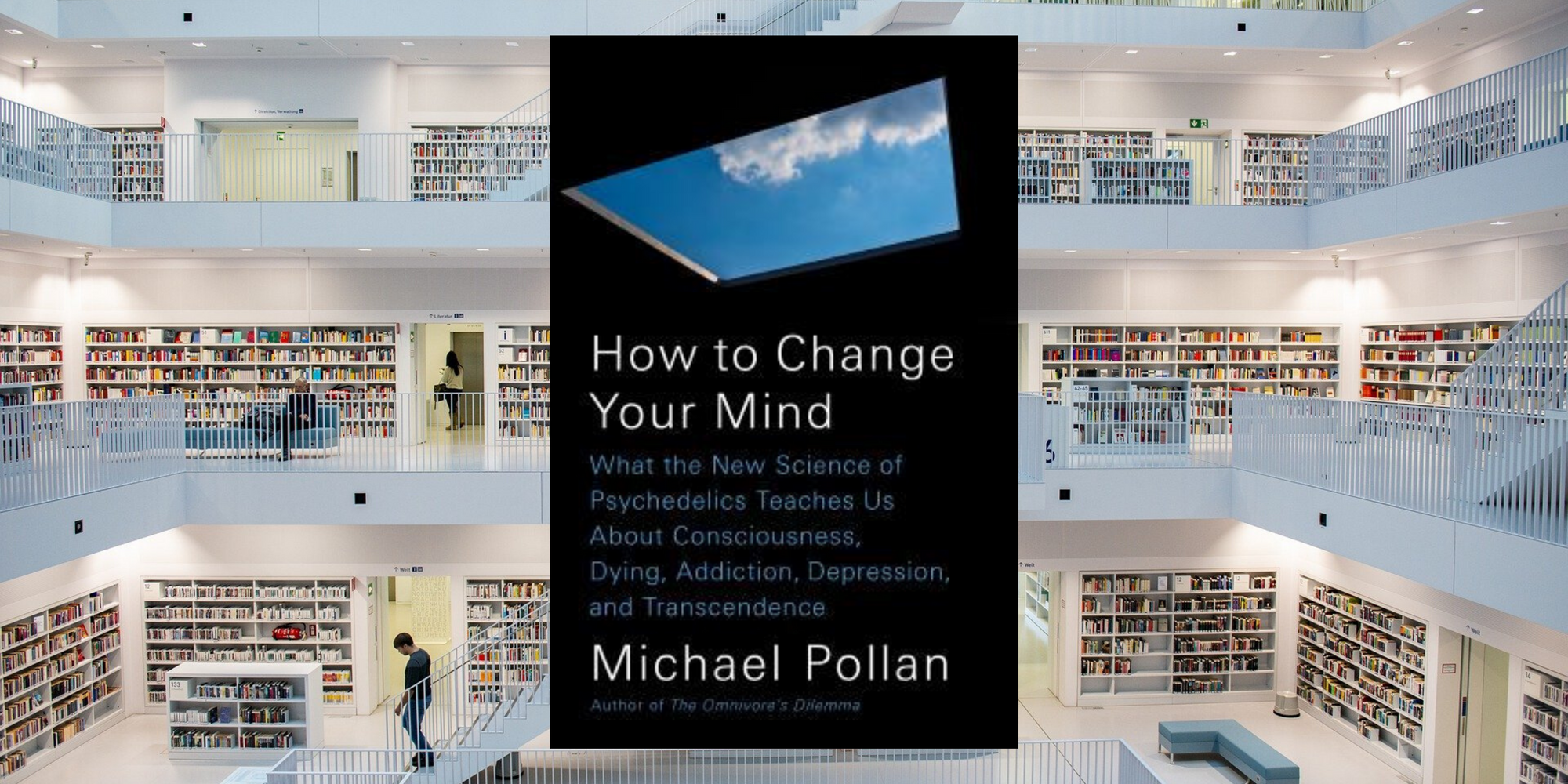
This is perhaps one of the most important books to come along in recent years, and we’re going to be feeling the aftershocks of the movement toward the application of psychedelic drug therapies and the incorporation of plant medicine into our approaches concerning depression, anxiety, and trauma, among other afflictions, for a long time to come.
How to Change Your Mind grew out of a New Yorker article that Pollan wrote back in 2015, where he interviewed a number of cancer patients after they had undergone a single guided session on psilocybin, a hallucinogen derived from mushrooms. The people Pollan interviewed had such powerful mystical experiences that their fear of death either faded or vanished altogether. This would be groundbreaking stuff - and it is - except for the fact that we already knew this!
The story of psychedelics is often a story of repression and fear, but that’s far from being the complete story. Human beings have known for thousands of years that substances such as LSD, psilocybin, Ayahuasca (which I’ve taken myself), and DMT have the potential to relieve a wide, wide range of mental suffering, including anxiety, depression, and addiction. Yet we’ve also known their potential for casual and catastrophic misuse, and this, sadly, is what often makes headlines.
That being said, we’re now seeing exciting new research into the practical applications of all these tools for understanding the mind, for battling our mental afflictions, and for tapping into some of our highest powers. The mature children of the first experimenters with (and abusers of) these compounds are now rigorous scientists, and How to Change Your Mind is the story of how we got here, and where these new researchers are taking us.
I tore through this book, and I took pages and pages of excellent notes, which you’ll see below. This is really exciting, hopeful stuff, and the book takes on a personal dimension when Pollan decides to apply these tools and treatments to his own mind, in his effort to learn what these compounds may have to teach.
This is Michael Pollan’s brain on drugs, and, while there’s still so much undiscovered territory here that we’ve only begun to explore, like he says, “This I can say with certainty: the mind is vaster, and the world ever so much more alive, than I knew when I began.”

Key Ideas:
#1: “Who controls your cortex? Who decides on the range and limits of your awareness? If you want to research your own nervous system, expand your consciousness, who is to decide that you can’t and why?”
#2: So much of human suffering stems from having this “self” that has to be psychologically defended at all costs. We’re not even sure of what our self is, but we’re always trying to hold onto it, expand it - and we attack others when we feel that this self is threatened. And yet, we are linked together on this planet floating in the middle of nowhere; you’d think we could find a way to get along. Maybe there is a way.
#3: People have always been trying to alter their consciousness. Most of us do it every day with coffee. Still others, for thousands of years, have turned to psychoactive compounds like DMT to feel more connected, to gain self-knowledge, and to gain insight into the nature of reality. Yet, these practices have always been a threat to existing hierarchical structures, from the church to the state and everything in between.
#4: “The kids who take LSD aren’t going to fight your wars. They’re not going to join your corporations.”
#5: “How can this ever have been illegal? It’s as if we made entering Gothic cathedrals illegal, or museums, or sunsets!”
#6: Neurochemistry may be the language in which nature communicates with us. There’s an interesting line of thought with respect to the nature of this communication.
Materialists - and all those generally who believe that science can explain everything - will say that mystical experiences are just the result of neurochemical firings in the brain. But, of course they are! How else would Nature / God / What Have You communicate with us, except via the medium we’re equipped to process?
This, however, doesn’t invalidate what the materialists say, either. It’s tough to see either side claiming “victory” on this one.
#7: It seems astonishing though, that it’s possible for humans to ingest something found in nature, and through various processes inside our brains, we create meaning out of these plants, mushrooms, etc. How cool!
#8: It seems to be a result of psychedelic experiences that we come to see the literal and inescapable truth of things that were just empty cliches and platitudes to us before. We say things like “Yea, love is everything.” But then we hear the response from our deepest levels of consciousness: “No! You don’t GET it! Love is EVERYTHING.”
#9: During guided psychedelic experiences, the advice you are likely to receive from an experienced, knowledgeable, and well-meaning therapist is to “Go towards what you fear, and go towards what is most painful.” And this is excellent advice. But it applies in so many other different areas as well! In the gym, most people stop when it starts to hurt. But to actually grow bigger and stronger muscles, you have to go through what’s called the “pain period.” And remember in Dante’s Divine Comedy, the exit out of Hell was located at the very center. So to get out, he had to go through. Everything worth striving for in life is achieved by voluntarily assuming responsibility, giving up our desire for comfort, and doing the hard things instead of the easy things.
#10: We have many ideas about what constitutes insanity, and of course it can take many forms. But comparatively, we know little about what sanity actually is, what it looks like, and how to achieve it.
Sanity has to be something more than simply fitting into an insane society, and it has to be about more than just being happy and chilled out all the time. But what is it? How can we tell whether or not we’ve found it?
#11: Everything in the universe is of equal importance, including yourself.

Book Notes:
What’s left to do the doubting if not your “I”?
“And the rest of my life is footnotes!”
Nixon was against psychedelic research because drugs like LSD were reducing the willingness of young people in America to fight the Vietnam War.
There is so much authority that comes out of the primary mystical experience that it can be threatening to existing hierarchical structures.
“How can this ever have been illegal? It’s as if we made entering Gothic cathedrals illegal, or museums, or sunsets!”
“Turn off your mind, relax and float downstream.”
Whenever you encounter anything scary, go towards it.
“I’ve heard that said my whole life, but I never realized its full meaning until now.”
The mystical journey seems to offer a graduate education in the obvious.
Somehow, for some reason, these remarkable mushrooms produce, in addition to spores, meanings in human minds.
The Stoned Ape Theory: Language was made possible by the synesthesia which attached otherwise meaningless sounds to concepts.
From the mushrooms’ point of view, being so valuable and important to human beings means that their number will increase far and wide.
Neurochemistry may be the language in which nature communicates with us.
The world is literally teeming with subjectivities, and it is only the human ego, with its imagined monopoly on subjectivity that prevents us from recognizing this.
Humphry Osmond, before heading to LA to administer mescaline to Aldous Huxley: “I do not relish the possibility, however remote, of finding a small but discreditable niche in literary history as the man who drove Aldous Huxley mad.”
Some people thought that they were going mad, but instead, they were becoming sane.
It is one of the many paradoxes of psychedelics that these drugs can sponsor an ego-dissolving experience that in some people quickly leads to massive ego inflation.
“Psychedelic drugs cause panic and temporary insanity in people who have not taken them.”
“Who controls your cortex? Who decides on the range and limits of your awareness? If you want to research your own nervous system, expand your consciousness, who is to decide that you can’t and why?”
“The kids who take LSD aren’t going to fight your wars. They’re not going to join your corporations.”
Society will indulge any effort to help the wayward individual conform to its norms.
James Fadiman, after receiving the letter from the FDA to halt his research: “I think we all need to agree that we got this letter tomorrow.”
“I generally prefer to leave my psychic depths undisturbed, assuming they exist. There’s quite enough to deal with up here on the surface.”
"All that stuff down there in the psychic basement has been stowed there for a reason, and unless you're looking for something specific to help solve a problem, why would anyone willingly go down those steps and switch on that light?"
"At such times, I begin seriously to entertain the possibility that somewhere deep beneath the equable presence I present, there exists a shadow me made up of forces roiling, anarchic, and potentially mad. Just how thin is the skin of my sanity? There are times when I wonder. Perhaps we all do. But did I really want to find out? R.D. Laing once said there are three things human beings are afraid of: death, other people, and their own minds. Put me down as two for three. But there are moments when curiosity gets the better of fear. I guess for me such a moment had arrived."
You need a strong ego in order to let go of it and then come back to it.
"The psychedelic underground was populated with a great many such vivid characters, I soon discovered, but not necessarily the kinds of characters to whom I felt I could entrust my mind - or for that matter any part of me. Immediately after my session with Andrei, I had a meeting with a second prospective guide, a brilliant psychologist in his eighties who had been a student of Timothy Leary's at Harvard. His knowledge of psychedelics was deep; his credentials impressive; he had been highly recommended by people I respected.
Yet when over lunch at a Tibetan restaurant near his office he removed his bolo tie and suspended it over the menu, I began to lose confidence that this was my man. He explained that he relied on energies released by the pendulum swing of the silver clasp to choose the entree most likely to agree with his temperamental digestion. I forget what his tie ordered for lunch, but even before he began dilating on the evidence that 9/11 was an inside job, I knew my search for a guide was not over quite yet."
“What are you doing in my mind? What do you have to teach me?”
"During a psychedelic experience, platitudes that wouldn't seem out of place on a Hallmark card glow with the force of revealed truth. 'Love is everything'. Okay, but what else did you learn? 'No - you must not have heard me: it's EVERYTHING!' Is a platitude so deeply felt still just a platitude? No, I decided. They are the loveliest and most deeply rooted of truths, hidden in plain sight."
"Psychedelics can make even the most cynical of us into fervent evangelists of the obvious."
"Nothing in my experience led me to believe this novel form of consciousness originated outside me; it seems just as plausible, and surely more parsimonious, to assume it was a product of my brain, just like the ego it supplanted. Yet this by itself strikes me as a remarkable gift: that we can let go of so much - the desires, fears, and defenses of a lifetime! - without suffering complete annihilation."
There is an infinite amount of time to be dead.
"Whatever this was, it was not a hallucination. A hallucination implies a reality and a point of reference and an entity to have it. None of those things remained."
"Everybody gives thanks for "being alive," but who stops to give thanks for the bare-bones gerund that comes before "alive"? I had just come from a place where being was no more and now vowed never to forget what a gift (and mystery) it is, that there is something rather than nothing."
"Death was an almost impossibility; the loss of personality (if so it were) seeming no extinction, but the only true life."
"That feeling of transparency we associate with ordinary consciousness may owe more to familiarity and habit than it does to verisimilitude. As a psychonaut acquaintance put it to me, 'If it were possible to temporarily experience another person's mental state, my guess is that it would feel more like a psychedelic state than a 'normal' state, because of its massive disparity with whatever mental state is habitual with you."
There is no single reality out there waiting to be faithfully and comprehensively transcribed. Our senses have evolved for a much narrower purpose and take in only what serves our needs as animals of a particular kind.
The child approaches reality with the astonishment of an adult on psychedelics.
"If you want to understand what an expanded consciousness looks like, all you have to do is have tea with a four-year-old."
"The short summary is, babies and children are basically tripping all the time."
The advice commonly given before a psychedelic journey is to go wherever it takes you, and to open any doors that you come to, etc. It’s the same with having an interesting life, especially the part about moving toward anything that scares you instead of running from it.
Dig in your heels and ask, “What are you doing in my mind?”
Ask, “What can I learn from you?”
“The cancer is something completely out of my control, but the fear, I realized, is not.”
Nabokov: “The miracle of consciousness, that sudden window swinging open on a sunlit landscape amidst the night of non-being.”
“Smoking became irrelevant, so I stopped.”
Everything in the universe is of equal importance, including yourself.
“The universe was so great and there were so many things you could do and see in it that killing yourself seemed like a dumb idea. It put smoking in a whole new context.”
“If you don’t stop to look, you’ll never see it.”
"Psychedelics occasion a sufficiently dramatic experience to “dope-slap” people out of their story. It’s literally a reboot of the system - a biological CTL+ALT+DELETE."
So much of human suffering stems from having this self that has to be psychologically defended at all costs.
We are linked together on this planet floating in the middle of nowhere.
“Wherever you look, you see that the level of interconnectedness is truly amazing, and yet we insist on thinking of ourselves as individual agents.”
Albert Einstein: "The modern human's sense of separateness is a kind of optical delusion of his consciousness. This delusion is a kind of prison for us, restricting us to our personal desires and to affection for a few persons nearest to us. Our task must be to free ourselves from this prison by widening our circle of compassion to embrace all living creatures and the whole of nature in its beauty."
“I think about that other life I might have had all the time.”
Addiction is, among other things, a radical form of selfishness.
If you ask people to draw themselves before and after viewing awe-inspiring images of nature, the after-awe self-portraits will take up considerably less space on the page.
“Awe in a pill.”
Whether awe is a cause or an effect of the mental changes psychedelics sponsor isn’t entirely clear.
“It was like a holiday away from the prison of my brain.”
“It was like the light switch being turned on in a dark house.”
“I would look at people on the street and think, ‘How interesting we are’ - I felt connected to them all.”
It’s okay to have negative thoughts. That’s life.
The antonym of “spiritual” may be “egotistical” instead of “material.”
I just thought of this myself: Timothy Leary is kind of like the Voldemort of the psychedelic community! He's sort of this dark figure in the background that no one really wants to talk about but all realize exists.
Most people in America today die in an ICU, even though most of them say that they want to die at home, surrounded by their loved ones.
“We’re all dealing with death. This is far too valuable to limit to sick people.”
“For me now, the hidden vastness of the mind is a felt reality.”
“I spent an unreasonable amount of time reflecting on how improbable and fortunate it is to be living here and now at the frontier of two eternities of nonexistence."
If you define intelligence as the ability to solve the novel problems reality throws at the living, then plants surely have it.
Subatomic particles can exist simultaneously in multiple locations, are pure possibility, until they are measured - that is, perceived by a mind.
“But this I can say with certainty: the mind is vaster, and the world ever so much more alive, than I knew when I began.”
“Although I can’t thank them publicly, I owe a tremendous debt to the many underground guides who gave so freely of their time, their experience, and their wisdom. It is a shame that at least for now their healing practice depends on acts of civil disobedience.”
Action Steps:
So you've finished reading the book. What do you do now?
#1: Attend Apotheosis.
HighExistence runs our own meditation and plant medicine retreats all over the world, and they’re called Apotheosis. The first time I went was actually the first time we had Apotheosis, and it was two of the most transformative weeks of my entire life. There was yoga, hiking in the rainforest, dancing, workshops, and tons more, but it was also my first introduction to Ayahuasca. I can’t say enough good things about Apotheosis, and you can find out more for yourself here.
#2: Do your own research.
Don’t believe something just because Michael Pollan tells you, or I tell you, or whatever. I and a multitude of my friends and acquaintances can attest to the benefits of plant medicine and things like LSD, DMT, etc but you have to do your own research, and come to your own decision regarding whether or not it’s something you’d like to explore further. There are people who say it’s the answer to everything (it’s not), and there are people who say it’s the most reckless and irresponsible thing you could ever do to your own mind (it’s not). The point is that this area of research is littered with crazies - on both sides - and you have to do your own research. I’ll leave it to you.
#3: List the ways you currently alter your consciousness.
For me, it’s coffee and meditation, among other things. Music I guess too. Come to think of it, almost everything human beings do is an attempt to feel some other way than they do now. If you can start to be aware of that tendency within yourself, you can make a lot of developmental progress on your own. After you have your list, ask yourself, “Why am I trying to alter my consciousness in these situations? What don’t I want to feel? What do I want to feel?”
#4: Think back to the latest, strongest insight that you’ve had into something of special importance.
We have all these flashes of brilliant insight - usually at 3am - and then we forget about them hours later. Why do we do that? Why isn’t that Perfect Answer something that we remember for all time and always? Think about the last time you had something extremely important come to you, and examine it now, in the light of day. And in light of everything you’ve learned and experienced since. Was it merely an episode of drunken exuberance? Something more?
#5: Move towards what you fear.
The only way out is through. Every time something rises up within you or outside of you that you don’t want to face, you can be pretty sure that that’s exactly what you need to face. Everything you want in life is on the other side of discomfort, and pain, and sacrifice. It’s in the answer to the supremely difficult question you’ve avoided asking yourself all this time. Just like you can only build bigger muscles if you can make it through the ‘pain period,’ the only way you’re going to achieve maximal personal growth is if you go towards what you fear, and towards what you once believed you could never confront.
About the Author:
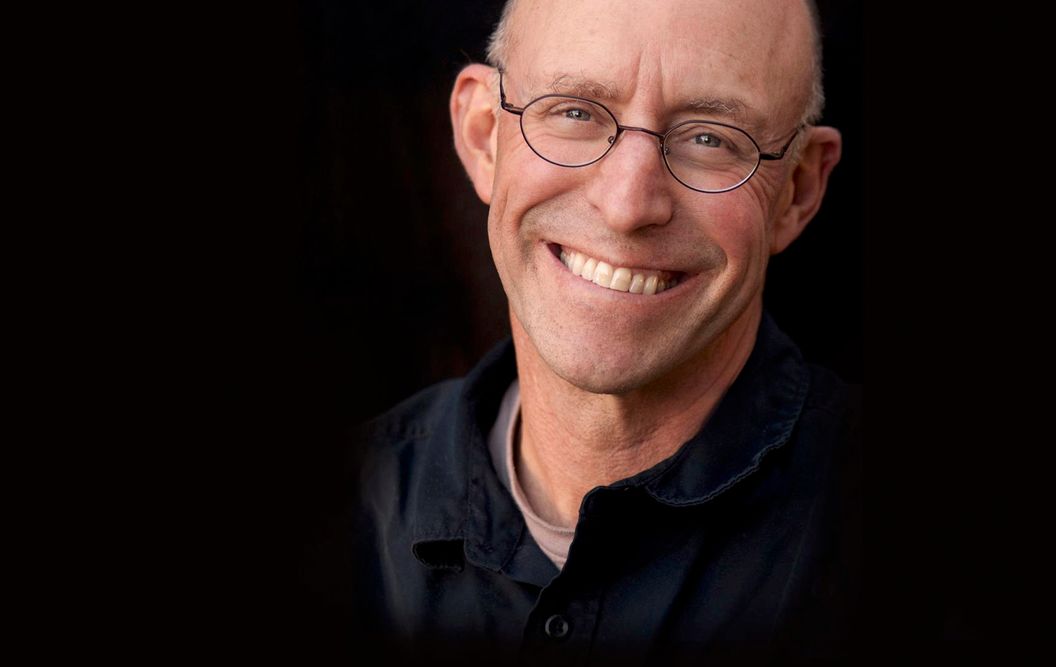
Michael Kevin Pollan is an American author, journalist, activist, and professor of journalism at the UC Berkeley Graduate School of Journalism. Pollan is best known for his books that explore the socio-cultural impacts of food, such as The Botany of Desire and The Omnivore's Dilemma.
Additional Resources:
This Book on Amazon:
How to Change Your Mind, by Michael Pollan
If You Liked This Book:
The Hero with a Thousand Faces, by Joseph Campbell
The Denial of Death, by Ernest Becker