
Summary:
If you ever stumbled on someone treating another person the way you sometimes treat yourself, you’d probably call the police. And the fire department. Speaking for myself here, I’d be embarrassed if anyone were to witness me beating up on someone else in the same way that I sometimes go after myself. If you’re the same way, you may want to put this book higher up on your reading list.
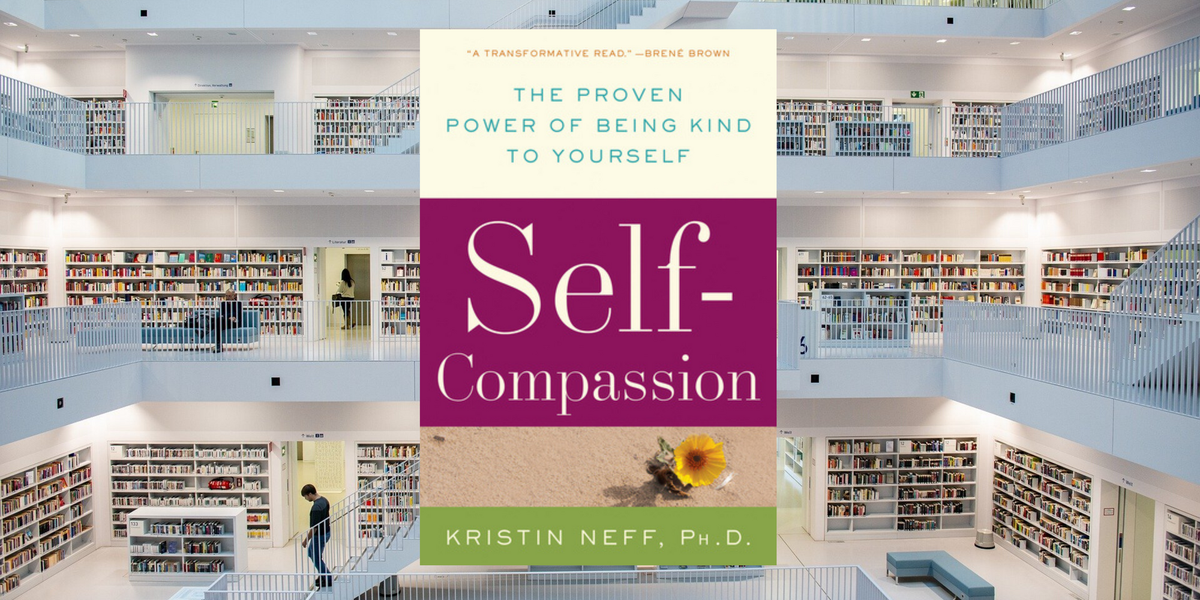
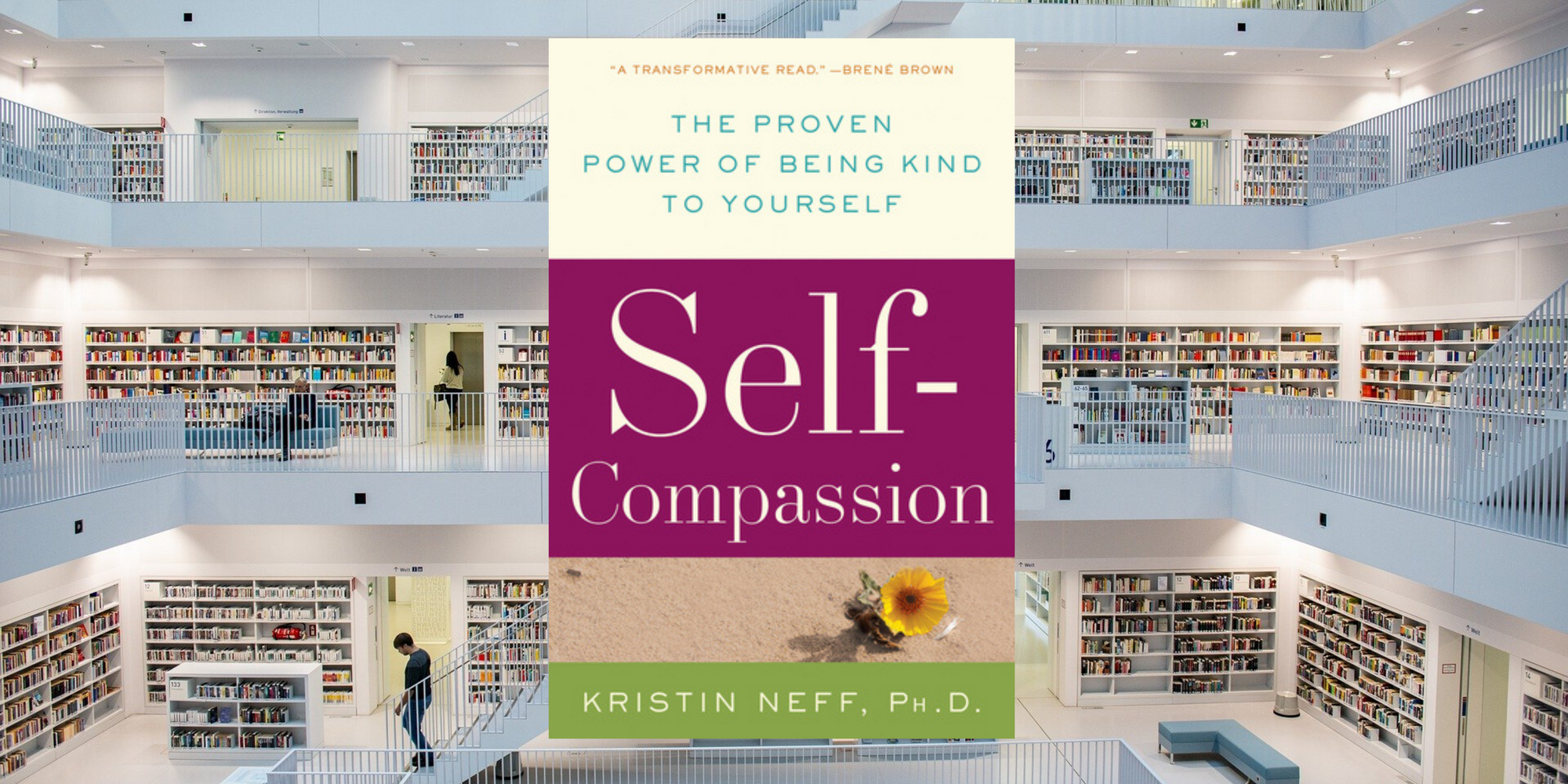
Kristin Neff is an expert on compassion (imagine being able to introduce yourself like that at dinner parties) and she literally invented the operational definition of self-compassion, legitimizing the study of its effects and implications within the psychological research community. With all that, though, the book is never stuffy or hard to follow, and you’ll instantly recognize that she’s on your side throughout all this.
Neff wants to see us treating ourselves in the same way we would a really good friend, someone we cared a lot about and wanted to see get better, an attitude which pops up again as Rule #2 in Dr. Jordan Peterson’s 12 Rules for Life, another excellent book in its own right.
See, the only person who’s able to be there for you 24/7/365 is you, and so it’s essential that you “get on your own side,” as it were. You have to treat yourself like someone you were responsible for helping, and you need to be strong for yourself, so that you can be strong for others. Neff explains that we’re more intimately connected with other people than we tend to imagine, but we can only be of service to others if we get ourselves right first.
Luckily for all of us, self-compassion is a major piece in the putting-yourself-back-together puzzle. Where the self-esteem movement failed (more on that in the next section), self-compassion picks up the slack. Whereas self-esteem - built on nothing - can only set us up for a crash, self-compassion has proven extraordinarily effective at fighting anxiety, depression, and feelings of unworthiness in all those who practice it consistently.
It’s not that someday all our problems are going to go away and that we’ll never get down on ourselves ever again, but being there for yourself - being in your own corner - is critical. We may not be able to stop the waves from crashing, but we can learn to surf.

Key Ideas:
#1: The self-esteem movement has failed. Parents in the late 20th century had been moving towards an ethos of “feel-good” parenting, where they withheld criticism at all costs, heaped praise on children who hadn’t done anything praiseworthy, and constantly told their children that they were “special” and that they could do no wrong.
Of course, it doesn’t seem like that would be such a horrible idea. I mean, why shouldn’t we tell our children they’re special? Do you mean to say we should just criticize them all the time?
But this style of parenting unwittingly unleashed a narcissism epidemic that produced entire generations of adults with gigantic egos and no sense that life in the real world is often unfair. But, where self-esteem has failed, self-compassion offers a corrective.
#2: When we want to feel “better than,” it’s very difficult to see ourselves clearly. We’re motivated by the ego to see ourselves in a good light, and as “better” than other people we’re similar to, and since we’re human and we have all these human biases, all this works together to offer us a distorted view of how we actually are. And as you’re probably aware, the first step to improving yourself and your situation is to determine where you are now, without distortion, without bias.
#3: The only person who’s available to look after you 24/7/365 is you. You spend the most time with yourself, and you have a big influence on you! This may seem obvious, but it’s extremely important to achieve a visceral awareness of this fact.
Social support and strong, positive relationships are exceptionally important, but what happens during those times when you’re alone? What happens then? Are you going to give up, and just fold? Are you going to support and encourage yourself? Are you going to pick yourself up off the floor? If you don’t, who will?
#4: Our perceived separation from other people is a sort of prison. In the prison of our aloneness, it can be very difficult to stay by our own side. But we all have to be strong for each other. And in fact, our separation is only perceived. We’re more intimately connected with other people than we can imagine, but the work has to be done from the inside out. We’re in this together, but you can’t simply rely on other people to come to save you.
#5: “You can’t stop the waves, but you can learn to surf.”
#6: Self-compassion is a major protective factor against anxiety and depression, often accounting for between one-third and one-half of the variation in how anxious or depressed people are.
#7: Our subconscious registers any attempt at avoidance or suppression so that what we’re trying to avoid ends up being amplified. In a classic example, try not to think of a white elephant. So, when you try to push back and repress things about yourself and your past that you don’t want to deal with, they become amplified in other ways. Our problems, neuroses, and struggles are white elephants that will eventually make themselves heard, seen, and felt.
#8: “The beauty of self-compassion is that instead of replacing negative feelings with positive ones, new positive emotions are generated by embracing the negative ones."
#9: If we’re trying to encourage someone to do better, do we really think that telling them that they’re awful and stupid and worthless is going to motivate them? Then why do we do it to ourselves? You would never speak to a friend in the same way that you sometimes speak to yourself, and what’s most self-defeating about the whole thing, is that it’s so counterproductive and unnecessary anyway! Self-compassion is the answer; self-flagellation accomplishes nothing and often makes things worse.
#10: “We must be what we want our children to become.”
#11: When you’re happy for the success of others, then you have a lot more opportunities to be happy (nearly 8 billion, actually) than if you only cared about your own success. When we feel ourselves to be part of a larger whole, we can feel glad whenever one of “us” has something to celebrate. When we feel connected with others, we can fully revel in their glory. But what would happen if we widened that sense of belonging to include all of humanity, not just our local sports team? Then our side would always win.

Book Notes:
“If I have to feel better than you to feel good about myself, then how clearly am I really going to see you, or myself for that matter?"
We can’t always feel special and above average.
There’s almost no one whom we treat as badly as ourselves.
Self-compassion provides the same benefits as self-esteem, without its drawbacks.
“Compassion is not only relevant to those who are blameless victims, but also to those whose suffering stems from failures, personal weakness, or bad decisions. You know, the kind you and I make every day."
More often than one might think, we don’t realize when we’re actually suffering.
“Where is that written contract you signed before birth promising that you'd be perfect, that you'd never fail, and that your life would go absolutely the way you want it to? 'Uh, excuse me. There must be some error. I signed up for the 'everything will go swimmingly until the day I die' plan. Can I speak to the management, please?'"
As a change of pace, try seeing the best in people, and recognize them for something they’re good at or doing well, rather than finding fault with people.
“Self-love so often seems unrequited.”
We can, and perhaps should, feel connected to others in the experience of life and all that entails, rather than feeling isolated and alienated by our suffering.
Self-compassion may be a powerful trigger for the release of oxytocin.
“When we are moved by how difficult life is in the moment, somehow the moment isn't as difficult as it was just a second ago."
The only person who is available 24/7 to look after you is you.
Our perceived separation from other people is a sort of prison.
“Who we are, how we think, and what we do is inextricably interwoven with other people and events, which makes the assignment of blame quite ambiguous."
Thich Nhat Hahn: "If you are a poet, you will see clearly that there is a cloud floating in this sheet of paper. Without a cloud there will be no water; without water, the trees cannot grow, you cannot make paper. So the cloud is in here. The existence of this page is dependent upon the existence of a cloud. Paper and cloud are so close."
“You can’t stop the waves, but you can learn to surf.”
“We can’t heal what we can’t feel.”
Charlie Chaplin: “Life is a tragedy when seen in a close-up, but a comedy when seen in a long-shot.”
“Did you choose to have that particular thought? Of course you didn’t.”
Herman Hesse: “It is your aversion that hurts, nothing else.”
Self-compassion is a major protective factor against anxiety and depression, often accounting for between one-third and one-half of the variation in how anxious or depressed people are.
Our subconscious registers any attempt at avoidance or suppression so that what we’re trying to avoid ends up being amplified.
“Psychologists have conducted a great deal of research on our ability to consciously suppress unwanted thoughts and emotions. Their findings are clear: we have no such ability."
“The beauty of self-compassion is that instead of replacing negative feelings with positive ones, new positive emotions are generated by embracing the negative ones."
Marcel Proust: “We are healed from suffering only by experiencing it to the full.”
Research shows that people’s self-esteem is more strongly influenced by what they perceive strangers think of them than what their close friends and family thinks of them.
Our self-concept is not our actual self, it is only a representation.
“Our minds may try to convince us otherwise, but our hearts know that our true value lies in the core experience of being a conscious being who feels and perceives."
If we’re trying to encourage someone to do better, do we really think that telling them (ourselves) that they’re awful and stupid and worthless is going to motivate them? Then why do we do it to ourselves?
The Buddha referred to the motivational quality of self-compassion as “right effort”.
Kindness is a far more effective motivator than self-criticism.
“If one is cruel to himself, how can we expect him to be compassionate with others?”
“In many ways, self-compassion is an altruistic act, because it puts us into the optimal mental and emotional mindset to help others in a sustainable, long-lasting way.”
“We must be what we want our children to become.”
Parenthood: “Feeding the hand that bites you.”
Mark Twain: "When I was fourteen, my father was so stupid that I could hardly stand to be around the old man. When I turned 21, I was simply amazed at what this elderly gentleman had learned in only seven short years."
“When life gives you lemons, make margaritas!”
When you’re happy for the success of others, then you have a lot more opportunities to be happy than if you only cared about your own success.
When we’re part of a larger whole, we can feel glad whenever one of “us” has something to celebrate.
“When we feel connected with others, we can fully revel in their glory. But what would happen if we widened that sense of belonging to include all of humanity, not just our local sports team? Then our side would always win."
Thich Nhat Hahn: "You are a wonderful manifestation. The whole universe has come together to make your existence possible."
If you take your interbeing seriously, then celebrating your achievements isn't self-centered at all, but instead a celebration of what people are capable of.
“There are always wonderful things to appreciate about ourselves, even if they don't make us unique. The fact that I can breathe, walk, eat, make love, hug a friend - these are all magnificent abilities that are definitely to be celebrated, despite the fact that just about everyone shares these abilities - despite the fact that they are beautifully average."
Instead of going around obsessing about all the things that you want to fix in your life, you can marvel at what’s not broken.
“The good and the beautiful is all around us. And within us.”
Action Steps:
So you've finished reading the book. What do you do now?
#1: Take the Self-Authoring course from Dr. Jordan Peterson.
The course consists of writing exercises designed to help you access parts of your personality that have been hidden previously, even from yourself. It's also about setting a direction for your future while acknowledging your own faults and virtues in the present. You can find it here.
#2: Treat yourself like someone you’re responsible for helping.
Step outside yourself for a moment, and look at your situation as if from the viewpoint of a really good friend who wants to see you happy. What do you suggest that they do? What is it that they’re not seeing? Which qualities are laying dormant right now, that they could use to improve their situation? What are they missing? Whatever it is you think would genuinely help that friend, give it to yourself.
#3: Cheer yourself on at least once per hour.
I do this myself, and I don’t care how stupid it sounds. It doesn’t matter, just do it. You could set a timer on your phone or something, whatever. But just make sure that you’re offering yourself words of encouragement consistently throughout the day. It could be as simple as “Alright, you can do this.” Or maybe something like, “You’ve done this before, you can do it again. Let’s go.” Say it out loud or to yourself, it doesn’t matter. Just make sure you’re telling yourself good things.
#4: Forgive yourself for at least one thing you’ve done wrong this past year.
Ideally, you would make this a consistent practice. And it doesn’t have to be something big like, “I forgive myself for running that jerk over with my car,” (and I don’t think I even have to tell you what’s wrong with that one) but you should take just one thing that you’ve been feeling guilty about, and forgive yourself for it. You’ve beaten yourself up enough, you’re not going to do it again, and maybe you couldn’t have even known it was going to turn out badly when you did it. Just practice forgiving yourself on a regular basis - and then try not to do anything you’d have to forgive yourself for in the first place.
#5: Congratulate someone else for their achievement.
When you start becoming genuinely happy for the good things that happen to other people in their lives, then you automatically have many, many more reasons to be happy. Because lots of amazing things happen to other people, just like plenty of amazing things happen to you! So shift your mindset, be happy for others’ success, and then tell someone how proud you are of them.
About the Author:
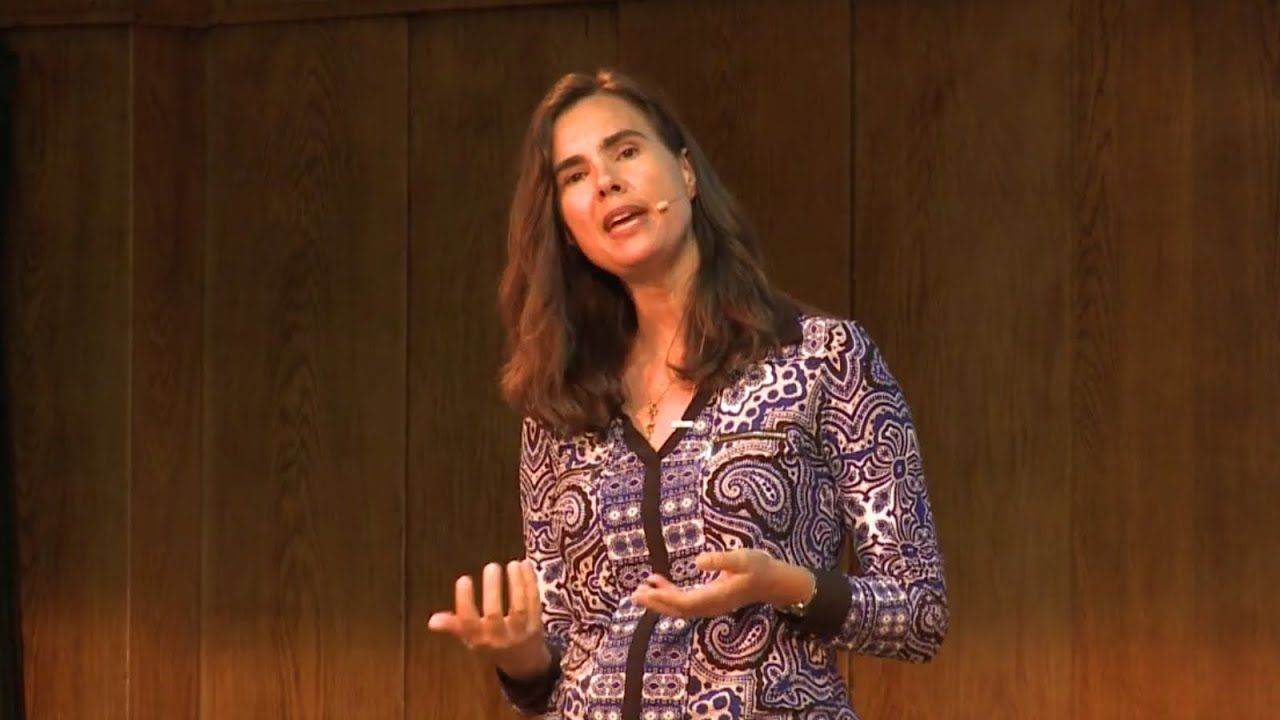
Kristin Neff is an associate professor in the University of Texas at Austin's department of educational psychology. She created the Self-compassion Scales. The long scale consists of 26 items and the short scale consists of 12 items. She has been credited with conducting the first academic studies into self-compassion.
Additional Resources:
Jordan Peterson - Self-Authoring Course
This Book on Amazon:
Self-Compassion, by Kristin Neff
If You Liked This Book:
The Self-Acceptance Project, edited by Tami Simon
12 Rules for Life, by Jordan Peterson
Don’t Bite the Hook, by Pema Chodron
The Tools, by Phil Stutz and Barry Michels
The Narcissism Epidemic, by Jean Twenge
Love Yourself Like Your Life Depends On It, by Kamal Ravikant