
Summary:
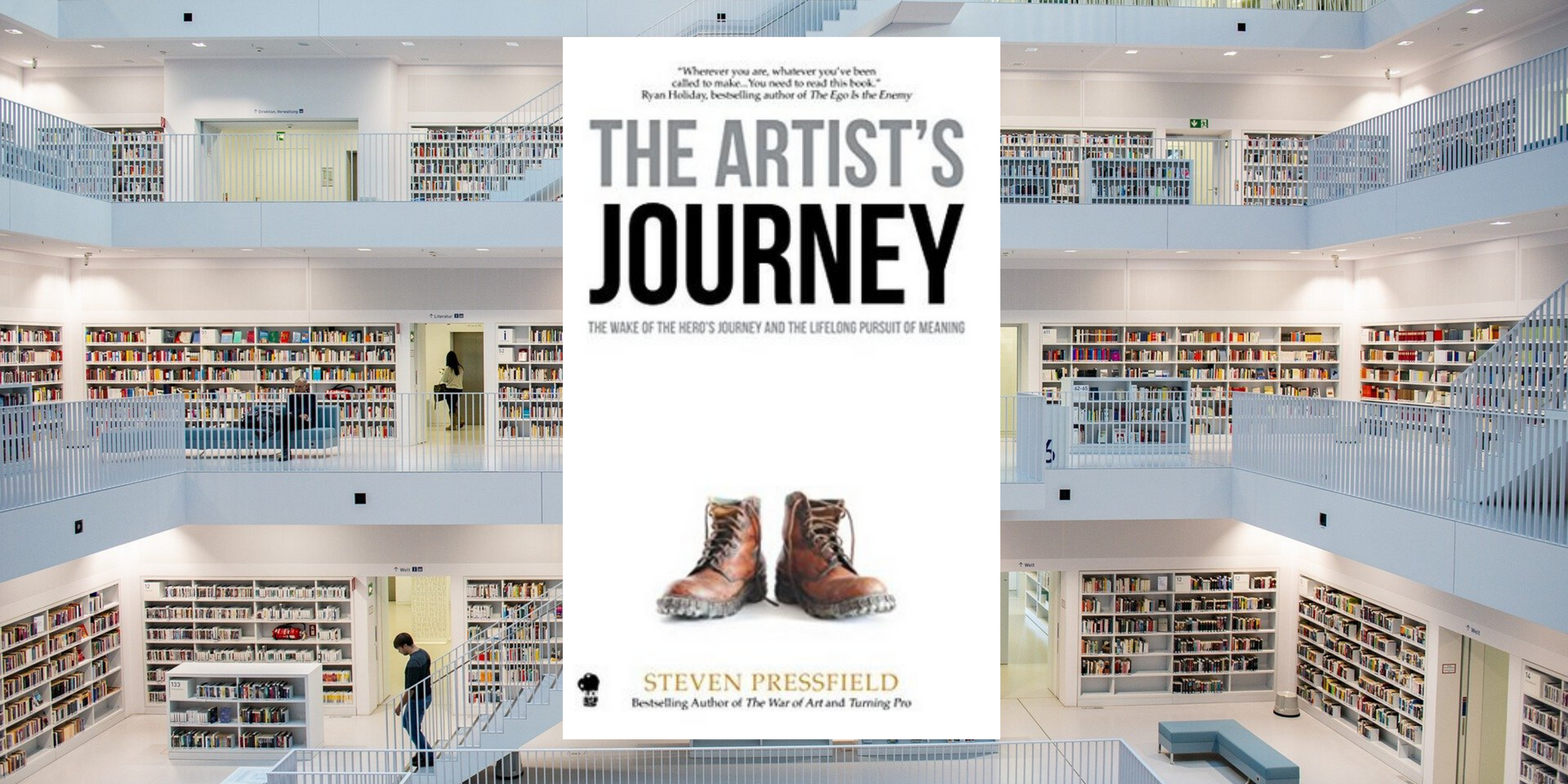
Ready or not, you are called. Being a creative - a writer, painter, sculptor, choreographer, builder, or something else entirely - means that you have an artist's journey. It means that there is something specific to you, something concrete, something that only you are able to create, and if you don't create it, no one else will.
The artist's journey is not something you can just ignore and hope it goes away, either. Oh you can try and suppress it, but you will know - somewhere, you will know - that you are living a lie.
You can think of the artist's journey as almost like software in your head, demanding to be lived out in real life. In short, life "wants" you to become a hero, and you will experience some severe cognitive dissonance if you don't recognize this impulse and act on it.
You may have heard of the hero's journey (Key Idea #3 below), which is seen to underlie the great storytelling traditions since the dawn of recorded history.
The best stories have a similar structure: the Hero is living in the Ordinary World, when he or she receives a Call to Adventure, some inciting incident that may or may not cause the Hero to undertake a Quest, depending on whether he or she Accepts the Call, or Refuses the Call.
Sometimes the Hero meets a Mentor, sometimes not, but the Hero will undoubtedly face Challenges, Trials, Ordeals, and Setbacks. Betrayals are common as well, including the last resurgence on the part of the Adversary, called the Resurrection.
If successful, the Hero will return to the Ordinary World, usually with a Gift, something that he or she has attained, learned or otherwise acquired that will be a Boon for the People.
You'll notice this same structure everywhere you look. Joseph Campbell first laid out these ideas in The Hero with a Thousand Faces, a book that George Lucas is reported to have read again and again. Yes, Luke Skywalker goes through every one of these steps above.
So what does this have to do with you as an artist? Well, we all have hero's journeys, the fight of our lives, and the purpose is to undertake an adventure where we will become who we need to become; if successful, we will return with a Gift, a Boon for the People.
Steven Pressfield teaches us that our hero's journey is but preparation for our artist's journey, which is to continue for as long as we're alive, maybe longer. Our hero's journey is what we go through in order to become an Artist, someone courageous enough - and capable enough - to speak in our true voice, to attempt the process of Creation.
That being said, they don't call them trials and ordeals for nothing. Being an artist is hard. We face many dangerous enemies, and most of them are internal, sometimes even hidden.
Self-doubt, arrogance, fears of various kinds; internal obstacles - personified in Pressfield's work as Resistance - which will do anything and everything to stop you from completing your artist's journey - or even beginning your journey in the first place.
That's not even the worst part! Stay in freefall long enough, and we can experience the All is Lost moment, the Dark Night of the Soul, the moment where we're as far away from our goal as it's even possible to get, the moment where everyone and everything is telling us to just 'give it up'; 'pack it in', 'try something else', 'you gave it a good run', 'someone else must have wanted it more.'
We're on the canvas now, looking up at whoever or whatever just knocked us down. This is where a lot of people stay in their lives. But here is exactly when - according to Pressfield, and citing Hollywood precedent, not to mention thousands of years of epic storytelling - we experience the Epiphany moment. Our hero decides that enough is enough, she does have what it takes, and she's going to finish writing that screenplay even if it damn well kills her.
As creatives, we need to sit down and do our work. That's the only way we're ever going to beat the Resistance. The Resistance, according to Pressfield, can never be defeated entirely, but we can win the battle for that day.
We can bang out 500 words at the computer, we can sketch out a new building, we can make an attempt. In Pressfield's words, we need to "put your ass where your heart wants to be." That's how we fulfill our artist's journey, one day at a time.
Every time we sit down to work is a hero's journey of sorts. We experience the Call to Adventure, where there's something we feel an urge to create. If we give in to the Resistance, however, that is tantamount to Refusing the Call.
You need to be your own Mentor, overcome internal Resistance, do your work, and bring back a Gift for the People. We can all be heroes.
If that wasn't enough for such a short book, Steven Pressfield also hits us with a short, powerful discussion of the collective hero's journey of the human race. If it sounds dramatic, that's because it absolutely is.
In the author's terms, a hero's journey can also be the result of some act of commission - a crime, even - committed by the hero, usually out of ignorance or unconsciousness. The hero doesn't know any better and must go on a quest to find out. Pressfield believes that humanity's "crime" was identification with the ego.
The artist's role, therefore, is to lead the human race back to “Eden”, or the “Divine Ground”, or what have you, "not in the state of unconsciousness or dependence in which we stood before the Fall, but in full awareness of ourselves and our station, our mortality, and of the greater world around and within us."
If this sounds like just the challenge you've been looking for, the Artist's Journey is waiting.

Key Ideas:
#1: Creative people - and really, everyone - at one time or another in their lives experiences the All is Lost moment, where they are as far away from their objective as they could possibly be. This is the part of the story where the Empire has the upper hand, where Rocky gets knocked to the canvas, and where we experience the crushing failure that causes us to believe that we'll never make it.
#2: The All is Lost moment is always, at least in the movies, succeeded by the Epiphany moment. This is where the hero experiences a breakthrough - a breakthrough that is usually internal. Sarah Connor stops running and confronts the Terminator, Rocky grabs onto that bottom rope and starts pulling himself up, and we realize that if we don't stand up to the bully here and now, she might never stop.
#3: The Hero's Journey is a myth that underlies most of the great storytelling that has ever existed since the dawn of time.
The best stories follow a similar structure: the Hero is living in the "Ordinary" world (Luke Skywalker living with his aunt and uncle); he experiences a "Call to Adventure," which is the inciting incident, the challenge, the reason to venture out into the "Extraordinary" world and undertake a quest (Apollo Creed announces that he's going to give an amateur boxer a shot at his world title); sometimes he meets a Mentor (like Obi-Wan Kenobi); sometimes he Refuses the Call (Rocky turning down the fight with the champ); but eventually the Hero ventures out into the Extraordinary World, faces Trials and Ordeals, and, if successful, returns with a Gift for the People, the Holy Grail, a scientific discovery, or the defeat of the Empire. Look at almost every great story ever told, and you'll see this basic structure.
#4: The artist's journey is what comes after the hero's journey. The hero's journey is the search for our calling, our attempt to find our real voice, our purpose. Pressfield says that "everything that has happened to us up to this point is rehearsal for us to act, now, as our true self and to find and to speak in our true voice. The artist's journey is the process of self-discovery that follows. It will last as long as we're alive, and maybe longer."
#5: As human beings, the deleterious effects of ignoring our own hero's journey are manifold. We each have something very specific that we - and only we - can contribute to the world, something to make it more beautiful, more accepting, more joyous, more complete - and if we don't do it, then all of humanity will be deprived.
We absolutely must bring back our Gift or no one else will. If, perhaps, you feel some sort of vague anxiety, an aimlessness, some gaping existential void within your cells, consider that you might in fact be Refusing the Call.
#6: We create many of our own enemies, and we do this inside our own minds. Fear of failure, fear of success, overconfidence, lack of confidence, greed, aversion, self-loathing, enmity towards others - these are all enemies of the mind, created by the mind, inside the mind. Since they were created by the mind, they can be defeated in the same way. You defeat them in your own mind, and then you resume your artist's journey.
#7: As creatives on our artist's journeys, we go on a hero's journey every single day when we sit down (or stand up, or whatever) to work for that day. When we do what needs to be done, when we Answer the Call, when we do our work, and when we return with something that we have created out of nothing, that means that we have successfully completed the hero's journey for that day. The next day the hero's journey begins again.
#8: Humanity itself has a hero's journey, and we need to figure out what that might mean for us. It might mean that everything that humanity has struggled through has not been in vain, that we are going through Trials and Ordeals right now, encountering Mentors, moving through the Extraordinary World - and that we are not coming back empty-handed. What might a collective Return of the Hero look like? Are you going to contribute?

Book Notes:
“On our hero’s journey, we acquire a history that is ours alone. It's a secret history, a private history, a personal history. No one has it but us. No one knows it but us. This secret history is the most valuable possession we hold, or ever will hold. We will draw upon it for the rest of our lives."
“Everything that has happened to us up until this point is a rehearsal for us to act, now, as our true self and to find and speak in our true voice. The artist's journey is the process of self-discovery that follows. It will last as long as we're alive, and maybe longer."
"The hero's journey template exerts a powerful, almost irresistible pressure on the individual to live it out in real life."
“The hero’s journey software in our heads is demanding to be lived out.”
“The artist in her journey speaks to and of her time.”
What is personal to the artist is universal to the rest of us.
"Fear of failure. Fear of success. Fear of the new, of loneliness, of exertion, of intensity. Need for external validation. Self-doubt. Arrogance. Impatience. Inability to defer gratification. Predisposition to distraction. Shallowness of thought and purpose. Conventionality. Insularity. The need to cling to the known. None of these enemies is real in the sense that, say, a lion is real, or a man with a gun. All are products of the mind."
You created all these enemies with your mind, and so you can defeat them the same way.
"Courage. Honesty, particularly with yourself. Self-confidence. Humility. Compassion for yourself and others. The ability to receive criticism objectively. Patience. Curiosity, open-mindedness, receptivity to the new. The ability to focus. The ability to defer gratification. Will. Mental toughness. The capacity to endure adversity, injustice, indifference. None of the capacities listed previously is innate, but all may be acquired by effort and force of will."
Writing helps you figure out what you think.
Every work of art is its own hero’s journey.
"Each trip from Level #1 to Level #2 is a hero's journey."
"Resistance is a mini Refusal of the Call."
"The artist can feel it when she’s working beyond her limits, and she loves it."
“We can sense it, you and I, when we’re playing it safe.”
"All art - dance, drama, architecture, literature, music, etc. - is about the recognition of beauty and the articulation of empathy and compassion for the Other."
“No longer can we say or think, 'These people are not like me.'"
Humanity has a hero's journey as well, and it's the work of our time to figure out what it might be and how best to undertake it.
"When we speak of the Call that initiates the hero's journey, it's often an opportunity that suddenly appears, an imposed expulsion, an emergency that demands action. But not infrequently it's a crime - a wrong committed, usually in ignorance or unconsciousness by the hero."
"The human race's crime is identifying with the ego."
“That the passage from the unity of spirit to the manifoldness of temporal being is an essential part of the Fall is clearly stated in the Buddhist and Hindu renderings of the Perennial Philosophy. Pain and evil are inseparable from human existence in a world of time; and, for human beings, there is an intensification of this inevitable pain and evil when the desire is turned towards the self and the many, rather than toward the divine Ground."
"I find two fundamental movements that pull conscious awareness beyond its normal horizon. The first movement begins with the suspension of directed thinking and the consequent activation of the symbol-producing function. The symbol mysteriously arises through the play of dreaming and active imagination, mediates unconscious depth to our awareness, and infuses life with differentiated aspect.
This process creates an opportunity to recognize that a whole range of psychic activity is at work apart from the ego's normal functioning. Such recognition pulls us beyond our usual horizon of awareness. We know ourselves not simply as the 'I' of intentional acts, but as a psyche whose reality extends far beyond the 'I'."
“Put your ass where your heart wants to be.”
Do you want to write? Sit down at the keyboard.
If the human race itself has a hero's journey, then every single human being is critical to its success, and indeed to its very existence. No one is unimportant, no one is less important than anyone else, and we need everyone.
“If mankind is indeed on a collective hero's journey, then Creation itself is on our side."

Action Steps:
So you've finished reading the book. What do you do now?
#1: Make a self-promise, a promise to yourself that you categorically refuse to break.
One of the most utterly transformational things you can ever do for yourself is to make a commitment, to yourself and for yourself, that you will never, ever, ever let yourself down. It's basic, foundational. It'll be your rock. No matter who else lets you down, fails you, or betrays you, you never will.
#2: Pick a favorite book or movie and see if you can trace the outline of the hero's journey.
It's easy with books like The Iliad and movies like Star Wars, but it's a worthwhile exercise to start looking for the hero's journey in Hollywood movies, bestselling books, high school plays. Sometimes the writer or director isn't aware that they're doing it, but they are.
#3: Look back over your life for evidence of your own hero's journey.
Maybe you're still on it. Maybe some cataclysmic event just happened, shook up your whole world, and now a Mentor is on their way to show you how to navigate the Extraordinary World. Or maybe you've just returned with a Gift.
Remember, it's at the end of your hero's journey that your artist's journey begins. With any luck, your artist's journey will never end.
#4: Intentionally place yourself in at least one uncomfortable situation per day.
Nothing about being an artist or a hero is going to be easy. You're going to have to get comfortable being uncomfortable. So you may as well start training now.
Talk to an attractive stranger at a bar; pick up a spider with your bare hands; do one more rep with a weight you're not completely sure you can rack. You're building your discomfort muscles.
#5: Identify your Resistance.
Each of us struggles with the Resistance in a different form. For myself, oddly enough, it was the fear of success. If I was successful, then my life would have to change, and that was scary. So I coasted, unconsciously refusing to move forward.
For you, the Resistance might take the form of anticipated rejection or a lack of confidence in your artistic abilities. Whatever it is, root it out so you know exactly what it is that you're facing.
#6: Do your work, or nothing.
This is a good one: Go to the place where you normally do your creative work. A laptop if you're a writer, say, or a studio if you're a painter, etc. Commit to staying there for at least half an hour, during which time you are only allowed to do either a) your work, or b) nothing. Nothing at all. Sit there in silence, completely still, or get your work done. Those are your two options.
#7: Do it again tomorrow.
So you banged out your 500 words on the computer today, or you sketched out Act 3, Scene 4 of your screenplay. You should be genuinely (seriously) proud of yourself. You did something heroic, even if it doesn't look that way right now. I'm not just throwing around the word 'heroic' either. You faced down your internal Resistance, you got down to work, and you created something that didn't exist before, and now you're done for the day.
But tomorrow, the work begins anew. You have to face the Resistance all over again...because it will be back. You will again have to Answer the Call.
About the Author:
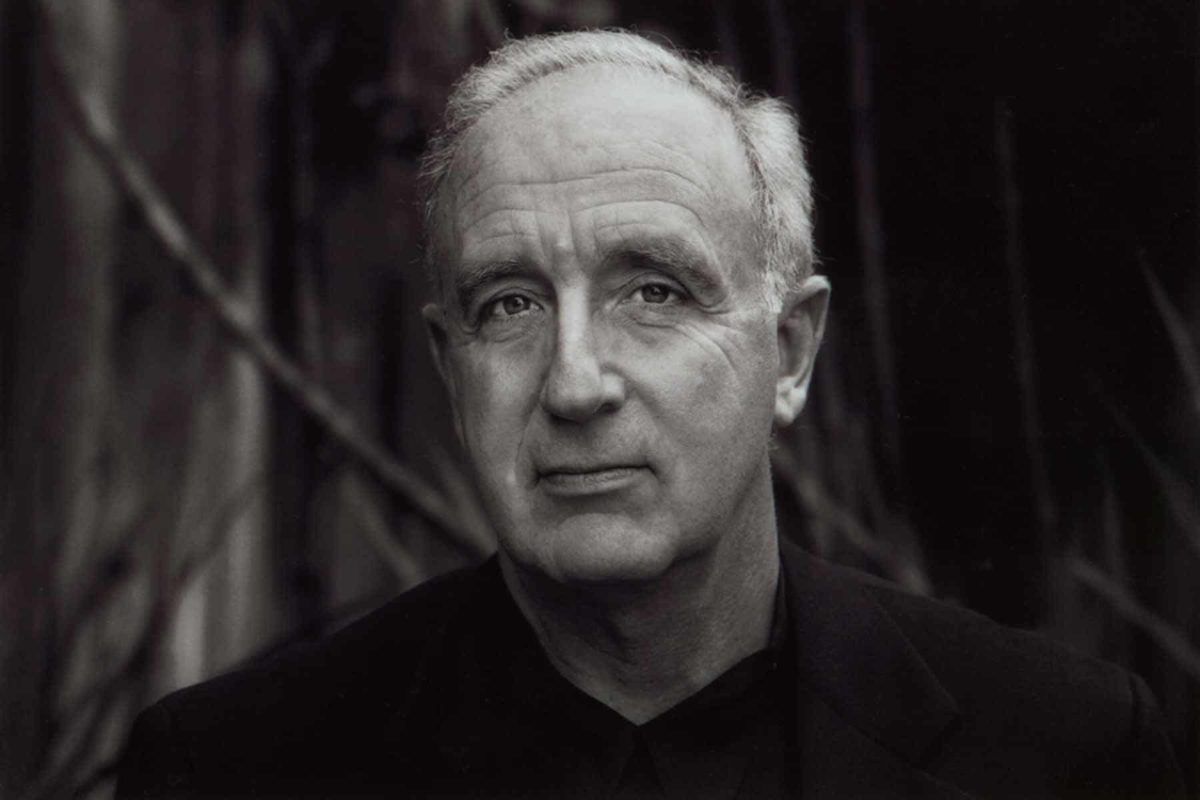
Steven Pressfield is an American author of historical fiction, non-fiction, and screenplays. He’s written some of the most influential books in the modern age on the subjects of developing one’s own artistic abilities, overcoming the Resistance, and getting one’s creative work into the world.
Additional Resources:
Steven Pressfield - Writing Wednesdays
Steven Pressfield - Writing Mastermind
This Book on Amazon:
The Artist’s Journey, by Steven Pressfield
If You Liked This Book:
The Hero with a Thousand Faces, by Joseph Campbell
Turning Pro, by Steven Pressfield