
Summary:
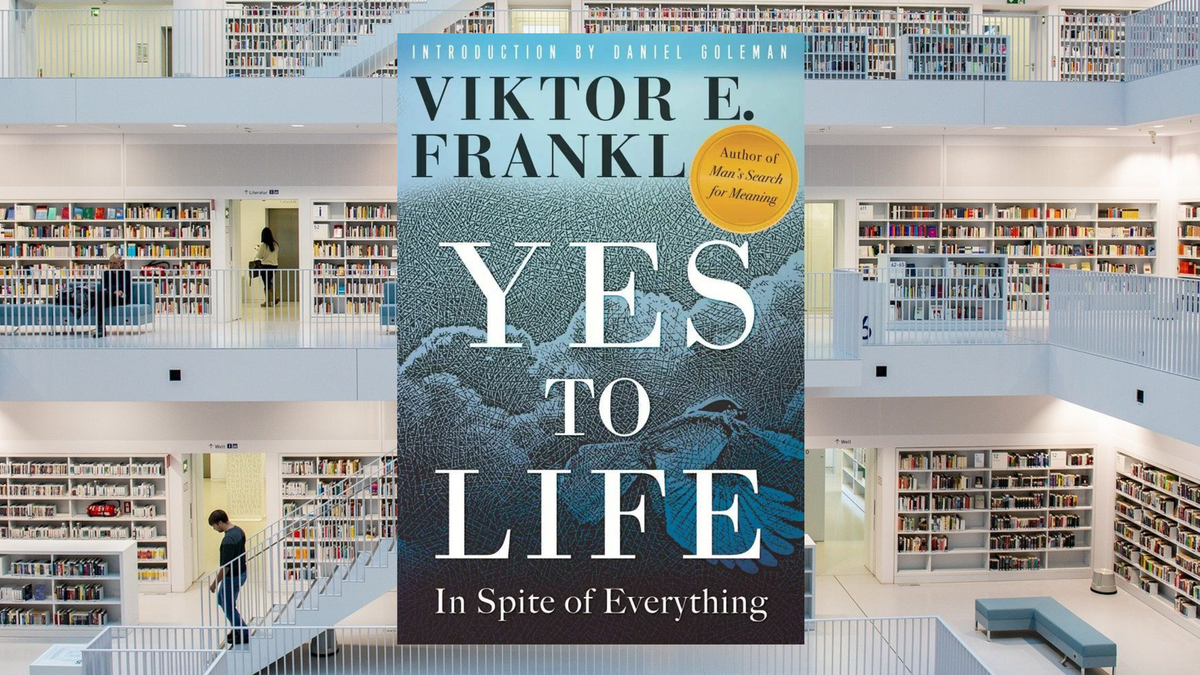
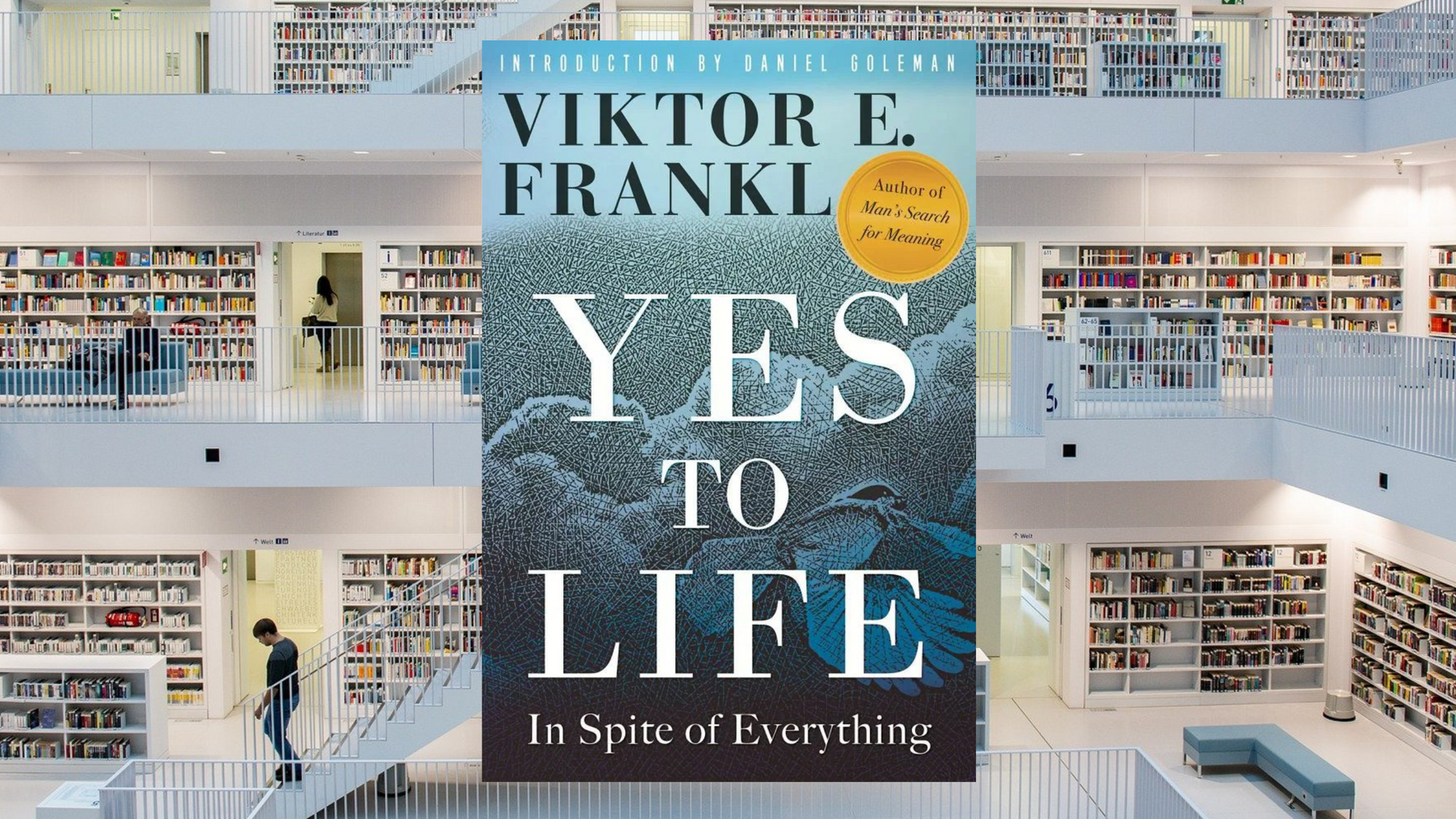
A new Viktor Frankl book? Is this for real? Yes, yes, a thousand times, yes! Published for the first time in English, Yes to Life: In Spite of Everything, which was delivered as a series of lectures just 11 months after Frankl was liberated from a Nazi concentration camp, contains his stirring conviction that life is the ultimate value, and that every moment of life is both meaningful and worthwhile.
His most well-known book, Man’s Search for Meaning, has sold something like 12 million copies so far, and tells the story of Frankl’s experience surviving the Nazi concentration camps during World War II – it also changed my life forever from the very day I read it.
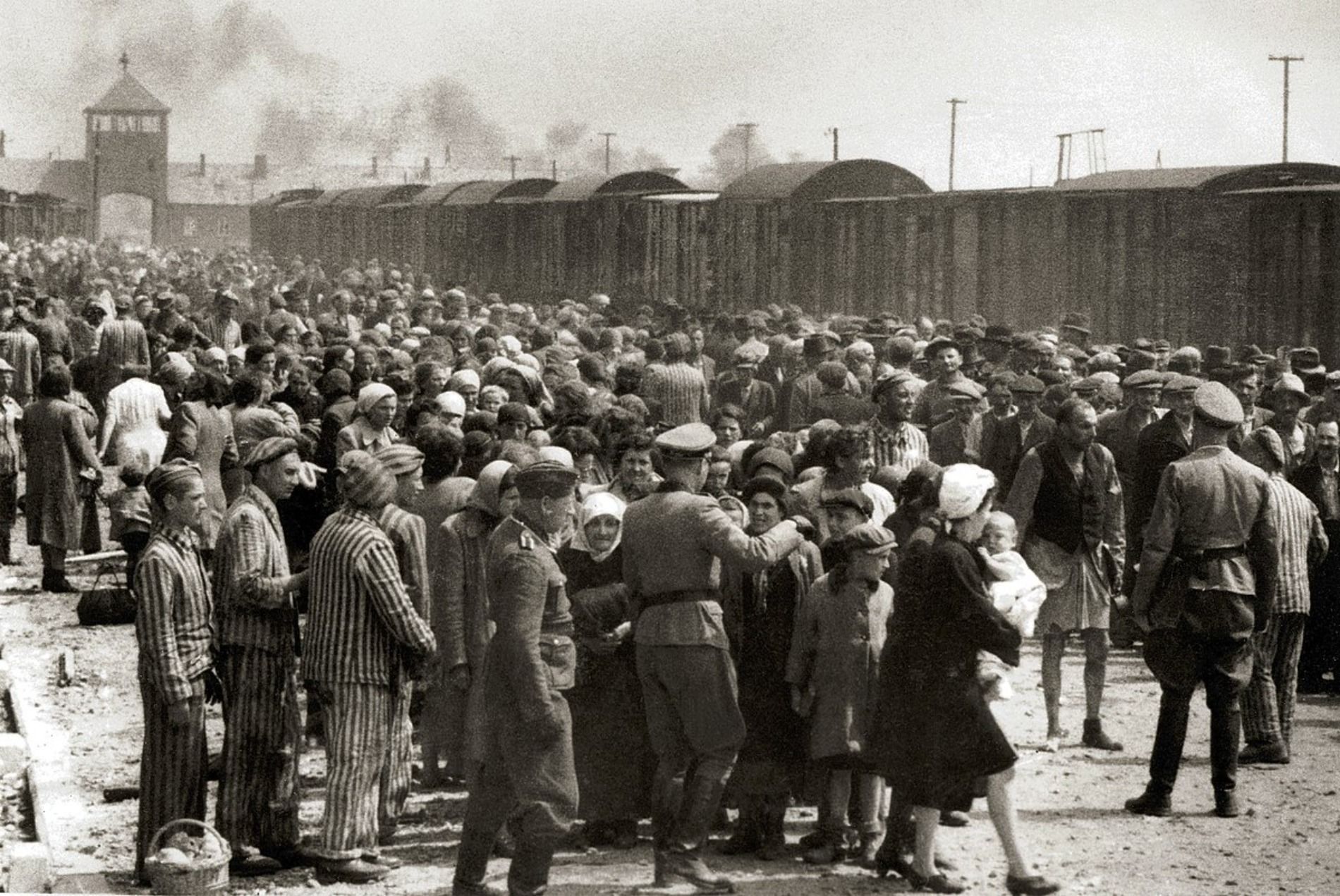
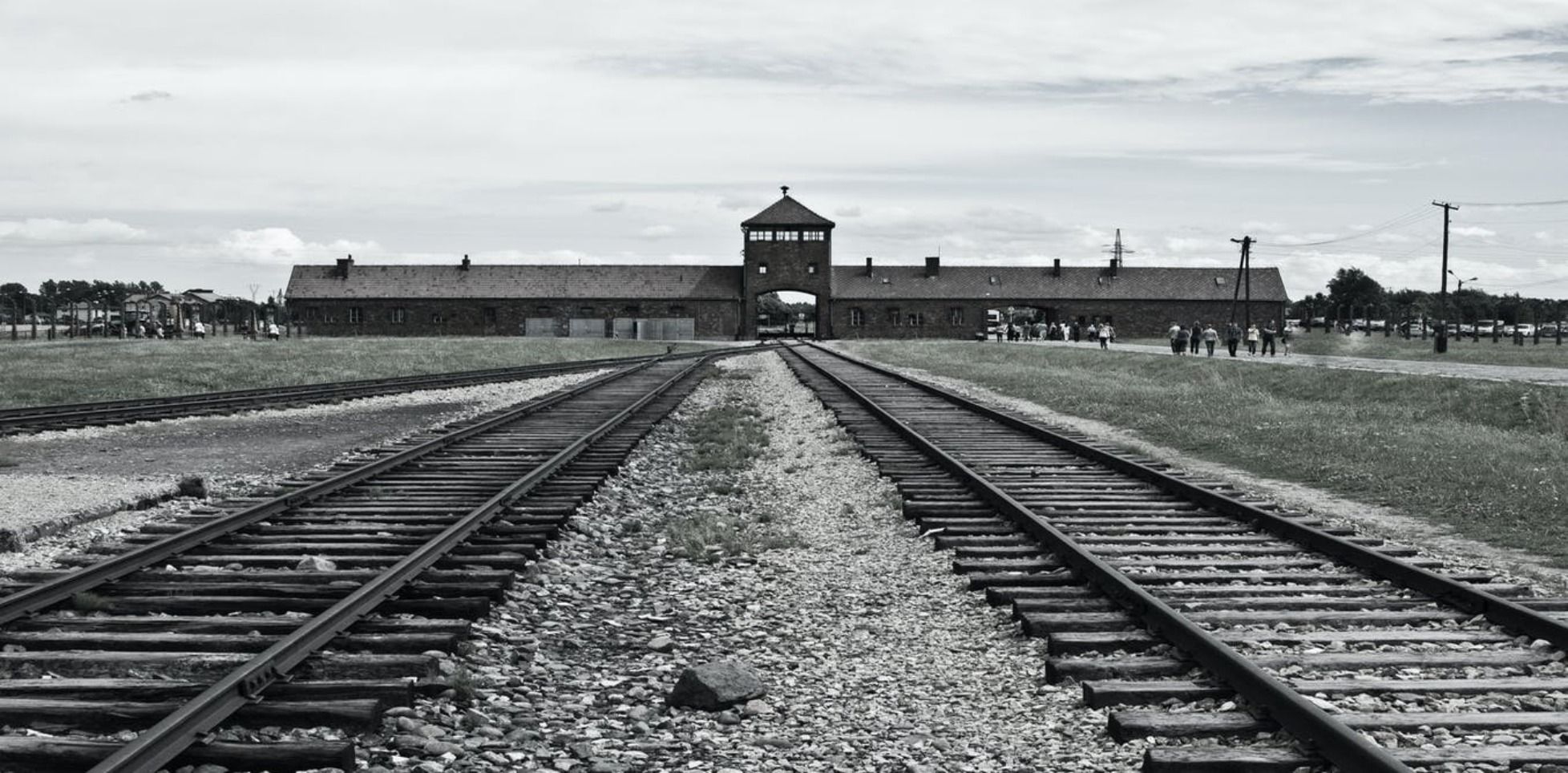
In 1942, just months after getting married, Viktor Frankl was rounded up, arrested, and brought to the concentration camp, Theresienstadt, along with his entire family. Six months after that, his father died in the camps. And eventually, his whole family would perish there. Frankl, however, wouldn't find this out until after he was released in 1946. Wife, children, parents - all gone. Victims of the Nazi death machine that was to terminate the lives of more than 6 million Jews in just a few short years.
Logotherapy, a school of psychotherapy that Frankl founded that describes a search for a life's meaning as the central human motivational force, was already quite well-developed in Frankl's mind, and he even had a full manuscript version of Man's Search for Meaning completed at the time of his arrest, though it was burned by the Nazis immediately after he entered the camp.
Upon his release, however, logotherapy now had a solid empirical justification - Frankl's own life and his personal victory over the combined forces of fear, hatred, and inhuman suffering. Now a free man, but an individual who had lost everything, he stood up in front of a capacity crowd in Vienna and affirmed once and for all that life was ultimately good and meaningful, and that limitless personal freedom was available to all of us if we would only stand up and claim it.
I hesitate to say things like “everyone needs to read this book,” but in this case, that’s probably right. You need to read this book. Or, at least, Man's Search for Meaning, which is perhaps a little more reader-friendly. If only I could have been at that lecture hall in Vienna in 1946!
Throughout the book, you'll notice the emphasis on a certain intensification of consciousness. In most video clips of Frankl, you see him almost wildly animated, alive to life's possibilities, and verbally shaking his viewers by the shoulders with an awareness of the vividness of reality. Given his personal history, this just shouldn't have been the case.
Despite four years of being beaten and starved and hounded by the Nazis, despite never knowing whether he'd see his family again, and despite the constant threat of instant, violent death, Frankl endured. He transmogrified his greatest suffering into his greatest strength. Along with Friedrich Nietzsche, he might have been able to say:
Whence come the highest mountains? so did I once ask. Then did I learn that they come out of the sea."
Given the choice between more and less consciousness - between Eternal Yes and Eternal No - Frankl snatched the meaning of his own life out of the hands of the Nazis and gave it back to himself. Even more importantly, he shows in this book that the same thing is possible for each and every one of us, at all times, and in any situation, no matter what.
In this book breakdown, we're going to travel along the tracks of Viktor Frankl's mind as he discriminates between meaningful and meaningless suffering; we're going to explore the nature of real human problems, rather than dehumanizing pseudo-problems; and we're going to see why each human being deserves to be treated as an end in themselves, and never simply as a means.
We're also going to see why the "meaning of life" is a misleading question, and whether there's a better one that we can answer instead. Through it all, Frankl himself is going to shake us by the shoulders and show us that there are no ordinary moments and that each person's fate and responsibility are completely and totally unique - unrepeatable in the infinity of space and time.
These thoughts were formed in the crucible of the concentration camp, tempered by suffering and hope, and kept hidden on scraps of paper that he hid inside his threadbare uniform, from the time of his forced enslavement, through to his release and rehabilitation, right up until the moment that he was able to stand up and say to a packed Viennese crowd who he had shocked into speechlessness:
“Ultimately that was the entire purpose of these three parts: to show you that people can still—despite hardship and death (first part), despite suffering from physical or mental illness (second part) or under the fate of the concentration camp (third part)—say yes to life in spite of everything.”

Key Ideas:
#1: “To say yes to life is not only meaningful under all circumstances – because life itself is – but it is also possible under all circumstances. And ultimately that was the entire purpose of these three parts: to show you that people can still – despite hardship and death (first part), despite suffering from physical or mental illness (second part) or under the fate of the concentration camp (third part) – say yes to life in spite of everything.”
#2: “A person should never become a means to an end.”
I don't think pessimism is a useful or productive vantage point from which to see the world - or even an accurate one - but transactional relationships are quite common in today's society, and "networking" has become a cringy word.
These "plastic" relationships are characterized by the effort of both parties to find out "who you know" and "what you can do for me," rather than placing an emphasis on real connection. It's dehumanizing in the very worst way, and Frankl felt that acutely when he had his humanity stripped from him in the camps. He even found this after he had been liberated by the Russians, albeit in a different way, as the entire economic system seemed to have been devised to turn workers into cogs, and people into profit.
In the novel, Middlemarch, George Eliot asks, "What are we here for if not to make life a little less difficult for each other?" Those are the only kinds of sentiments that can sustain us, but we seem to have lost our way. At least some of us have, some of the time.
Even if we do manage to beat self-involvement and selfishness for one day, the temptation is always there to take, rather than to give. I think a good benchmark to shoot for is to arrange things so that every person who enters into a relationship with us comes out ahead for having done so.
#3: There's plenty of joy to be found in life, and many opportunities for creating happiness, but it can never be pursued directly. Happiness, says the philosopher Soren Kierkegaard, is a door that opens outward, and trying to grab it and hold onto it forever is the best way to ensure that we never experience it. If we do chase happiness, it will always elude us. Frankl's thought experiment is illustrative of this idea:
“Let us imagine a man who has been sentenced to death and, a few hours before his execution, has been told he is free to decide on the menu for his last meal. The guard comes into his cell and asks him what he wants to eat, offers him all kinds of delicacies, but the man rejects all his suggestions.
He thinks to himself that it is quite irrelevant whether he stuffs good food into the stomach of his organism or not, as in a few hours it will be a corpse. And even the feelings of pleasure that could still be felt in the organism’s cerebral ganglia seem pointless in view of the fact that in two hours they will be destroyed forever.
But the whole of life stands in the face of death, and if this man had been right, then our whole lives would also be meaningless, were we only to strive for pleasure and nothing else – preferably the most pleasure and the highest degree of pleasure possible. Pleasure in itself cannot give our existence meaning; thus the lack of pleasure cannot take away meaning from life, which now seems obvious to us.”
“So, life is somehow duty, a single, huge obligation. And there is certainly joy in life too, but it cannot be pursued, cannot be ‘willed into being’ as joy; rather, it must arise spontaneously, and in fact, it does arise spontaneously, just as an outcome may arise: Happiness should not, must not, and can never be a goal, but only an outcome.”
We are in the exact same position as the condemned man. Death exists for all of us, looming over our days and nights, everpresent and ever-threatening. In reaction to this, whole "philosophies" have sprung up around the idea of "getting while the getting is good," but Frankl saw how this is a total dead end. There has to be something more; there is something more, and it lies in our stance towards life and our willingness to confront its challenges and opportunities.
So we can never directly pursue happiness in life, but we create the conditions for its arrival, and we do this by taking an open stance toward life and letting in all the love and true human connection that's available. Importantly, when we create happiness for others, it spontaneously arises in ourselves.
#4: Whenever you're confronted with a seemingly insoluble question, it often pays to consider whether it's just a matter of the question being asked in the wrong way. "What's the meaning of life?" Well, what kind of question is that!?
A better question, according to Frankl, is to ask, "What is life asking of me at this very moment? What am I being called to do?" That's not only a much more interesting question, it also has an answer that you can figure out and apply to your life. The flip that Frankl pulls goes something like this:
“It is not we who are permitted to ask about the meaning of life – it is life that asks the questions, directs questions at us – we are the ones who are questioned! We are the ones who must answer, must give answers to the constant, hourly question of life, to the essential ‘life questions.’
Living itself means nothing other than being questioned; our whole act of being is nothing more than responding to – of being responsible toward – life. With this mental standpoint, nothing can scare us anymore, no future, no apparent lack of a future.
Because now the present is everything as it holds the eternally new question of life for us. Now everything depends on what is expected of us. As to what awaits us in the future, we don’t need to know that any more than we are able to know it.”
There is always something that you can do. There is always some good that you can create where it didn't exist before, and if you open yourself up to the possibility that life is making demands of you - that it wants something from you - then you can take that question and run with it.
You can create your own meaning, using your own ideas of what you could possibly contribute to the world where you are, instead of passively waiting on some "meaning" to reveal itself to you. It rarely works that way.
Instead, meet your life halfway. Wherever you find yourself in this moment, there exists a task, a contribution, a gift, that you - and only you - can bestow upon life, and if you don't do it, then the whole world will be deprived.
#5: In a limitless universe, envy is an untenable position. Our individual human uniqueness means - essentially, necessarily - that each one of us is completely irreplaceable and singular, across all the galaxies and timescales that we have ever known.
There is no one in the entire history of the cosmos, past, present, or future that can do what you have the power to do in this moment, which is to accept the call to adventure and to make your life everything that it could be. Here's Frankl again:
“The tasks that his life imposes are only for him, and only he is required to fulfill them. And a person who has not completely filled his (relatively) larger circle remains more unfulfilled than that of a person whose more closely drawn circle is sufficient.
In his specific environment, this tailor’s assistant can achieve more, and, in the things he does and the things he leaves undone, he can lead a more meaningful life than the person he envies, as long as that person is not aware of his greater responsibility in life and does not do justice to it.”
We each have a wider or narrow "circle of responsibility," says Frankl, but whether you're commanding armies, leading sales forces, or raising a child, life is asking something specific from you, demanding that you step up, and if you don't do it, your life will pale in comparison to your potential.
Importantly, this has nothing to do with anything that anyone else is doing. Nobody else matters. It's your life, your opportunity, your task, your challenge, your opportunity, your happiness, your meaning. So fill out your circle. Whatever it takes, say yes.
#6: "The question life asks us, and in answering which we can realize the meaning of the present moment, does not only change from hour to hour but also changes from person to person: the question is entirely different in each moment for every individual.
We can, therefore, see how the question as to the meaning of life is posed too simply, unless it is posed with complete specificity, in the concreteness of the here and now.
To ask about 'the meaning of life' in this way seems just as naive to us as the question of a reporter interviewing a world chess champion and asking, 'And now, Master, please tell me: which chess move do you think is the best?' Is there a move, a particular move, that could be good, or even the best, beyond a very specific, concrete game situation, a specific configuration of the pieces?"
#7: “Fate really is integral in the totality of our lives; and not even the smallest part of what is destined can be broken away from this totality without destroying the whole, the configuration of our existence.”
Affirming existence is an all-or-nothing proposition, and there is not one single day that you could strike from your life without compromising the meaning, integrity, and value of the whole. Everything had to happen to you - and for you - exactly as it did in order for you to reach this moment and say, "Yes, life is absolutely worth living, at times, in all situations, and no matter what."
Living this way might be the hardest thing you've ever been called to do. However, it also means that every moment of every day has meaning, and always will, for all eternity.
This is a huge responsibility! It's about having faith - not necessarily in a religious sense (although it can mean that), but faith in the fundamentally positive nature of ultimate reality. It may be one of the most demanding responsibilities, but it's also one of the most rewarding long-term, and "living as if" can bring about this change in perspective in yourself, even if you're not quite prepared to accept that there's nothing about your life that you would change.
#8: “Certainly, our life, in terms of the biological, the physical, is transitory in nature. Nothing of it survives – and yet how much remains!”
In one of my favorite books by the existential psychotherapist Irvin Yalom, Staring at the Sun, he likens our words and actions to waves that ripple outward and spread to the rest of humanity and beyond. These ripples continue to extend after our deaths, in the memories we leave behind with the people who knew us, and in the good works that we've done in our lives, that, in turn, cause even more good to be done by others after we're gone.
Even if you live for four thousand weeks, life is short. It doesn't take an existential psychotherapist to tell you that! We live for a brief span, like the fly that survives the afternoon and thinks it's forever. But our waves survive us! So much survives our physical deaths, if only the positive ripples we've started while we were alive.
#9: Most of the suffering that people experience today is unworthy of a real, genuine human being. Not nearly enough of us are working on real, true human problems. We suffer because of dehumanizing and degrading work; we suffer because of the deleterious effects of cultural games like social media on our health; we suffer the basic indignities of having to do things we hate just so we can "get along and get ahead."
None of it has ultimate value. None of it is a worthy expenditure of human dignity. In humanity's current stage of development, we do things that keep us alive, sure, but very few things that are worth living and suffering for. Frankl felt this acutely when he said:
“How we longed for proper human suffering at that time, real human problems, real human conflicts, in place of these degrading questions of eating or starving, freezing or sleeping, toiling or being beaten.
With deep melancholy and sadness we thought back to the time when we still had our human sufferings, problems, and conflicts and not the suffering and perils of an anima; but when thinking ahead to the future, how heartfelt was our longing for a state in which we would exist by no means without suffering, problems, and conflicts, in which we would indeed have to suffer, but to suffer that particular form of meaningful suffering that has been imposed on a human being in his very humanity.”
So what are real human problems? What is worthy of us? Certainly, we need to eat, we need to have clean floors, and there's nothing "wrong" with social media. I would never look askance at a server in a restaurant and say that they're not "working on real human problems." What a terrible thing to say! The fact is that nearly anything can be done with artistry and fire. We can all be artists!
But to spend all of our time doing these things for money and respect and a basic living? That's not living. Again, there can be dignity in work, regardless of what it is. We all have to eat, and many essential jobs aren't necessarily glamorous. But there's more to life - there are higher challenges - that will demand more from you, and these are what Frankl is talking about. Work, yes. But ask yourself, "What am I working for?"
#10: This is tough to accept, but some of the things that the Nazis believed are in fact logical extensions of some of society's current attitudes. For example, we know that the Nazis murdered all those who they deemed “unproductive” or “inferior,” and basically anyone unfit for work. Anyone perceived to be of lesser “value” was put to death.
Naturally, most of us find this abhorrent - and for good reason. It's abhorrent! But, if we're honest with ourselves, we're exhibiting the same flaws in thinking today when we look down on anyone on the fringes of society, or on anyone who has a job that is menial or of lower status. Our lack of feeling - our cultural sociopathy - leads us to think in the same way that the Nazis thought when they destroyed anyone and everyone who wasn’t “productive.”
Rather than actual, physical death, we consign those of "lower status" to a kind of social death, where we fail to appreciate their intrinsic worth and inalienable human dignity and value.
How many hundreds of millions of times does this happen every day, all over the world? Do you have to perpetuate it? Or is there a better way to relate to all people with whom you share the earth and this brief lifetime?
#11: “Many of you who have not lived through the concentration camp will be astonished and will ask me how a human being can endure all the things I have been talking about. I assure you, the person who has experienced and survived all of that is even more amazed than you are! But do not forget this: the human psyche seems to behave in some ways like a vaulted arch – an arch that has become dilapidated can be supported by placing an extra load on it. The human soul also appears to be strengthened by experiencing a burden.”
#12: “The suffering of human beings is incommensurable! Real suffering fills a person completely, fills their whole being.”
What Frankl means here is that suffering is experienced differently by each and every one of us and that it's often pointless to say, "Oh, he has no right to complain about that. I would never complain about something so trivial."
The experience of suffering - how it's felt in the psyche of the individual - is dependent on a person's upbringing, pain threshold, current life experience, prospects for the alleviation of that suffering, and much more besides. We can never know how that negative event or situation is hitting them. Something that we're strong enough to withstand easily might completely floor another person.
This is just another argument for additional empathy and understanding as we're each going about our day! The goal for each individual should always be to get stronger, but sometimes they just need for their particular suffering to be understood.
#13: “It is terrible to know that at every moment I bear responsibility for the next; that every decision, from the smallest to the largest, is a decision ‘for all eternity’; that in every moment I can actualize the possibility of a moment, of that particular moment, or forfeit it.
Every single moment contains thousands of possibilities – and I can only choose one of them to actualize it. But in making the choice, I have condemned all the others and sentenced them to ‘never being,’ and even this is for all eternity!
But it is wonderful to know that the future – my own future and with it the future of the things, the people around me – is somehow, albeit to a very small extent, dependent on my decisions in every moment. Everything I realize through them, or ‘bring into the world,’ as we have said, I save into reality and thus protect from transience.”
Book Notes from Yes to Life:
"Fate really is integral in the totality of our lives; and not even the smallest part of what is destined can be broken away from this totality without destroying the whole, the configuration of our existence.”
“We give life meaning not only through our actions but also through loving and, finally, through suffering.”
Said about the daughter of two Holocaust survivors:
“She remembers her father saying, ‘That’s living,’ at even the slightest pleasures. As she says, ‘They never forgot that life was a gift that the Nazi machine did not succeed in taking away from them.’”
“I slept and dreamt that life was joy. I awoke and saw that life was duty. I worked – and behold, duty was joy.”
-Rabindranath Tagore
“What do athletes do but create difficulties for themselves so that they can grow through overcoming them?”
“If we look at things that way then, essentially, it may prove to be quite irrelevant to us how long a human life lasts. Its long duration does not automatically make it meaningful, and its possible briefness makes it far from meaningless. We also do not judge the life history of a particular person by the number of pages in the book that portrays it but only by the richness of the content it contains.”
“If I step onto my misfortune, I stand higher.”
-Friedrich Hölderlin
"One way or another, there can only be one alternative at a time to give meaning to life, meaning to the moment — so at any time we only need to make one decision about how we must answer, but, each time, a very specific question is being asked of us by life.
From all this follows that life always offers us a possibility for the fulfillment of meaning, therefore there is always the option that it has a meaning. One could also say that our human existence can be made meaningful “to the very last breath”; as long as we have breath, as long as we are still conscious, we are each responsible for answering life’s questions."
“Any hour whose demands we do not fulfill, or fulfill half-heartedly, this hour is forfeited, forfeited ‘for all eternity.’ Conversely, what we achieve by seizing the moment is, once and for all, rescued into reality in which it is only apparently ‘canceled out’ by becoming the past.
In truth, it has actually been preserved, in the sense of being kept safe. Having been is in this sense perhaps even the safest form of being. The ‘being,’ the reality that we have rescued into the past in this way, can no longer be harmed by transitoriness.”

Book Notes from Man's Search for Meaning:
“When we are no longer able to change a situation, we are challenged to change ourselves.”
“Everything can be taken from a man but one thing: the last of the human freedoms—to choose one’s attitude in any given set of circumstances, to choose one’s own way.”
“Don't aim at success. The more you aim at it and make it a target, the more you are going to miss it. For success, like happiness, cannot be pursued; it must ensue, and it only does so as the unintended side effect of one's personal dedication to a cause greater than oneself or as the by-product of one's surrender to a person other than oneself. Happiness must happen, and the same holds for success: you have to let it happen by not caring about it. I want you to listen to what your conscience commands you to do and go on to carry it out to the best of your knowledge. Then you will live to see that in the long-run—in the long-run, I say!—success will follow you precisely because you had forgotten to think about it.”
“It is this spiritual freedom - which cannot be taken away - that makes life purposeful and meaningful.”
“Without suffering and death, human life cannot be complete.”
“In camp, a day lasted longer than a week.”
“Ultimately, man should not ask what the meaning of his life is, but rather must recognize that it is he who is asked. In a word, each man is questioned by life; and he can only answer to life by answering for his own life; to life he can only respond by being responsible.”
“No man should judge unless he asks himself in absolute honesty whether in a similar situation he might not have done the same.”
“It did not really matter what we expected from life, but rather what life expected from us. We needed to stop asking about the meaning of life, and instead to think of ourselves as those who were being questioned by life—daily and hourly. Our answer must consist, not in talk and meditation, but in right action and in right conduct. Life ultimately means taking the responsibility to find the right answer to its problems and to fulfill the tasks which it constantly sets for each individual.”
“Even in suffering, each man is unique and alone in the universe.”
“What you have experienced, no power on earth may take from you.”
“The hopelessness of our struggle does not detract from its dignity or meaning.”
There was a camp SS commander that Frankl talks about who, over time, paid a huge amount of money from his own pocket in order to buy medicine for the prisoners he was supposed to be guarding.
“No group consists entirely of decent or indecent people.”
“Human kindness can be found in all groups, even those which as a whole it would be easy to condemn.”
“To draw an analogy: a man's suffering is similar to the behavior of a gas. If a certain quantity of gas is pumped into an empty chamber, it will fill the chamber completely and evenly, no matter how big the chamber. Thus, suffering completely fills the human soul and conscious mind, no matter whether the suffering is great or little. Therefore the "size" of human suffering is absolutely relative.”
“No one has the right to do wrong, not even if wrong has been done to them.”
“I shall never forget how I was roused one night by the groans of a fellow prisoner, who threw himself about in his sleep, obviously having a horrible nightmare. Since I had always been especially sorry for people who suffered from fearful dreams or deliria, I wanted to wake the poor man. Suddenly I drew back the hand which was ready to shake him, frightened at the thing I was about to do. At that moment I became intensely conscious of the fact that no dream, no matter how horrible, could be as bad as the reality of the camp which surrounded us, and to which I was about to recall him.”
“Man does not simply exist but always decides what his existence will be, what he will become the next moment. By the same token, every human being has the freedom to change at any instant.”
“Everyone has his own specific vocation or mission in life; everyone must carry out a concrete assignment that demands fulfillment. Therein he cannot be replaced, nor can his life be repeated. Thus, everyone's task is unique as is his specific opportunity to implement it.”
“The truth - that love is the highest goal to which man can aspire.”
The meaning of Frankl's life, according to him, was to help others find the meaning of their lives.
Important Insights from Related Books:

The Gulag Archipelago, by Aleksandr Solzhenitsyn:
"They have tightly bound my body, but my soul is beyond their power."
"And during that outdoor walk, you concentrated on breathing as much fresh air as possible. There, too, alone beneath that bright heaven, you had to imagine your bright future life, sinless and without error."
"As if it were possible to liberate anyone who has not first become liberated in his own soul."
"So long as there is no independent public opinion in our country, there is no guarantee that the extermination of millions and millions for no good reason will not happen again, that it will not begin any night - perhaps this very night."
This Book on Amazon: The Gulag Archipelago, by Aleksandr Solzhenitsyn

Thus Spoke Zarathustra, by Friedrich Nietzsche:
"I tell you: one must still have chaos within one, to give birth to a dancing star."
"As yet humanity hath not a goal. But pray tell me, brethren, if the goal of humanity be still lacking, is there not also still lacking - humanity itself?"
"Let the value of everything be determined anew by you!"
"Before my highest mountain do I stand, and before my longest wandering: therefore must I first go deeper down than I ever ascended - deeper down into pain than I ever ascended, even into its darkest flood! So willeth my fate. Well! I am ready. Whence come the highest mountains? so did I once ask. Then did I learn that they come out of the sea."
This Book on Amazon: Thus Spoke Zarathustra, by Friedrich Nietzsche

Zorba the Greek, by Nikos Kazantzakis:
“He stares likewise with protruding eyes and asks in the same way when astonished by the sight of a man, or a blossoming tree, or a refreshing glass of water. Each day Zorba views everything as though for the first time.”
“Those two paths are equally uplifting and rugged; both can lead to the summit. To act as though death does not exist and to act with death in mind at every moment – perhaps both paths are the same.”
“Have you ever seen the sort of ship’s sails that have been mended in a thousand places with red, yellow, and black patches sewn with a strong cord, so that these sails never tear again even in the greatest tempests? That’s what my heart is like. Pierced a thousand times, patched a thousand times, durable.”
“Action, action! No other salvation exists.”
This Book on Amazon: Zorba the Greek, by Nikos Kazantzakis

The Outsider, by Colin Wilson:
“Man’s moments of freedom tend to come under crisis or challenge, and when things are going well, he tends to allow his grip on life to slacken.”
“Obviously, freedom is not simply being allowed to do what you like; it is intensity of will, and it appears under any circumstances that limit man and arouse his will to more life."
"The greatest act man is capable of is to 'praise in spite of,' to become aware of the worst forms of the Eternal No and to make the gigantic effort of digesting them and still finding life positive."
“What is Hell? I maintain it is the suffering of not being able to love - and for that, you do not need Eternity; a day will do, or even a moment."
Read the Full Breakdown: The Outsider, by Colin Wilson

The View from the Opposition:
No one's ideas are beyond questioning. In this section, I argue the case for the opposition and raise some points that you might wish to evaluate for yourself while reading this book.
#1: This is a charged topic, so be aware of nuance.
It's so easy for books like this to be misunderstood, or for people to read meanings into the text that just aren't there, and that's to be expected when you're talking about the Holocaust and Nazis and all that unpleasant stuff.
Frankl's not saying that suffering is somehow noble in itself, or that if you're not miserable then you're not a real human being or anything like that. He was horrified by meaningless suffering, and he's certainly not saying that you should go out and create all these awful conditions for yourself so that you'll be "better" or more "evolved" than anyone else.
Not that you would ever think that, but people get defensive about weird stuff all the time, and I wouldn't want anyone to get the wrong idea.
"The test of a first-rate intelligence is the ability to hold two opposed ideas in the mind at the same time and still retain the ability to function.”
-F. Scott Fitzgerald

Action Steps:
So you've finished reading the book. What do you do now?
#1: Affirm your own existence no matter what.
I'm going to start sounding like Jordan Peterson here (hey, not the worst thing), but suffering, voluntarily taken on, ceases to be suffering. When you experience your own existence as meaningful - and it is, absolutely, always, and at all times - then you transmogrify seemingly unbearable suffering and turn it into something vital and real. It takes strength to do this. But it's strength that, as a human being, you already possess.
#2: Help someone find the meaning of their life.
Viktor Frankl was once asked what the meaning of his life was - the answer that he had come to regarding the necessary and vital cause to which he was devoting his precious days. After some reflection, he answered that the meaning of his life was to help others find the meaning of their lives.
You can be that person for someone else. You can see something in someone that everyone else - including perhaps that very person - consistently fails to see. And, even better than that, you can be the person that helps them to see it.
#3: Determine what life is asking from you at this very moment.
Within your circle of responsibility, there is an important task that life is asking you to fulfill, and it is your absolute duty as a human being to accept the call and to actualize that possibility.
So, every day, and even multiple times per day, ask yourself, "What am I being called to do? Who am I being called to help?"
The answer to that question will vary from person to person - because our lives and situations are all different! But there is something, right now, that you are uniquely capable of doing, that you must do. Find it, actualize it, and add your infinitely valuable contribution to the order of the cosmos.
About the Author:
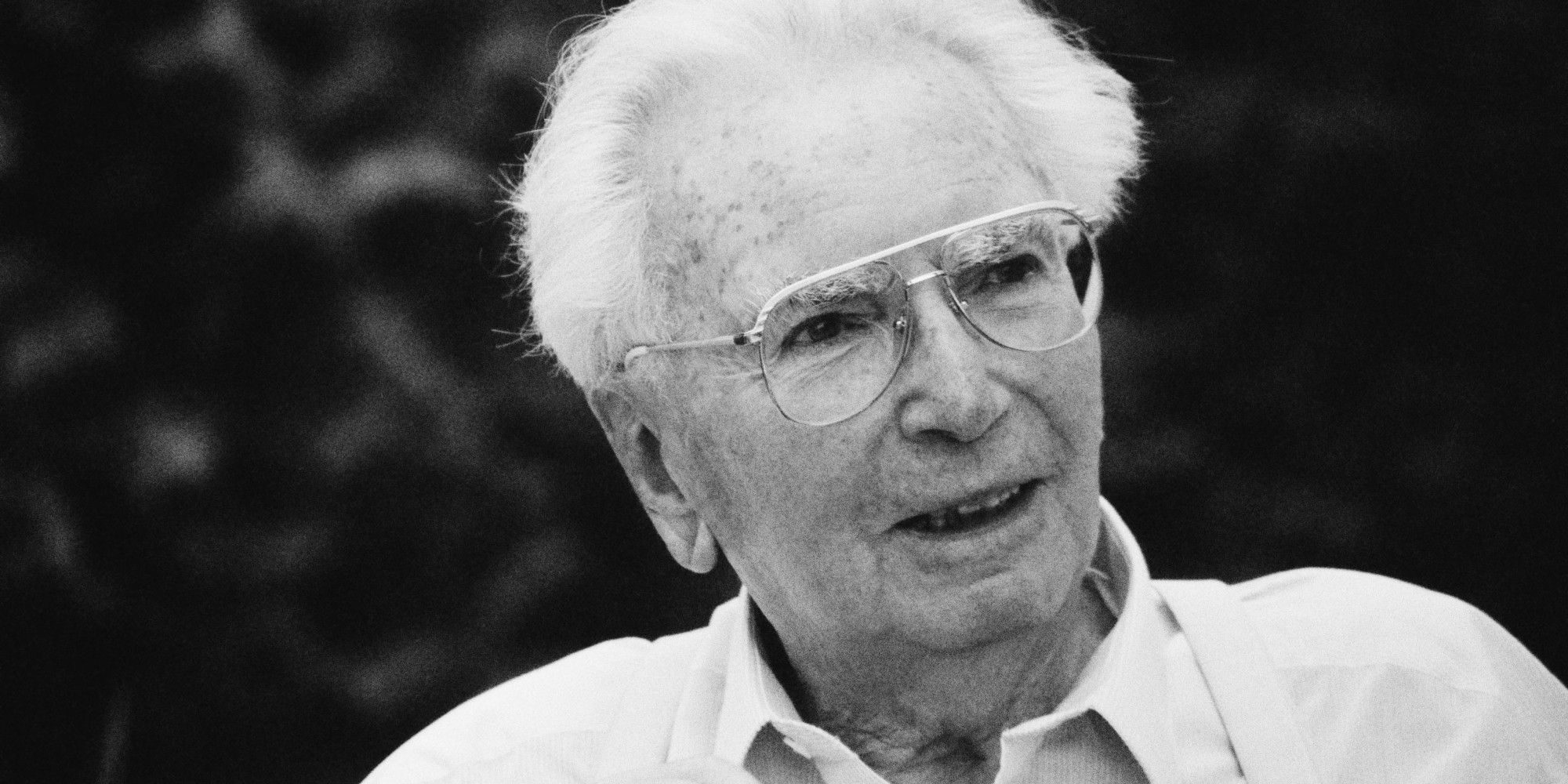
Viktor Emil Frankl (26 March 1905 – 2 September 1997) was an Austrian neurologist, psychiatrist, philosopher, author, and Holocaust survivor.
He was the founder of logotherapy, a school of psychotherapy that describes a search for a life's meaning as the central human motivational force. Logotherapy was recognized as the third school of Viennese Psychotherapy; the first school was created by Sigmund Freud, and the second by Alfred Adler.
Frankl published 39 books. The autobiographical Man's Search for Meaning, a best-selling book that's sold more than 12 million copies, is based on his experiences in various Nazi concentration camps.
Additional Resources:
Viktor Frankl - Why Believe in Others (MUST WATCH)
Viktor Frankl on Human Suffering and Finding Meaning
Viktor Frankl on Finding Meaning in Life
This Book on Amazon:
Yes to Life: In Spite of Everything, by Viktor Frankl
If You Liked This Book:
Man's Search for Meaning, by Viktor Frankl
The Will to Meaning, by Viktor Frankl
The Gulag Archipelago, by Aleksandr Solzenitsyn
Thus Spake Zarathustra, by Frierich Nietzsche
12 Rules for Life, by Jordan Peterson