
Summary:
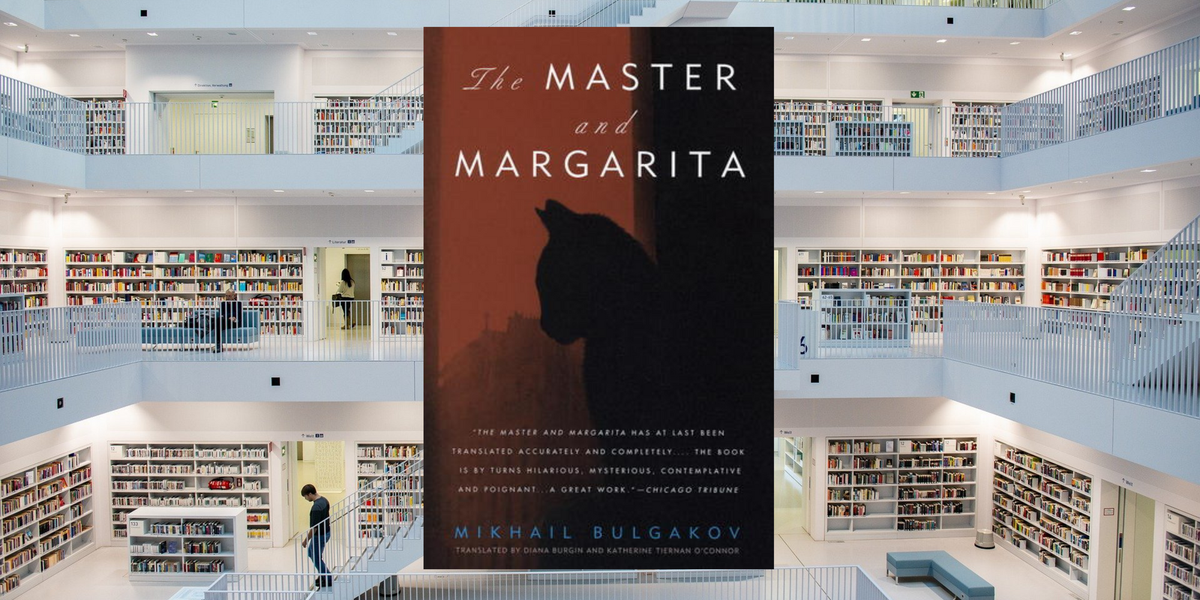
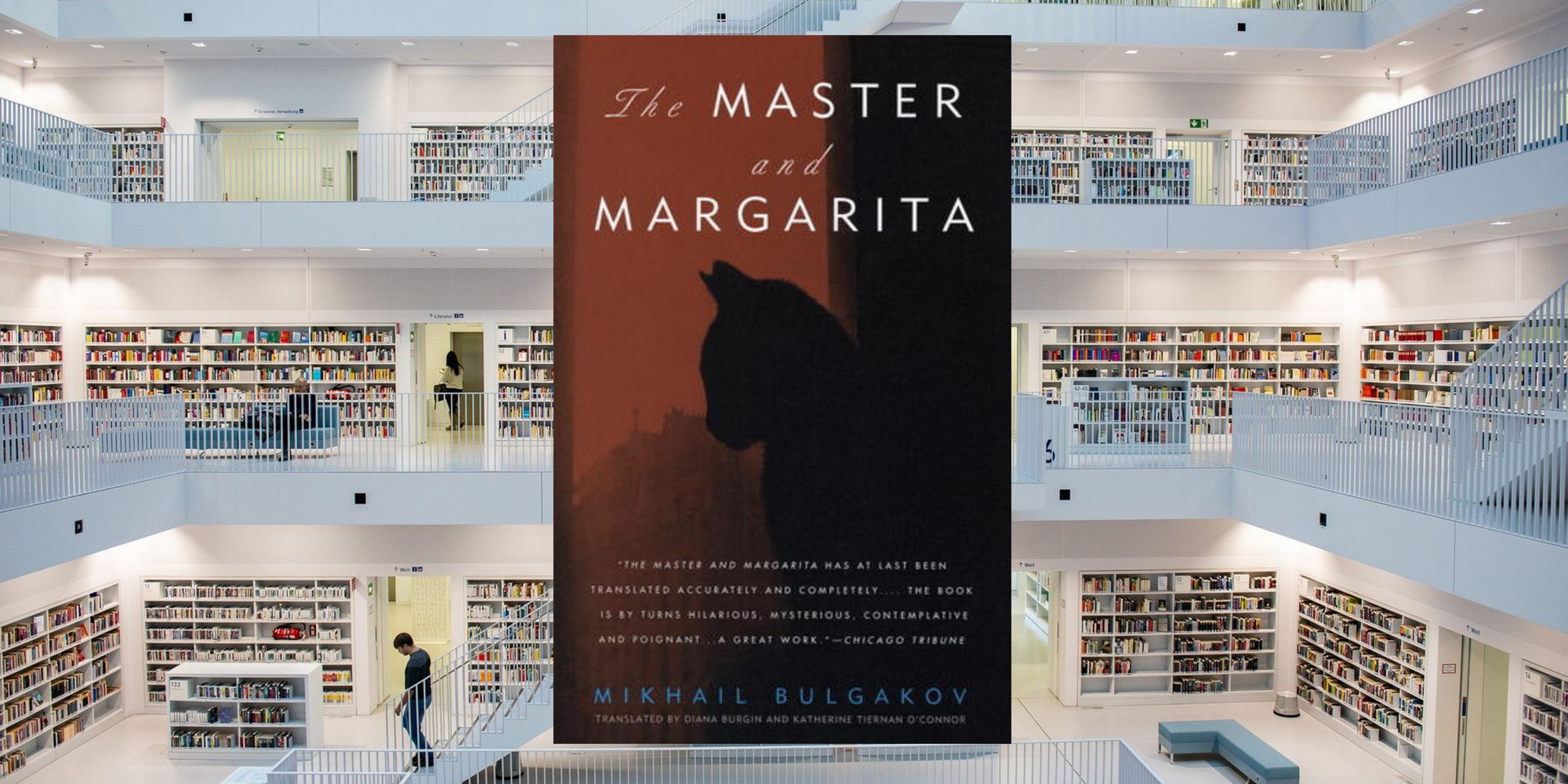
In The Master and Margarita, the Devil and his entourage - including a giant talking cat with a passion for shooting guns and drinking vodka - come to Moscow in order to judge the moral progress of the Russian people, thereby providing the background for one of the greatest love stories in world literature.
It's a satire, pillorying contemporary Russian society under Joseph Stalin, but it's also a story of forgiveness, absurdity, and true love.
And of course, there are philosophical elements as well, in that we have the Devil visiting the heavily atheistic Soviet Union, where an unlucky poet tries to prove to the Devil (in disguise) that he doesn't exist!
On one level, it's just a great story, a work of fantasy, where you have people turned into flying pigs and others losing their heads - literally - but it's so much more than that, and an entire nation fell in love with it, to the point where, if you say "manuscripts don't burn" in Russia, most people will know which book you're referencing.
Indeed, since it took aim at the pointless bureaucracy and gross social injustice of Stalin's Russia, it couldn't be published during Bulgakov's lifetime, but when the magazine Moskva published the first part of the novel in 1966, 150,000 copies sold out within hours.
As for the love story, the title refers to an unnamed author, the Master, who has written a book about Pontius Pilate (who, historically, was the guy who sentenced Jesus to death), the manuscript for which has been lost - and which the Devil resurrects, saying to the Master, "manuscripts don't burn."
Margarita loves the Master so deeply that she is willing to go back to Hell with the Devil out of love for the Master. Naturally, the unnamed Master is thought to refer to Bulgakov himself, since he was unable to publish the book during his lifetime, seeing as the book was such a brutal indictment of an evil and senseless regime. Oh yea, and the talking cat, Behemoth, always comes through with the comic relief!
Key Ideas:
#1: Forgiveness is a very strong theme in this book, and the alternate storyline involves a reluctant Pontius Pilate sentencing Jesus to death and experiencing heavy guilt forever afterward.
#2: The question of "who governs human life" comes into play, especially at the beginning, where Woland (the Devil) questions whether humans, who live such vanishingly short lives, can be said to be in control of anything at all.
#3: There are satisfying literary connections everywhere throughout, especially to Goethe's Faust. Indeed, in Faust, the demon (Mephistopheles) at one point takes the form of a black poodle. Fast forward to The Master and Margarita, and Woland (the Devil) is seen carrying a cane which has a grip in the shape of...wait for it...a black poodle. If you love hunting for literary allusions and references, The Master and Margarita will not disappoint.
#4: "There are no evil people in the world." This line appears in the book. Do you believe that that's true? Could it be that there are no evil people in the world, but that those who commit evil acts are, as Plato said, ignorant of the Good?
#5: “What would the earth look like if shadows disappeared from it?” What would life be like without death? Could "up" exist without "down"? Trying to expurgate the shadows and the evil from the world would be like trying to keep the mountains while getting rid of the valleys.
#6: “Everything will turn out right, the world is built on that.”

Book Notes:
"...who are you, then?"
"I am part of that power which eternally wills evil and eternally works good."
Professor Woland (who is actually the devil himself) arrives with a cane, the head of which is the head of a black poodle. In Goethe's Faust, Mephistopheles first takes the form of a black poodle.
“But here is a question that is troubling me: if there is no God, then, one may ask, who governs human life and, in general, the whole order of things on earth?" "Man governs it himself." "Pardon me, but in order to govern, one needs, after all, to have a precise plan for a certain, at least somewhat decent, length of time. Allow me to ask you, then, how can man govern, if he is not only deprived of the opportunity of making a plan for at least some ridiculously short period - well, say, a thousand years - but cannot even vouch for his own tomorrow?"
“He treated me hostilely at first and even insulted me - that is, thought he insulted me - by calling me a dog. I personally see nothing bad about this animal, that I should be offended by this word."
“There are no evil people in the world.”
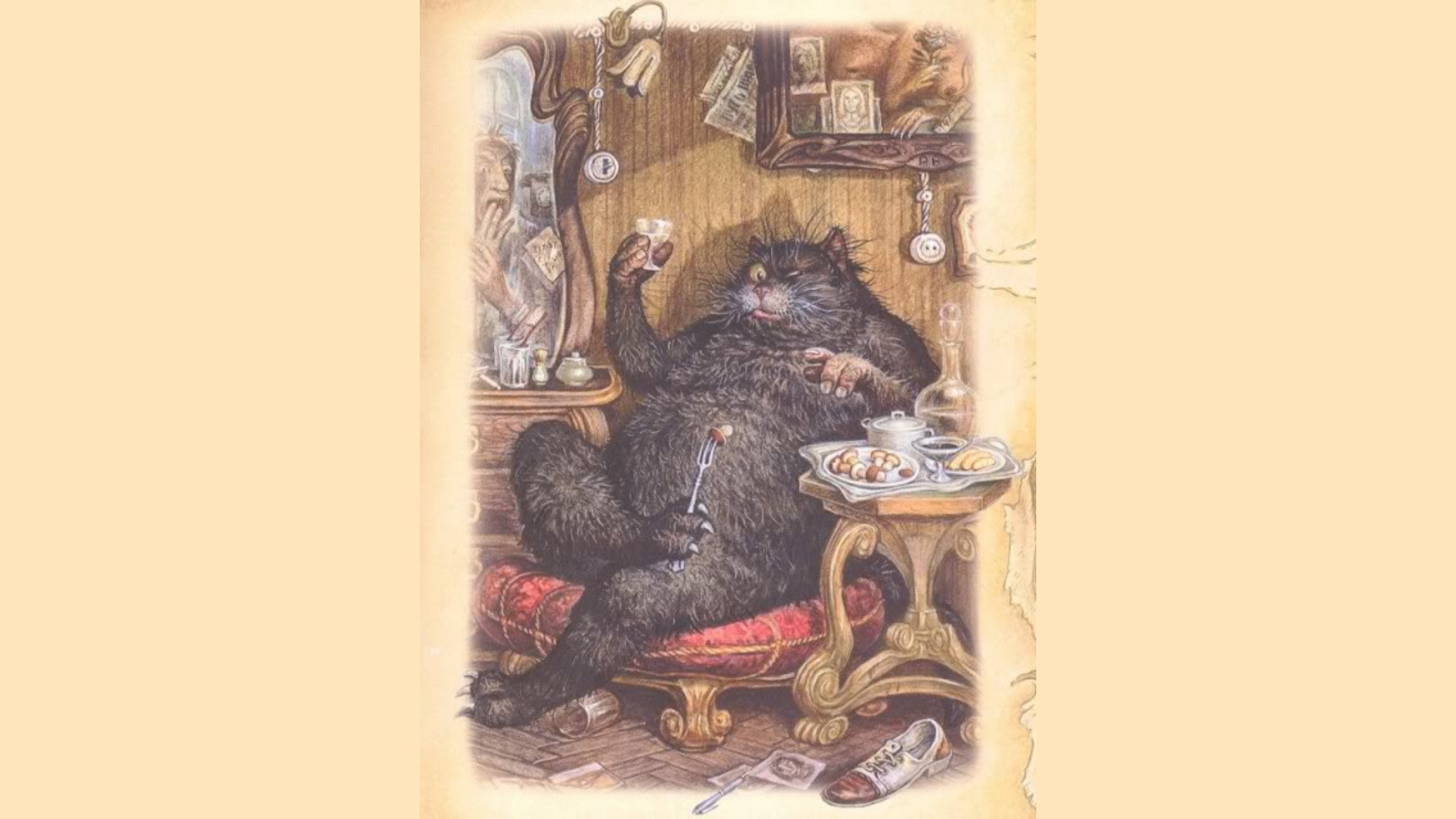
"Neither the conductress nor the passengers were struck by the essence of the matter: not just that a cat was boarding a tram-car, which would have been good enough, but that he was going to pay!"
“But as soon as the conductress yanked the cord and the tram-car started moving off, the cat acted like anyone who has been expelled from a tram-car but still needs a ride. Letting all three cars go by, the cat jumped on to the rear coupling-pin of the last one, wrapped its paws around some hose sticking out of the side, and rode off, thus saving himself ten kopecks."
“There is no greater misfortune in the world than the loss of reason.”
“Love leaped out in front of us like a murderer in an alley leaping out of nowhere, and struck us both at once.”
“I had the feeling, and I couldn't get rid of it, that the authors of these articles were not saying what they wanted to say, and that their rage sprang precisely from that."
“How many times have I told you that your basic error consists in underestimating the significance of the human eye. Understand that the tongue can conceal the truth, but the eyes - never!"
“Devil take you? That, in fact, can be done!”
"What other prodigies occurred in Moscow that night we do not know and certainly will not try to find out - especially as it has come time for us to go on to the second part of this truthful narrative. Follow me, reader!"
“Two eyes were fixed on Margarita's face. The right one with a golden spark at its bottom, drilling anyone to the bottom of his soul, and the left one empty and black, like the narrow eye of a needle, like the entrance to the bottomless well of all darkness and shadow."
“Everything came to pass, did it not? The head was cut off by a woman, the meeting did not take place, and I am living in your apartment. That is a fact. And fact is the most stubborn thing in the world. But we are now interested in what follows, and not in this already accomplished fact.
You have always been an ardent preacher of the theory that, on the cutting off of his head, life ceases in a man, he turns to ashes and goes into non-being. I have the pleasure of informing you, in the presence of my guests, though they serve as proof of quite a different theory, that your theory is both solid and clever. However, one theory is as good as another.
There is also one which holds that it will be given to each according to his faith. Let it come true! You go into non-being, and from the cup into which you are to be transformed, I will joyfully drink to being!"
"The cat made lengthy preparations, turning his back to the pillow. Margarita sat with her fingers in her ears and looked at the owl dozing on the mantelpiece. The cat fired both guns, after which Hella shrieked at once, the owl fell dead from the mantelpiece, and the smashed clock stopped. Hella, whose hand was all bloody, clutched at the cat's fur with a howl, and he clutched her hair in retaliation, and the two got tangled into a ball and rolled on the floor. One of the goblets fell from the table and broke."
“Never ask for anything! Never for anything, and especially from those who are stronger than you."
“Ah, yes, yes, I had the pleasure of meeting that young man at the Patriarch's Ponds. He almost drove me mad myself, proving to me that I don't exist."
“Manuscripts don’t burn.”
“'A writer is defined not by any identity card, but by what he writes. How do you know what plots are swarming in my head? Or in this head?' and he pointed at Behemoth's head, from which the latter at once removed the cap, as if to let the citizeness examine it better."
“What would the earth look like if shadows disappeared from it?”
“Everything will turn out right, the world is built on that.”
Action Steps:
So you've finished reading the book. What do you do now?
#1: Read The Gulag Archipelago, by Aleksandr Solzhenitsyn.
Widely considered one of the greatest books of the 20th century, Gulag chronicles the author's experiences over his eight years' imprisonment inside the Soviet prison camp system that claimed millions of lives over many years during the 20th century. This is the society that Bulgakov is writing from within in The Master and Margarita.
Speaking of Gulag, Jordan Peterson once described the book as being like: the smartest person you’ve ever known, shaking you by the shoulders for 2,000 pages. It comes in three volumes, so don't feel like you have to read the whole thing. Part I will give you an idea.
#2: Read a banned book.
Thousands of books have been banned over the years, usually for transgressing religious or ethical norms. But take a look at a list of banned books and see which ones we'd be missing out on if those efforts at censorship had succeeded. We wouldn't have Animal Farm, Brave New World, Lolita, American Psycho, or The Satanic Verses, among many others. They even once banned The Catcher in the Rye! The nerve!
#3: Take another look at the last time someone mistreated you.
Extend to them the benefit of the doubt that they are mistaken as to which actions are good and appropriate, and which are bad and therefore harmful. Consider that if they had received the benefit of a proper moral education, they may not have acted in such a way. Also consider the times when you have acted inappropriately, simply because you didn't know any better at the time.
#4: Forgive someone.
It doesn't matter who it is or what they've done, just forgive them. Don't necessarily forget, just forgive. Our lives are so short that we barely have any time to make friends, so how do we ever have time to make enemies?
About the Author:
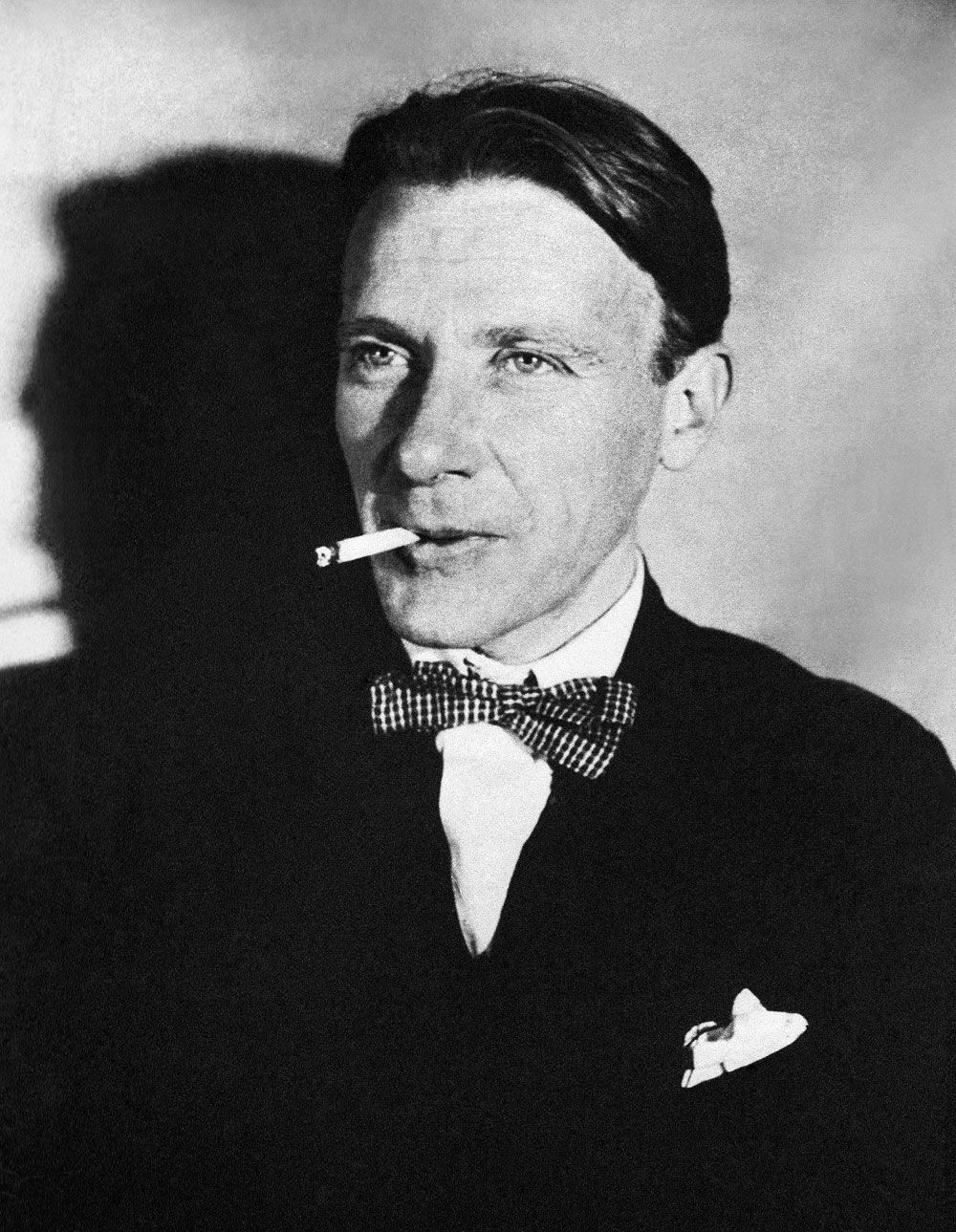
Mikhail Afanasyevich Bulgakov was a Russian writer, medical doctor, and playwright active in the first half of the 20th century. He is best known for his novel The Master and Margarita, published posthumously, which has been called one of the masterpieces of the 20th century.
This Book on Amazon:
The Master and Margarita, by Mikhail Bulgakov