

Summary:
This Book is For:
- Lovers of life who want to savor their entire existence and leave nothing unfinished!
- Intellectuals who feel as though they're missing something important about life that isn't to be found in any book.
- People who are tired of negativity and apathy and hopelessness, and who want to turn their face to the sunlight instead.
“Great visionaries and poets see everything in the same way – for the first time. They see a new world before them each morning. No, they do not see this new world; they create it.”
-Nikos Kazantzakis, Zorba the Greek
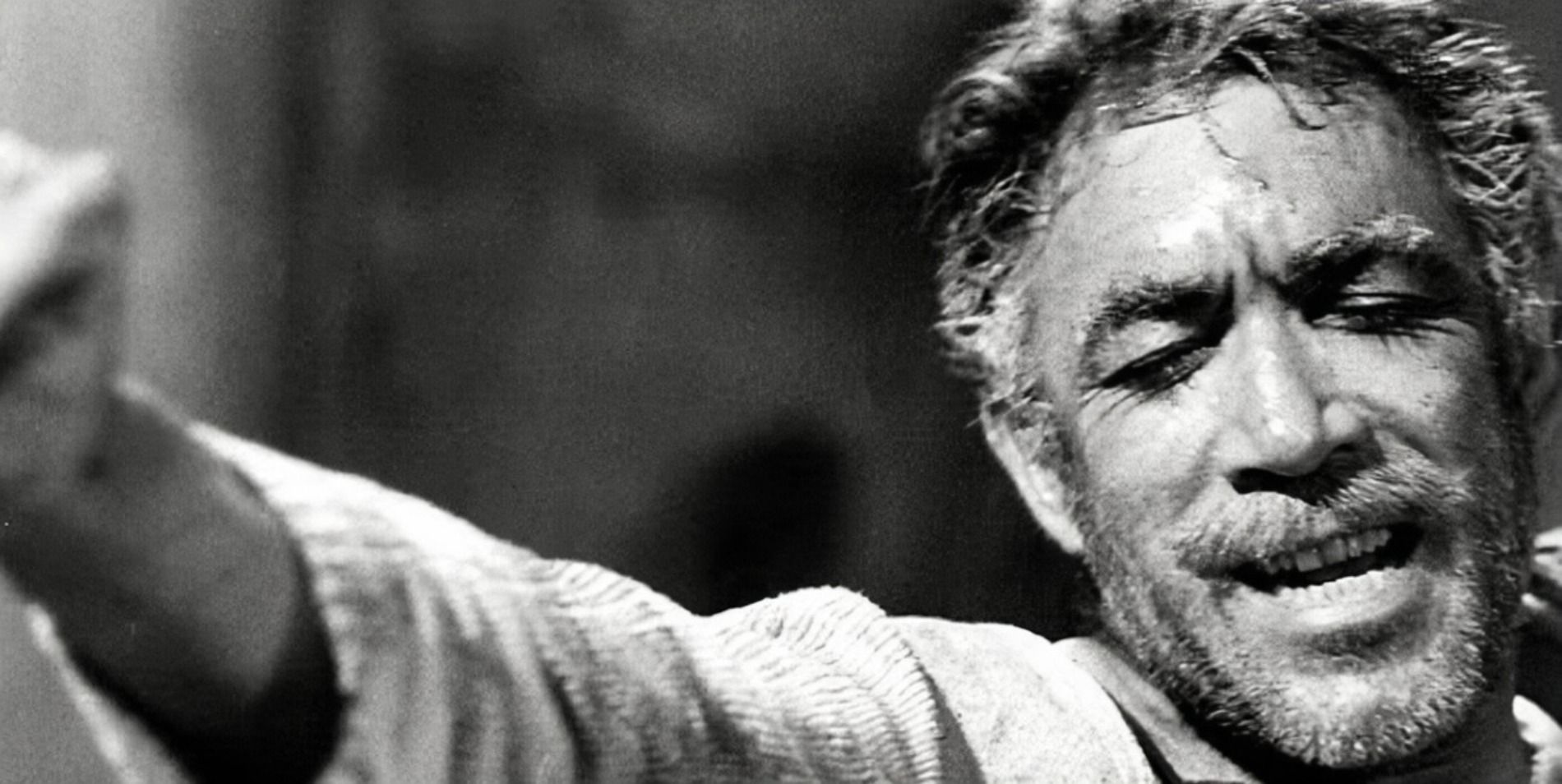
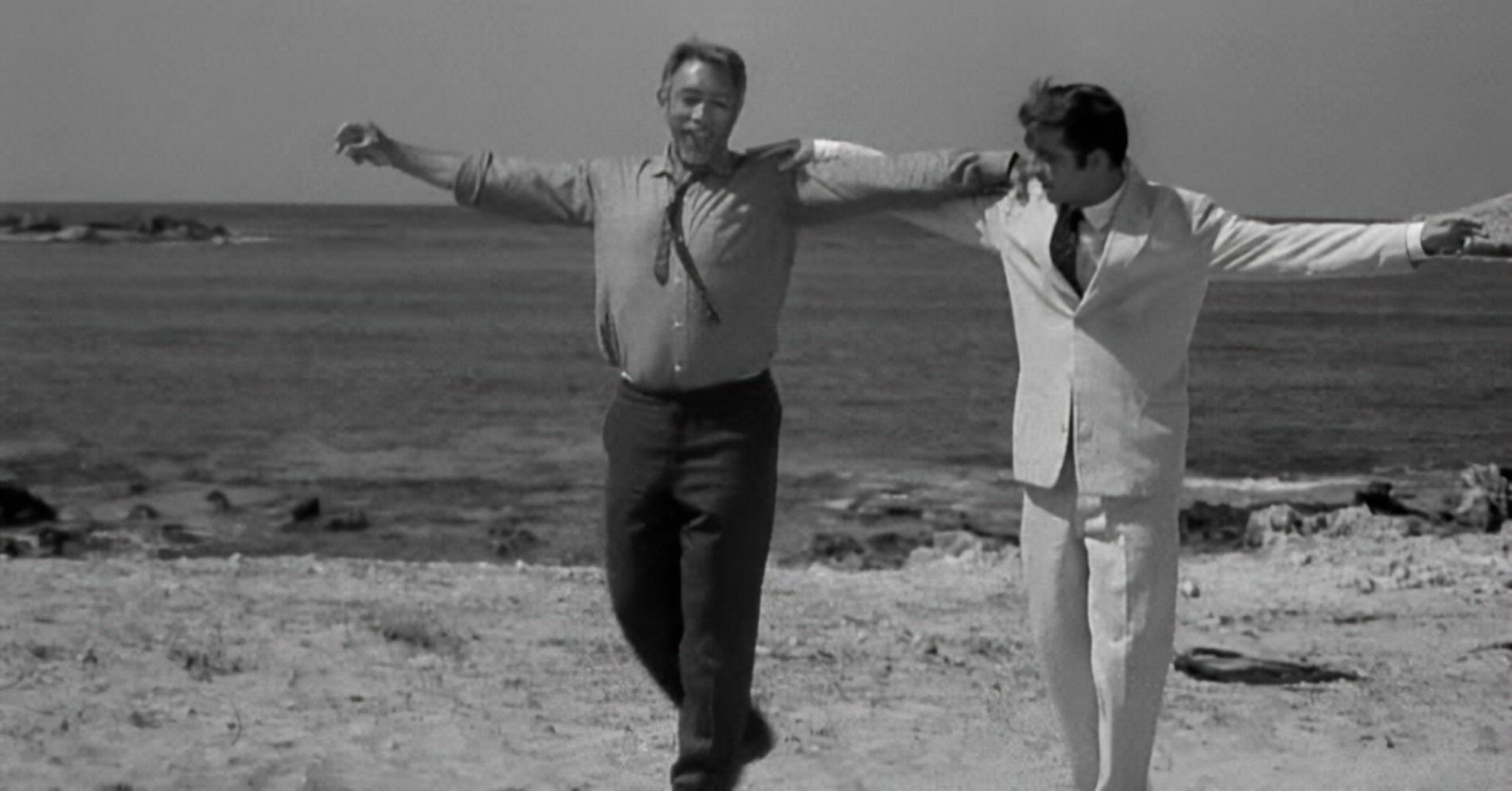
Anthony Quinn, the actor who played Zorba in the 1964 movie adaptation of this wonderfully life-affirming book, once had a knife pulled on him in New York City's Central Park. The attacker had come up to Quinn from behind and, with the knife pointed against his back, ordered him to turn around.
Quinn had just been nominated for an Oscar for portraying Kazantzakis's ecstatic, life-loving creation who laughed at death, and inspired hundreds of thousands of readers with his philosophy of “living immediately and intensely.” But in the dark of night, the knife-wielding attacker couldn't possibly have known who he was about to stab.
What happened — and this is true! — is that when he turned around, the moon lit up Quinn’s face, and there was a flash — not of steel, but of recognition. That’s…that’s the guy from the movie! That’s Zorba the Greek — the Yea-sayer, the Life-affirmer, the Death-renouncing Zorba the Greek!
History doesn’t record whether the mugger held onto his knife, but he immediately pulled it away from Quinn’s back and exclaimed, “Mr. Zorba! I’m so sorry!” And ran off into the night.
To anyone who has had their life changed by this book - and there are many, myself included - the attacker's reaction seems completely appropriate. Zorba the Greek is one of the most powerful, life-affirming books you’re ever likely to come across, and I don’t think that anyone who is somewhat alive and breathing can read this book and sit still. And I certainly would never be able to bring myself to hurt the man who brought Kazantzakis's character so vividly to life.
Alright, so what is it actually, you know, about? I was just getting to that! The story is told by an unnamed narrator (usually just referred to as "Boss" by Zorba) who is actually based on Kazantzakis himself. Alexis Zorba is also based on a real person, George Zorbas, who Kazantzakis met and became close friends with in real life.
The book opens in a cafe in Piraeus, shortly after the end of the First World War, and the narrator has just separated from another close friend of his, Stavridakis, who has gone off to the Caucasus to fight for the Greek cause. Feeling chastened by his friend, he decides to lease a lignite mine on Crete and lead a more active life, not as a "pen-pusher" who lives only for books and words.
While he's sitting there reading his copy of Dante's Divine Comedy, Zorba approaches him and asks him for a job. Moved by Zorba's exuberant first impression, he immediately hires Zorba to be his foreman, and off they go!
I won't ruin the ending, but...the mining doesn't go so well. There are love affairs and vengeful mobs, mine collapses, financial ruin, and long philosophical discussions between the Boss and Zorba about life, death, and everything in between. In the end, reflecting on his relationship with Zorba, the narrator sees that "Zorba taught me to love life and not to fear death.”
One of the best reviews I've read says that "this is a novel that demands you put it down so that you can go out and enjoy life." That's so true! Throughout the whole book, you feel - almost literally feel - Kazantzakis shaking you by the shoulders, shouting into your ears, "Live! Live now! Breathe deeply! While you still can!"
And yet, it was written during one of the darkest periods of Kazantzakis's whole life. During the worst days of the Second World War, on 22 August 1941, he wrote to a friend: “I cannot find work, no one will stage my plays, and my financial situation is absolutely critical."
Surrounded by the most appalling and miserable death and destruction witnessed by the world in the 20th century, with very little real hope for the future and no end to his troubles in sight, Kazantzakis produced one of the most hopeful, optimistic, and joyous books ever written. Surrounded by death, he chose life. With every reason to be sad, he claimed his own happiness.
He observed "life’s passing and our passing with it," and knew that this earthly happiness was ours for just a brief moment between two eternities - the eternity before we were born, and the eternity after our death. We have to live now - there is no "later." As he put it, savoring the natural beauty of Crete one fine day:
"The voices of those cranes, echoing once again within me, was the terrible forewarning that this life is unique for each human being, that no other life exists, that we may enjoy it, enjoy it here, that it passes quickly, and that no other opportunity will be given us in the whole of eternity.
Hearing this message that is so merciless yet so filled with mercy, one’s mind vows to conquer its own degradation and weakness, to conquer laziness and great futile hopes in order to catch full hold of every split second that is departing forever.”
Key Ideas:
#1: Live the Entire Time You're Alive
The most important idea you could ever take away from Zorba the Greek is the recognition of the infinite value of human life. All human life. Looking out over the cosmos, what strikes you is that life is exceedingly rare. And looking out over our own lives, we see that it's also very short. Life simply doesn't emerge all that often or for all that long, and while we're here living and breathing and loving, we have to capture it.
We live in a universe of opposites - light and dark, up and down, shape and solid - and one of the most profound realizations we're capable of experiencing is that we face a choice in our daily lives, and that choice is between life and death. Always choose life.
Choose life, and protect it wherever you find it, because a multitude of deadening influences exist all around us as well. I'm not just talking about physical death either, but a kind of psychological, emotional death that happens to people long before they take their last breath.
Passive consumption of fear-based media is a kind of death, same as the seditentary existence many of us live because we're too damn busy getting and spending ever to make it outside and live it up with the people we care about!
We have an entire eternity to be dead, but only a brief period in the vastness of time and space in which to be alive. To be HERE! Art is forever, but life is brief, and Zorba is our constant, exuberant, boisterous reminder that we can say "YES" to life, and that that will make all the difference.
#2: Books Are Not Real Life
“How was it that I, who loved life so much, had been involved with paper and ink for so many years?”
The main conflict that the narrator experiences is between the pale imitation of life found in books, and the heartrendingly real existence experienced by the likes of Zorba. It's a conflict - and a choice - between Buddha's ascetisism and life denial, and Zorba's ecstatic earthly wisdom.
Books are not real life. That much is clear. But too often, I feel, people "use" books as a kind of escape from their real life, when in fact books should be a discovery of their real life!
There's so much wisdom to be found in books, and I've spent so many unforgettable afternoons holding entire worlds in my own two hands, but there comes a time when you have to put down the book and go out and live your actual life.
Reading is one of the highest-leverage, most amazing things you could ever spend your time doing, but it's a great big universe out there! Go outside and meet it! Don't be such a pen-pusher!
#3: Seeing Everything for the First Time
“He stares likewise with protruding eyes and asks in the same way when astonished by the sight of a man, or a blossoming tree, or a refreshing glass of water. Each day Zorba views everything as though for the first time.”
Some of the best advice I've ever received is to live as though it were simultaneously my first day on Earth, my last day on Earth, and as though I was going to live forever. That's a lot to keep straight at once, and it makes it difficult to plan your day! But it's fantastic advice, and here's why...
Living as though it were your last day is pretty common advice, and it's not bad as far as it goes. But, if you were really to do this and take it to its logical conclusion, you'd probably ruin your life by about 10:30am!
Yes, you'd probably "live life to the fullest," but many people would tell off their bosses and ruin their chances of ever getting hired anywhere again; they'd pull all these dangerous stunts and be awfully rude to people they thought they'd never see again. It would be mayhem!
So it's a good idea to live as though you're going to live forever as well, because then you'll keep in mind that your actions have consequences and that you'll have to live with them for a very long time. But what about living as though it were your first day?
Well, how miraculous and just fucking awesome would everything seem if you were seeing your world for the very first time?
I mean, you probably have this little box in your pocket that you can use to contact friends and family thousands of miles away and see their faces instantly onscreen; you turn this thing in your kitchen and life-giving water just flows out of your tap until you decide to stop it; you step outside your front door and you're exposed to wonders the likes of which billions of humans in the past could have only dreamt of!
Life is amazing, but we get numbed to it so easily! We forget how amazing everything is; but living as though it were your first day would change all that. Keeping all those different viewpoints in mind helps you avoid getting complacent. It goes even deeper than that, though, because Kazantzakis also points out that life and death themselves work together in exactly the same way. He says:
“Those two paths are equally uplifting and rugged; both can lead to the summit. To act as though death does not exist and to act with death in mind at every moment – perhaps both paths are the same.”
#4: Lose an Hour in the Morning and You'll Be Chasing It All Day
“I took out my fellow traveler, a pocket edition of Dante’s Divine Comedy. Lighting my pipe and leaning against the wall, I made myself comfortable. For a moment I weighed my choice. From which part should I extract the immortal verses – from the scorching tar of the Inferno, the pleasantly cool flame of Purgatory, or should I pounce straightaway onto the uppermost floor of human hope? The choice was mine. Holding my microscopic edition of Dante, I rejoiced in my freedom. The verses I chose now, in early morning, would control my entire day.”
I love this quote from early on in the book because it illustrates how much choice we have about what we choose to look at and what we end up seeing. If you look for the good, you'll find it. And vice versa.
When the narrator is trying to decide what he'll fill his mind with this morning, he realizes that what he puts into his mind is what he'll get out of it. Garbage in, garbage out; beauty in, beauty out. We decide.
How we begin is so important too. It's said that if we lose an hour in the morning we'll be chasing it all day, and I've found that to be excellent productivity advice. But it's so much more! If we fill our minds with negativity and awfulness and despair in the morning, that's exactly what we'll go out into the world and see. But we have a choice! We can "start in Paradiso," the third part of The Divine Comedy, and that's what our day will be like as well.
#5: No Half Measures!
“Right now I’m thinking of our meal: chicken, plus pilaf topped with cinnamon. My whole mind is steaming just like the pilaf. Let’s eat first, stuff our faces; then we’ll see. One thing at a time in proper order. Right now we’ve got pilaf in front of us; let our minds be pilaf. Tomorrow we’ll have lignite in front of us, so let our minds, then, be lignite. No half measures, understand?”
If we try to do more than one thing at once, we dilute our power. What Zorba has figured out is that when you have your supper in front of you, eat! When you have your next problem in front of you, attack it! When you have the person you love in front of you, love them! No multi-tasking, no split-consciousness. No half measures!
This is a powerful approach to life, as illustrated by the narrator in this passage below. He's talking about concentrating our consciousness like the sun's rays, thereby bringing miracles into existence:
“‘There are mountains,’ I continued, ‘huge, God-inhabited mountains filled with monasteries occupied by monks in yellow robes who sit cross-legged for one month, two months, six months thinking of only one thing. One thing, do you hear, one, not two! They don’t think of women and lignite or of books and lignite, as we do, but concentrate their minds, Zorba, on a single thing only, and perform miracles. That’s how miracles happen.
You’ve seen, haven’t you, Zorba, what happens when you place a magnifying glass in sunshine and gather its rays into just a single spot? The spot soon bursts into flames. Why? Because the sun’s power is not dispersed but is entirely concentrated on that spot. The same happens with the human mind. You produce miracles if you cast your mind on one and only one thing.’”
#6: Capture Your Own Happiness
“We sense happiness with difficulty while experiencing it. Only when it has passed and we look back do we suddenly comprehend, sometimes with astonishment, how happy we have been. I, however, on this Cretan shore, was experiencing happiness while being simultaneously aware of my happiness.”
I'm trying not to quote the nursery rhyme right now, but it's true: so often, we're happy without realizing it. Only after the good times have passed, and we're facing some daunting challenge, uncertainty, or sadness do we realize how good we had it before. How happy we were! And yet we had no idea!
This is a legitimate challenge for many people - they've been fed so much negativity, trained so completely to look for threats and to ignore contentment, that they find it much easier to be fearful than to realize that they could be happy instead. And I mean, if we don't realize that we're happy, are we? I'm not even sure; I'm asking you what you think.
One thing I started doing that I've never regretted - seriously, I just started doing this by accident one day and it's been one of the greatest things I've ever done - is to create what I've very creatively called my Good Times List. It's exactly what it sounds like! I'm that good at coming up with names for things.
Anyway, years later I now have pages and pages and pages of descriptions of awesome things that have happened to me, things and people I've loved, and so much more. No matter what I'm feeling in the present moment, I can go back to that list at any time and recapture my own happiness. You might try something similar! If you think of a better name for it, please let me know.
#7: Never Settle Down
“As I get older I become wilder, by God. Why do people sit there and keep telling me that old age tames a person, makes him lose his zest, stretch out his neck when he sees death and say, ‘Slaughter me, please, dear agha, so that I may become a saint’? As for me, as I get older I become wilder. I don’t quit. I want to eat up the whole wide world.”
Never let an old person move into your body! I don't care how old you are! Don't do it! I'm sure Zorba would agree with me, as evidenced by the quote above. Actually, his last words in the book are, "People like me should live a thousand years! Good night!"
You see, too many people act their age as they get older. They settle down into what they're "supposed" to do, which is subtly become more feeble and less vibrant, to stop living way before they stop breathing. This is a literally deadly mistake, and probably one of the "sins" most reprehensible to people like Zorba.
Just like we've covered in the book breakdown on Cicero's How to Grow Old:
“A good old age begins in youth. Cicero says the qualities that make the later years of our lives productive and happy should be cultivated from the beginning. Moderation, wisdom, clear thinking, enjoying all that life has to offer – these are habits we should learn while we are young since they will sustain us as we grow older. Miserable young people do not become happier as they grow older.”
#8: Behind the Mountains Are More Mountains
“But Kazantzakis takes this idea further; he proposes that even if Sisyphus succeeds in pushing the rock all the way to the top of the hill, he would then seek a higher hill, and start a new ascent, for the ascent itself is the enlightenment.”
One of the related books I quote from below is Albert Camus's The Myth of Sisyphus, one of the most influential philosophy books of the 20th century. In Greek mythology, Sisyphus was the guy who cheated death by escaping from the underworld and was punished by being made to roll a giant rock up a hill for all eternity.
The idea was that such a boring, repetitive, meaningless task would be the most soul-crushing punishment imaginable, but Camus says that "we must imagine Sisyphus happy." Sisyphus possessed the power of human choice, and he fashioned his own fate, with his own will, and the gods can never take that away from him.
But Kazantzakis takes this idea further and asks, "If Sisyphus ever did manage to roll the rock up the hill and make it stay there without rolling back down again...then what?"
Kazantzakis's answer is that Sisyphus would immediately seek higher mountains - a greater challenge, a more demanding test - and begin to scale those! He would ask, "What else am I capable of? What other mountains are there that I could climb?"
"Achieving" enlightenment would be - pardon my Greek - totally fucking boring. The climb itself is the enlightenment, the journey itself is the destination, and the life you are living right now is It! Paradise is right here, right now, and Heaven is under our feet as well as above our heads. That's the Great Insight of Zorba the Greek, and your task now is to view the infinite horizon of your life stretching out wide before you and commit to living it.

Book Notes:
“Yet if I wished to single out those individuals who did engrave their traces most deeply upon my soul, I would presumably designate these four: Homer, Bergson, Nietzsche, and Zorba.
The first was a serene, all-bright eye for me like the sun’s disk, illuminating everything with redemptive brightness. Bergson released me from insoluble philosophical anguishes that had tormented my early youth. Nietzsche enriched me with new anguishes and showed me how to transform misfortune, sorrow, and uncertainty into pride. Zorba taught me to love life and not to fear death.”
“Mothers clutched sons, wives husbands, friends friends as though separating forever, as though this minor parting reminded them of the major one.”
“I remained silent. Listening to Zorba, I sensed the world’s virginity being renewed. Everyday things that had lost their luster regained the brightness they had possessed the moment they emerged from God’s hands. Water, women, stars, and bread returned to their primordial, mysterious source; the divine wheel regained its rotational momentum in the sky.”
“He possessed precisely what a pen pusher needs for deliverance: the primitive glance that snatches nourishment lovingly from on high; the creative artlessness, renewed at each daybreak, that views everything unceasingly as though for the first time, bequeathing virginity to the everlastingly quotidian elements of wind, sea, fire, women, and bread; the sureness of hand, the freshness of heart, the gallant stalwart’s ability to poke fun at his own soul for seeming to harbor a power higher than the soul; finally, that wild, throaty laugh welling up from a source deeper than a man’s inner depths, a laugh that erupted redemptively at crucial moments from Zorba’s elderly chest, exploding with sufficient power to demolish (and did demolish) all the barricades – morality, religion, nationalism – erected around themselves by wretched, lily-livered humans to let them hobble securely through their diminished mini-lives.”
“Have you ever seen the sort of ship’s sails that have been mended in a thousand places with red, yellow, and black patches sewn with a strong cord, so that these sails never tear again even in the greatest tempests? That’s what my heart is like. Pierced a thousand times, patched a thousand times, durable.”
“The house seems empty to you, yet it has everything. A true human being needs so few things.”
“‘You don’t want trouble!’ said Zorba, stupefied. ‘So, what do you want, Boss?’ I did not answer. ‘Life is trouble; death isn’t,’ Zorba continued. ‘Do you know the definition of being alive? To undo your belt and look for trouble.’”
“My life had taken the wrong path; my contact with fellow humans had ended up as an internal monologue. My degeneration was so great that if I were to choose between loving a woman or reading a good book about love, I would choose the book.”
“No other Paradise exists, my poor friend. Don’t listen to the priests. No other Paradise exists!”
“I felt that what he could not say to me with words (or preferred not to) he was saying to me with the santouri – that my life was going to waste, that the widow and I were two insects living for a split second in sunlight and then lying dead for eternity. Last chance! Last chance!”
“If hell exists, I’ll go to hell, and that will be the cause – not because I stole, killed, committed adultery. No! No! Those sins are nothing; God forgives them. But I’ll go to hell because on that night a woman was waiting for me in bed and I did not go.”
“Don’t laugh, Boss! If a woman sleeps alone, the blame falls on us men, all of us.”
“‘Tomorrow,’ he said, ‘I’ll need lots of strength. I need to wrestle with thousands of demons. Good night!’”
“I recalled one dawn when I had chanced upon a butterfly’s cocoon in a pine tree at the very moment when the husk was breaking and the inner soul was preparing to emerge. I kept waiting and waiting; it was slow and I was in a hurry.
Leaning over it, I began to warm it with my breath. I kept warming it impatiently until the miracle commenced to unfold before my eyes at an unnatural speed. The husk opened completely; the butterfly came out.
But never shall I forget my horror: its wings remained curled inward, not unfolded. The whole of its minuscule body shook as it struggled to spread the wings outward. But it could not.
As for me, I struggled to aid it with my breath. In vain. What it needed was to ripen and unfold patiently in sunlight. Now it was too late. My breath had forced the butterfly to emerge ahead of time, crumpled and premature. It came out undeveloped, shook desperately, and soon died in my palm.
This butterfly’s fluffy corpse is, I believe, the greatest weight I carry on my conscience. What I understood deeply on that day was this: to hasten eternal rules is a mortal sin. One’s duty is confidently to follow nature’s everlasting rhythm.
I perched on a boulder to enable myself to assimilate this New Year’s thought in peace. ‘Ah,’ I said to myself, ‘let me regulate my life in this fashion in this new year without any occasion of hysterical impatience.
Let this tiny little butterfly, which I assassinated because I was in too much of a hurry to bring it into life, always fly in front of me, showing the way! In the same manner, may a prematurely expiring butterfly help one of its sisters, a human soul, to avoid rushing and therefore to manage to unwrap its wings at a leisurely pace.”
“The more I weighed myself down with years, the lighter I grew. At age twenty I began to do crazy things, but just the usual ones. When I reached forty I began without stint to feel young and finally sailed off to do really crazy things. Now that I’ve reached sixty (just between us, Boss, I’m sixty-five), well, now that I’ve reached sixty I swear to God – how can you explain this, Boss? – the world’s too small for me.”
“Confucius says: ‘Many seek a happiness higher than the human being; others seek one lower. But happiness is the same height as the human being.’ That is true. Accordingly, there are as many different forms of happiness as there are human heights.”
“Everything is the same: if I have a wife or don’t have a wife, if I’m honest or dishonest, if I’m a pasha or a porter. The only difference is whether I’m dead or alive.”
“‘Hey, Zorba,’ I kept asking myself, ‘how long are you going to stay alive with your nostrils quivering? You’ll smell the air just a little while longer, poor fellow, so breathe in deeply.’”
“I knew that eternity is each moment that passes.”
“The great ascetic, gathering his disciples around him, cries out: ‘Woe to whoever does not have within him the source of happiness! Woe to whoever wishes to please others! Woe to whoever does not sense that this life and the other life are the same!’”
“The day gleamed like an uncut diamond.”
“God changes his countenance; happy are those who succeed in discerning him behind each mask.”
“Those who live the mysteries lack time and those who don’t lack time don’t live the mysteries.”
“As long as countries exist, the human being will remain a beast, a ferocious beast.”
“Half-finished jobs, conversations, sins, and virtues are what have brought the world to its present mess. Reach the end, everyone! Strike; win the fight!”
“As for me, I remained awake for quite some time. Following stars in the light-blue sky, I observed the entire heavens gradually shift their constellations. My skull, like the dome of an observatory, shifted in its own right as it followed the stars. ‘Watch the stars, and see yourself running with them.’ This sentence of Marcus Aurelius’s filled my heart with harmony.”
“Oh, if only I was as young as you! Women and wine galore, sea and work galore! Full blast no matter what! Work on full blast. Wine, sex, all on full blast. No fear of God; no fear of the Devil. That’s the meaning of youth and strength.”
“Viewing the miracle of the circumambient universe and the similar miracle within myself, I inquired, ‘What is this? How has the world chanced to be well suited to our feet, our hands, our bellies?’ Then I would close my eyes once again and remain silent.”
“‘How many years were required,’ he murmured, ‘how many years for dust to manage to create such a body!’”
“‘A bit of earth,’ he thought, ‘a bit of earth that hungered, laughed, embraced. A lump of mud that wept. And now? Who the devil brings us into the world and who the devil removes us?’”
“What I felt profoundly was that humanity’s highest reach was not knowledge, nor was it virtue, goodness, or victory, but something else, something higher, more heroic and despairing – namely, awe, sacred terror. Beyond sacred terror the human mind cannot go.”
“‘Aren’t you going to answer?’ asked Zorba with anguish. Replying, I attempted to make my companion understand the meaning of sacred terror.
‘We are small worms, Zorba, very small worms on the tiniest leaf of a gigantic tree. This tiny leaf is our earth; the other leaves are the stars you see moving at night. We drag ourselves along on our tiny leaf, eagerly ferreting around in it. We smell it: it has an odor. We taste it: it can be eaten. We strike it: it resounds, shouting like a living thing. Some of us human beings, the most fearless, reach the edge of the leaf. We bend over this edge with open eyes and ears, observing chaos below. We shudder.
We divine the terrible drop beneath us, occasionally hear a sound made by the gigantic tree’s other leaves, sense the sap rising from the roots, swelling our hearts. In this way, leaning over the abyss, we realize with all our body and soul that we are being overcome by terror. What begins at this moment is –‘ I stopped. I had wanted to say, ‘What begins at that moment is poetry,’ but Zorba would not have understood, so I kept silent.
‘What begins,’ asked Zorba eagerly. ‘Why did you stop?’
‘At that moment, Zorba, begins the great danger,’ I replied. ‘Some become dazed and delirious; others, growing afraid, take great pains to discover an answer that will brace their heart. These say, ‘God.’ Still others, calmly, bravely, look down at the drop from the leaf’s edge and say, ‘I like it.’”
“To say yes to necessity, transubstantiating the unavoidable into one’s own free will, is perhaps our only path to deliverance.”
“Eating, we would avoid reawakening those large demons inside us - love, death, fear.”
“My words were made of paper; they descended from the head and were sprinkled with only a trickle of blood. Whatever value they possessed derived from that trickle.”
“The summer sky was filled with stars flinging sparks into the night.”
“I was happy. I kept saying to myself, ‘This is true happiness: not to have any ambition yet to work doggedly as though you had every ambition; to live far from other people, yet to love them and not need them; for it to be Christmas, to eat and drink well; yet afterward, alone, to escape every lure and to possess the stars above you, with the land to your left, the sea to your right, and suddenly to understand that life, having brought its final accomplishment to conclusion in your heart, has turned into a fairy tale.’”
“Action, action! No other salvation exists.”
“I did this, that, and other things in my life, but still not enough. People like me should live a thousand years. Good night!”
“Kazantzakis writes: ‘Zorba taught me to love life and have no fear of death. If it had been a question in my lifetime of choosing a spiritual guide, a guru as the Hindus say, a father as say the monks at Mount Athos, surely I would have chosen Zorba.’”
Important Insights from Related Books:
The Saviors of God, by Nikos Kazantzakis:
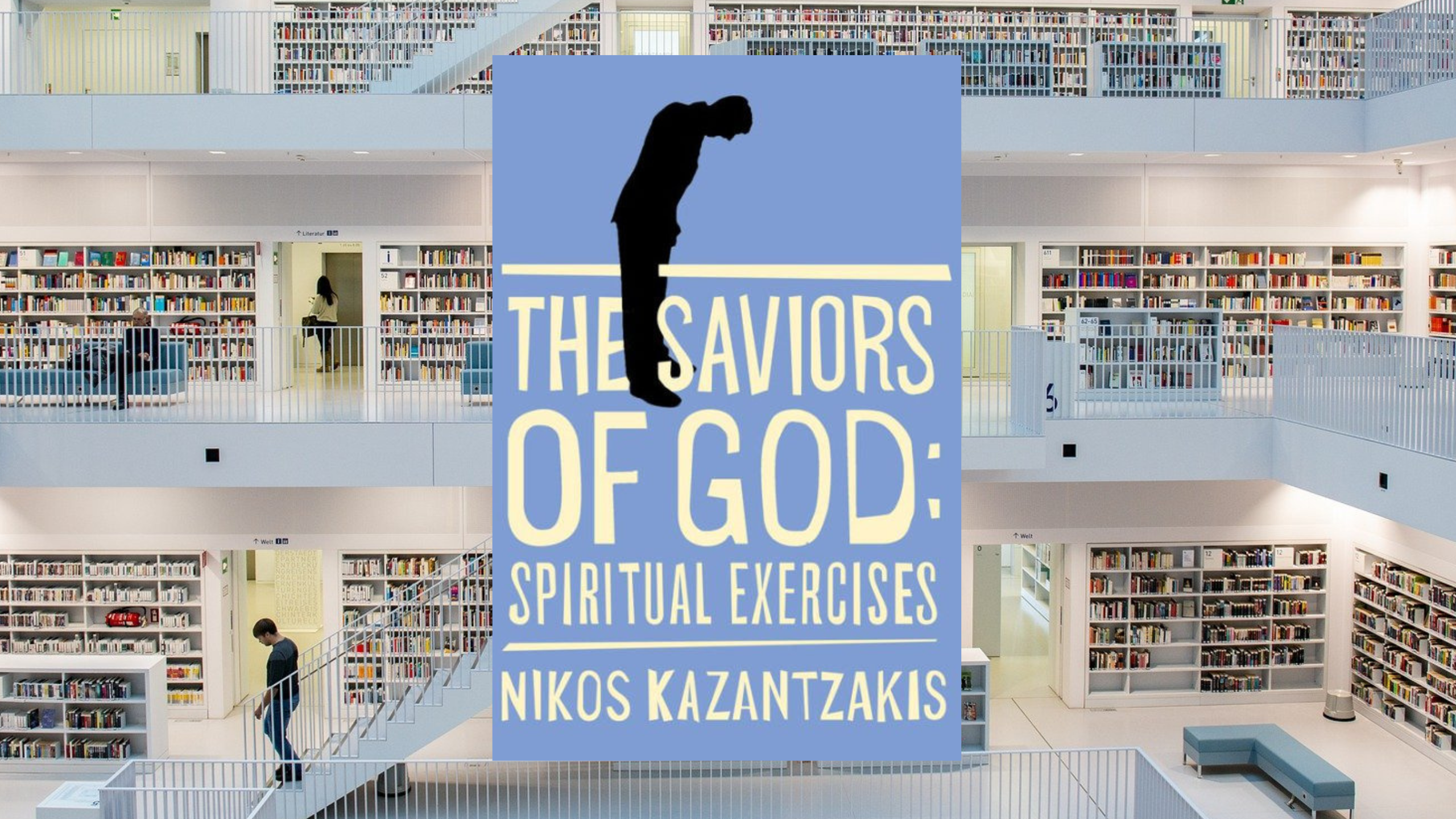
The Saviors of God is a collection of “spiritual exercises,” verse explorations of the nature of human life, our position in the cosmos, and our ultimate teleology or aims.
All his life, Kazantzakis pursued the answers to the most insoluble, urgent human questions, and the poetic quality of his work, combined with his honest searching, deep humanity, and sharp rationality makes this book very special reading.
You can think of him as almost a more optimistic Arthur Schopenhauer, as someone acutely aware of his special coming-to-consciousness at a particular moment in time suspended between the two eternities of birth and death, determined not to waste a single moment that was given to him.
“I do not hope for anything. I do not fear anything. I am free.”
“From Bergson he learned that all of nature, all of the pluriverse, all of life was the expression of an evolutionary drive, an elan vital, an inconceivable energy which ceaselessly renews itself, a continual creativity, a leap upward, not toward a fixed, predetermined, final end, but within a teleology immanent in the life force itself, which was creating its own perfectibility as it evolved eternally. This creativity toward a perfectibility never reached but always postulated, this agonized transmutation of matter into spirit, is what Kazantzakis meant by God.”
“My God is not Almighty. He struggles, for he is in peril every moment; he trembles and stumbles in every living thing, and he cries out. He is defeated incessantly, but rises again, full of blood and earth, to throw himself into battle once more. He is full of wounds, his eyes are filled with fear and stubbornness, his jawbones and temples are splintered. But he does not surrender, he ascends; he ascends with his feet, with his hands, biting his lips, undaunted.”
This Book on Amazon: The Saviors of God, by Nikos Kazantzakis

Report to Greco, by Nikos Kazantzakis:
Henry David Thoreau said that “heaven is under our feet, as well as over our heads,” and Kazantzakis’s life and work are a powerful reflection of that fact. Nowadays, I only read books that make me feel alive in some way, and few have ever made me feel more alive, active, strong, and expansive as Report to Greco, and his earlier book, Zorba the Greek.
Greco is an autobiographical novel framed as a report to the Spanish Renaissance painter El Greco. Kazantzakis is giving us a poeticized, fictionalized account of his life and intellectual development as he travels from his home in Greece, to study at the Sorbonne with Henri Bergson, to Italy, Jerusalem, Russia and the Caucasus, and many places in between.
Kazantzakis is so vividly alive in these pages that I almost literally cannot believe that he’s been dead for decades. If anyone’s soul is able to persist through time and space, his does through this book, and if you read it, you’ll be infused with a thrilling sense of the urgency of life, the unreality of death, and the infinite value of time.
“I feel like doing what Bergson says - going to the street corner and holding out my hand to start begging from the passers-by: ‘Alms, brothers! A quarter of an hour from each of you!’ Oh, for a little time, just enough to let me finish my work.”
“Extending my hand, I grasp earth’s latch to open the door and leave, but I hesitate on the luminous threshold just a little while longer. My eyes, my ears, my bowels find it difficult, terribly difficult, to tear themselves away from the world’s stones and grass. A man can tell himself he is satisfied and peaceful; he can say he has no more wants, that he has fulfilled his duty and is ready to leave. But the heart resists.
Clutching the stones and grass, it implores, ‘Stay a little!’ I fight to console my heart, to reconcile it to declaring the Yes freely. We must leave the earth not like scourged, tearful slaves, but like kings who rise from table with no further wants, after having eaten and drunk to the full. The heart, however, still beats inside the chest and resists, crying, ‘Stay a little!’”
“Each man acquires the stature of the enemy with whom he wrestles.”
This Book on Amazon: Report to Greco, by Nikos Kazantzakis
Thus Spake Zarathustra, by Friedrich Nietzsche:
Alright, serious question: should it be translated as "thus spoke," or "thus spake"? I feel as though it's a more contentious fight than whether one should floss before or after brushing one's teeth.
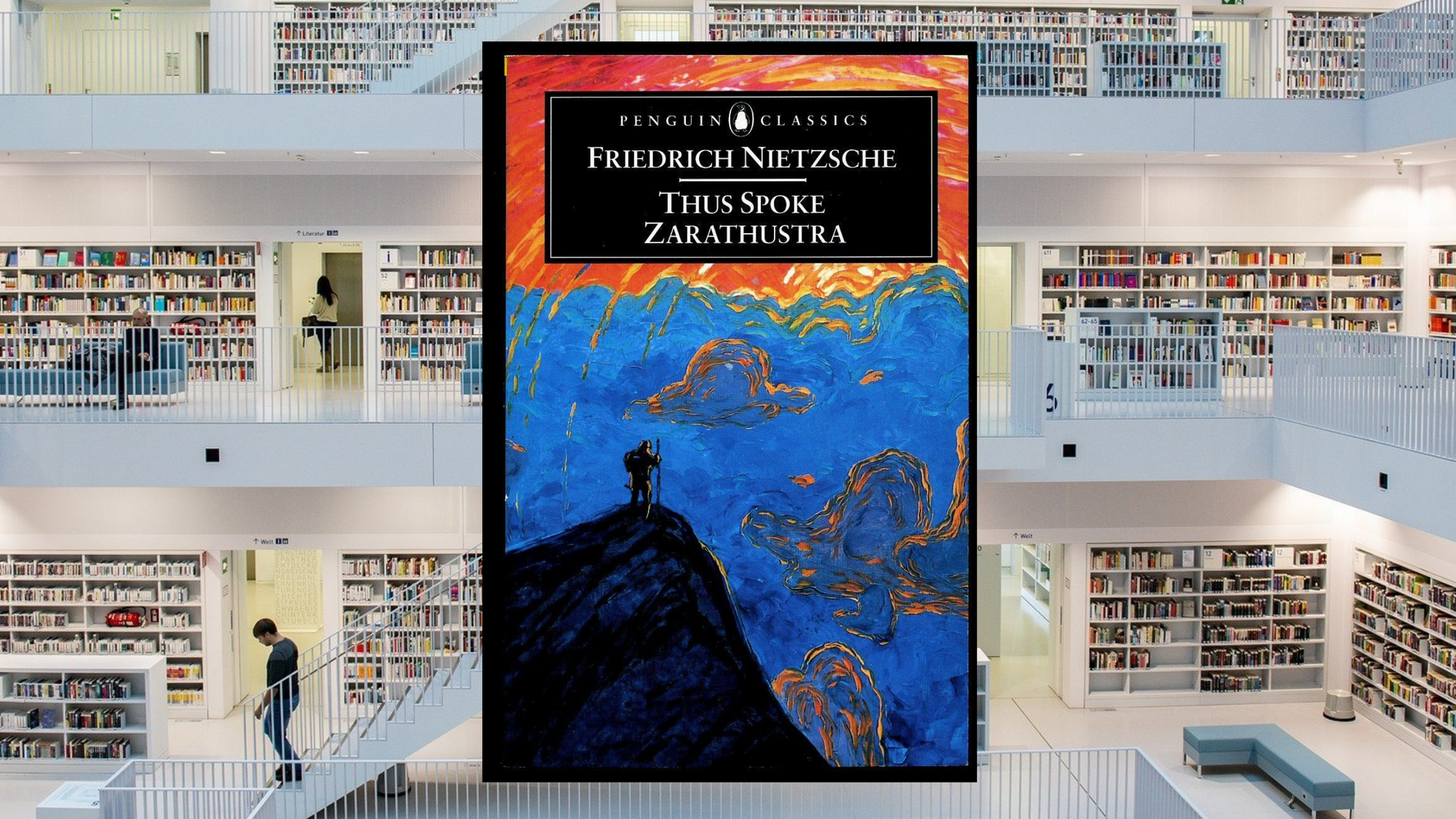
Anyway, Thus Spake Zarathustra (you can see which side I'm on) is another exceptionally life-affirming book written by one of the greatest philosophers of all time, Friedrich Nietzsche.
It's a fictionalized representation of Nietzsche's "Ubermensch," or "overman," as well as the book where he talked about the death of God, and the "eternal recurrence," a thought experiment about whether time is linear, or whether everything that has ever happened or existed repeats itself eternally.
"Not only onward shalt thou propagate thyself, but upward!"
"Look at this gateway! It hath two faces. Two roads come together here: these hath no one yet gone to the end of. This long lane backwards: it continueth for an eternity. And that long lane forward - that is another eternity. They are antithetical to each other, these roads; they directly abut on one another: and it is here, at this gateway, that they come together. The name of the gateway is inscribed above: 'This Moment.'"
“Become who you are!”
This Book on Amazon: Thus Spake Zarathustra, by Friedrich Nietzsche
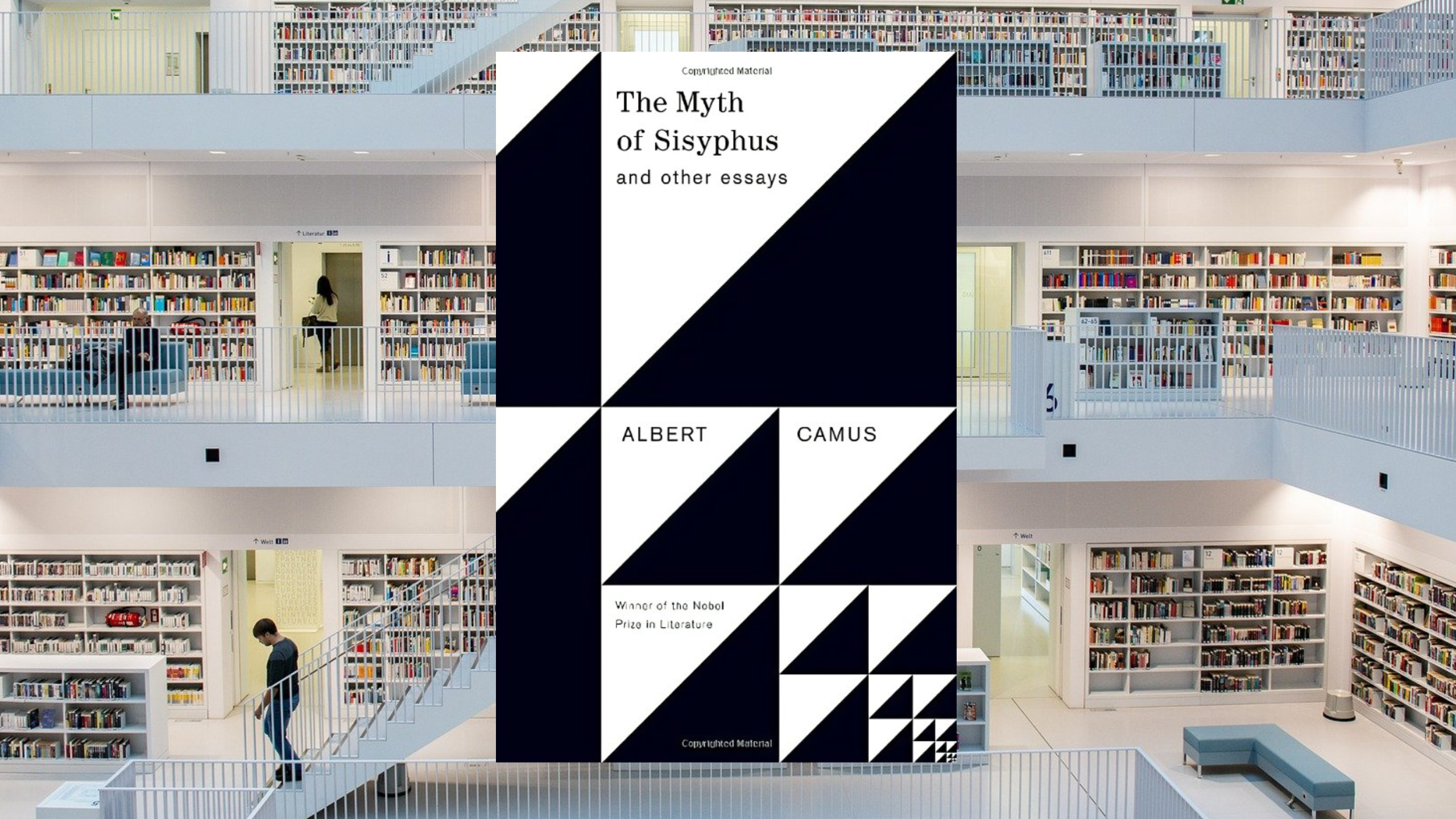
The Myth of Sisyphus, by Albert Camus:
This is another one of the most influential books of the 20th century, by one of my favorite writers, Albert Camus. He was also awarded the Nobel Prize for Literature and possessed a social conscience that was essentially unparalleled.
The Myth of Sisyphus doesn't start out all that happily - the most important question in all of philosophy, says Camus, is whether or not one should commit suicide - but it ends up being one of the most hopeful books I've ever read. It's also a key text in the history of existentialist thought, which is almost exclusively concerned with how to live in a universe that often seems indifferent to human happiness.
“In the midst of winter, I found there was, within me, an invincible summer. And that makes me happy. For it says that no matter how hard the world pushes against me, within me, there’s something stronger – something better, pushing right back.”
"If there is a sin against life, it consists perhaps not so much in despairing of life as in hoping for another life and in eluding the implacable grandeur of this life."
"At that subtle moment when man glances over his life, Sisyphus returning toward his rock, in that slight pivoting he contemplates that series of unrelated actions which becomes his fate, created by him, combined under his memory's eye and soon sealed by his death.
Thus, convinced of the wholly human origin of all that is human, a blind man eager to see who knows that the night has no end, he is still on the go. The rock is still rolling. I leave Sisyphus at the foot of the mountain! One always finds one's burden again.
But Sisyphus teaches the higher fidelity that negates the gods and raises rocks. He too concludes that all is well. This universe henceforth without a master seems to him neither sterile nor futile. Each atom of that stone, each mineral flake of that night-filled mountain, in itself forms a world. The struggle itself toward the heights is enough to fill a man's heart. One must imagine Sisyphus happy."
This Book on Amazon: The Myth of Sisyphus, by Albert Camus

The View from the Opposition:
No one's ideas are beyond questioning. In this section, I argue the case for the opposition and raise some points that you might wish to evaluate for yourself while reading this book.
#1: Zorba was a Product of a Different Time and Place
I'd hate for someone not to read this book just because of some of the outdated - and yes, offensive - ideas about women put forth by Zorba, but I have to mention them here so that people know exactly what they're getting into.
I mean, he was a Cretan mine-worker in the 19th century, so yea, he says a few things in this book that might turn off some more sensitive readers. And you know what? That's cool. I get why people would be upset. But I would hate for that to be what people think about when they think of this book. That's almost literally the least noteworthy thing about Zorba.
You know how Zorba always chooses life over death? Well, choose to see the good in Zorba, and not the beliefs manufactured in a different time and place that are no longer relevant or excusable today.
"The test of a first-rate intelligence is the ability to hold two opposed ideas in the mind at the same time and still retain the ability to function.”
-F. Scott Fitzgerald
Action Steps:
So you've finished reading. What do you do now?
Reading for pleasure is great, and I wholeheartedly support it. However, when I'm reading for a particular purpose, I am intensely practical. I want a result. I want to take what I've learned and apply it to my one and only life to make it better!
Because that's really what the Great Books all say. They all say: "You must change your life!" So here, below, are some suggestions for how you can apply the wisdom found in this breakdown to improve your actual life.
Please commit to taking massive action on this immediately! Acting on what you've learned here today will also help you solidify it in your long-term memory. So there's a double benefit! Let's begin...
#1: Stop Reading Books!
Books are magical. But they're also pieces of dead trees that you stare at to make you hallucinate. Real life isn't dead trees, so get out there get yourself some of it! Don't sit here reading - put down the book or the device or the whatever and join the universe! It's flowing!
#2: Take Action!
Action is the only salvation that exists on Earth. Nothing great ever happened to anyone while they were sitting at home - you have to get out there and make it happen. You have to make your life happen, because it's happening now!
#3: When Someone Suggests an Adventure, Say YES!
There are probably far fewer conspiracies than most people believe there are, but there are definitely far fewer adventures than people could actually be enjoying right now. The next time someone asks you to do something wild and crazy that won't involve the loss of life or farm animals, don't even think about saying no! Would Zorba sit at home?!

About the Author:
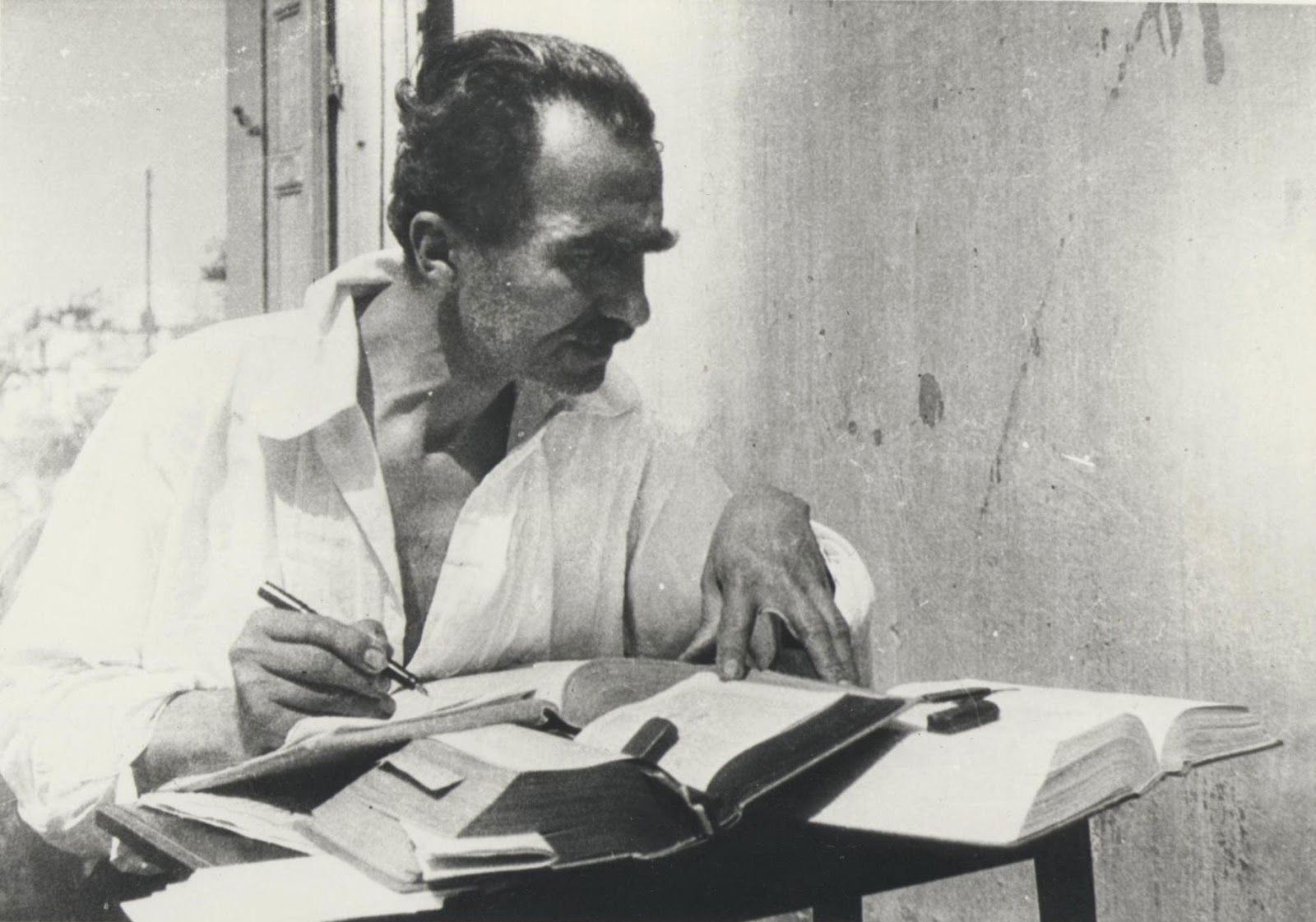
Nikos Kazantzakis was a Greek writer, and was widely considered a giant of modern Greek literature. He was nominated for the Nobel Prize in Literature nine times and in 1957, he lost the Prize to Albert Camus by one vote. Camus later said that Kazantzakis deserved the honour "a hundred times more" than himself.
Kazantzakis' novels included Zorba the Greek (published 1946 as Life and Times of Alexis Zorbas), Christ Recrucified (1948), Captain Michalis (1950, translated Freedom or Death), and The Last Temptation of Christ (1955). He also wrote plays, travel books, memoirs and philosophical essays such as The Saviors of God: Spiritual Exercises. His fame spread in the English-speaking world due to cinematic adaptations of Zorba the Greek (1964) and The Last Temptation of Christ (1988).
He also translated a number of notable works into Modern Greek, such as the Divine Comedy, Thus Spoke Zarathustra, On the Origin of Species, the Iliad and the Odyssey.
Additional Resources:
Zorba the Greek - Movie (1964 - IMDb)
Analysis of Nikos Kazantzakis's Novels
Summer Readings: Zorba the Greek (The Guardian)
This Book on Amazon:
Zorba the Greek, by Nikos Kazantzakis
If You Liked This Book:
The Saviors of God, by Nikos Kazantzakis
Report to Greco, by Nikos Kazantzakis
The Last Temptation of Christ, by Nikos Kazantzaki
The Brothers Karamazov, by Fyodor Dostoevsky
The Alchemist, by Paulo Coelho
The Myth of Sisyphus, by Albert Camus
Thus Spake Zarathustra, by Friedrich Nietzsche
Meditations, by Marcus Aurelius
Zen and the Art of Motorcycle Maintenance, by Robert M. Pirsig