
Summary:
This Book is For:
- People who are interested in politics (especially American politics) and who want to explore some of the most effective tactics that politicians use to get elected.
- Businesspeople in general and salespeople in particular who are looking for an edge over their competitors and who want to start building a "persuasion stack."
- Anyone interested in human psychology and behavior, and specifically the many ways in which we can be led to choices and behaviors that we may not have consciously chosen otherwise.
Here's a book that's perfectly suited to stretch your thinking, because it's almost certain that you'll disagree with large parts of it. Beautiful!
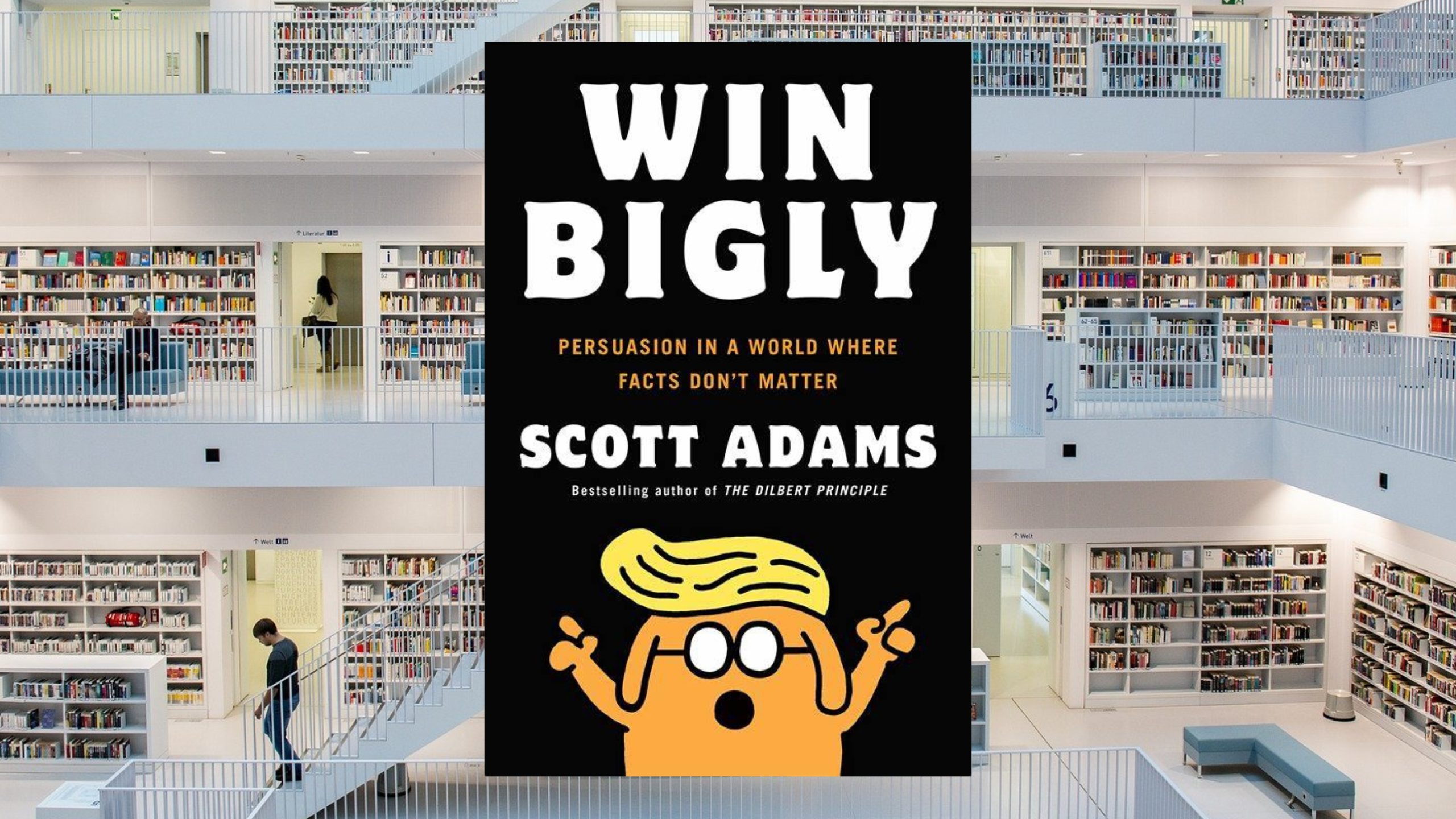
Win Bigly is a study of persuasion and influence examined through the lens of the 2016 American presidential election, where, according to Scott Adams, a certain Donald Trump put on a masterclass of persuasion.
See? I told you it would be controversial. But even though Adams once described Trump as "an orange ball of provocation," he also wrote:
"This book was not designed to change your mind about politics or about Trump. All I want to do is teach some things about persuasion."
Whether we believe him or not - he does claim to be a "trained hypnotist," whatever that means - this book itself is also a masterclass in persuasion. It describes in detail some of the persuasion strategies that Trump employed during his successful campaign and contrasts them with the middling efforts of Hilary Clinton that always seemed to come up short.
Alright, so who is Scott Adams? He is the creator of the Dilbert comic strip (I know, I know, just follow me here...), which was syndicated in more than 2,000 newspapers in 57 countries and 19 languages, and on top of being a well-respected serial entrepreneur he was one of the first public figures to predict a Trump win in the 2016 election.
By this point, Adams had been studying persuasion for his entire life, and he recognized in Trump the telltale signs of a Master Persuader. Right or wrong, good or evil, he moved people. Millions of them.
What Adams does in this book is break down exactly what made Trump so compelling to millions and millions of voters, and he explains the principles in such a way that you can apply them to your own life in order to become much more persuasive.
In this breakdown, we're going to expose the illusion of human rationality and discover why appeals to logic and reason just aren't persuasive; we're going to explore the idea of "mental filters," and how the very act of seeing changes what you see; we're going to stumble upon the world's least effective persuasion tactic and break down exactly why it doesn't work so that you can avoid it; and we're going to take a look at the eight methods of persuasion that do work, and rank them from least to most effective.
By the end of it, you're going to be a pretty powerful persuader yourself, and you'll have your defenses up against anyone who may try to use these dark tactics of influence on you instead. And maybe, just like the shocked political commentators who couldn't even fathom a Trump win ever taking place at all, you'll begin to see how he had been preparing for this moment his entire life.
I'll leave you with a pretty good explanation from the book, Wanting, by Luke Burgis, before we get into the Key Ideas from Win Bigly. The former is about "mimetic desire," or the fact that we tend to want what other people want.
As you'll see, maybe all those commentators shouldn't have been so shocked. Maybe we should have seen it coming:
“For more than twelve years, tens of millions of Americans watched the same TV show. Battle lines were drawn at the beginning of each episode. Every person on the show wants the same thing: the prestige of being proclaimed the victor, which will earn them praise from an authority figure and, with it, the adulation of the masses. And each of them is willing to do nearly anything to get it.
They fail. They engage in finger-pointing, backstabbing, and betrayals. Then, when the game is over, they walk into a giant boardroom. Donald Trump is seated, scowling, at the middle of a long table. They all want to be his next apprentice, but only one can win. Trump lets the mimetic crisis escalate until it’s boiling over.
Finally, he points a finger at one of them and says, ‘You’re fired!’ The crisis is averted. The scapegoat goes home. The team can get back to business. Meanwhile, the perception of Trump as a mimetic model – a person who knows what he wants – grows stronger every time he points his finger and utters the words, ‘You’re fired.’ After a dozen years of Trump cultivating and cementing his status as the ‘master’ and everyone else as the ‘apprentice,’ it’s not surprising that he became a cult-like figure.”

Key Ideas:
#1: The Rational Human Being
Everything happens for a reason...a reason that we make up afterward to help us make sense of the emotional decision we've just made. That's basically the revised consensus reached by experts involved in studying human rationality. We think we're rational at least most of the time, but really, our emotions primarily drive our decision-making and we rationalize those decisions afterward.
Of course, we have the potential for rational thought, just so long as we slow down our instinctive, emotional thought processes and engage the more critical structures of our brains. A persuader, however, is much more successful to the extent that they can stop this from happening in the minds of the people they're trying to persuade.
Persuaders are often effective at doing this, though, because we never think of ourselves as irrational. Indeed, we make so many small, rational choices during the day that we tend to assume we're also rational in the bigger matters when this just isn't the case.
Surprisingly, we even fall victim to what are called cognitive biases (distortions in thinking) even when we've read about them recently, or even studied them for years, as in the case of experts like Daniel Kahneman. He has literally won the Nobel Prize in Economics for his work studying cognitive biases, but he admits that he still falls victim to them occasionally.
For a long time, economists did believe that human beings were mostly rational, and a model of reality called rational choice theory dates back to Adam Smith in the eighteenth century. The theory postulates that an individual, when analyzing a decision, will perform at least a rudimentary "cost-benefit analysis" before arriving at an ultimate decision. However, human beings rarely take the time to do such a thing in reality, hence the extraordinary success of charlatans who can get people to believe pretty much anything.
#2: Select the Appropriate Mental Filter
We never see the world as it really is. Instead, we see it as we are. The "mental filter," as Scott Adams calls it throughout the book, is basically our orientation toward the world - what we're looking for when we're looking out at the world. And usually, what we see is what we'll find.
Adams asserts that a good mental filter is one that both helps you to somewhat accurately predict the future and make you happy. There are as many mental filters as there are people, but as long as you can satisfy those two conditions, you're doing pretty well.
We each see the world through a pre-determined “filter” made up of our own beliefs, experiences, and intuitions about how the world works. That’s why two people can look at the exact same information and see wildly different things. Different beliefs, different filters.
For example, most people share the mental filter that says that the laws of physics are pretty constant. As a model of reality, belief in gravity will serve you well, and will make you much happier than if you didn't believe in gravity, and were constantly surprised by falling apples smashing you in the head. In contrast, a less helpful mental filter is one that says that most people are greedy, self-centered narcissists intent on ruining your day.
You can develop a filter for pretty much anything, but in the context of this book, Adams speaks often about the "persuasion filter," meaning experience-content relating to persuasion that, if studied for patterns, will reveal the qualities and tactics of elite persuaders. Just like an aspiring copywriter will study junk mail to teach himself effective marketing strategies, we can develop the persuasion filter and thus discover for ourselves what makes someone extraordinarily persuasive.
#3: The 8 Methods of Persuasion
These are the 8 methods of persuasion that Scott Adams lists in order from least to most effective. We'll go through each of them in turn, but as we'll see later, visual persuasion is much more effective than oral persuasion. It's really not even close.
That means that a visual representation of something less powerful (for example, reason and facts) will usually be more persuasive than something higher up the list described in words (for example, writing about a fear, rather than showing a graphic representation of it). Here are the eight methods:
Word-Thinking: This describes a situation in which people are trying to win an argument by adjusting the definition of words. Adams gives the example of pro- and anti-abortion groups trying to redefine what it means for a fetus to be "alive." As he says, "If I say the scientific description of a fetus fits my personal definition of what it means to be alive, and you say it does not, there is no place to go with that argument. Our best-case scenario is a tie."
Hypocrisy: This is basically like saying, "Oh yea, well you're just as bad as we are!" It's just not helpful, and you're likely not going to persuade anyone who's listening. Better here to take "the high ground," and say something like, "Yes, we've both behaved reprehensible in the past, but now it's time to move forward."
Reason: When you have no emotional investment in the outcome, facts and reason can be useful in making decisions or for persuading. But when emotions and feelings and deeply-held beliefs come into play? Forget about it. "Facts don't matter" in that case.
Analogy: Analogies are good for explaining concepts, but terrible for persuasion. Comparing Trump to Hitler would be effective if you didn’t know Trump and were just looking for an explanation. But to someone who already supports Trump (or anyone else, really) just comparing him to Hitler wouldn’t be effective at all. Analogies are, by nature, imprecise, and their blanks can be filled with pretty much anything that the other party wants to fill them with. It's a persuasion dead-end.
Habit: A new behavior is more likely to stick when attached to another, previously-formed habit. An example that Adams gives in the book is that he was able to "persuade" people to fit his podcast into their morning routines by naming it "Coffee with Scott Adams." Reportedly, listeners felt "off" when Adams skipped a day, because they were so used to the podcast being a part of their morning routine.
Aspirations: During the 2016 election, Trump would often tell voters that he would make America safer, more prosperous - great again - and this was all aspirational. This was a "great vision" that he held up for people to move towards, as opposed to Clinton's slogan of "Stronger Together." Adams points out that although it seems like it would be effective, the slogan has something defensive about it; it's just not aspirational, and so it wasn't as effective.
Identity: This one makes sense from an evolutionary, historical perspective. Basically, those people who looked like you, sounded like you, and believed the same things as you did were helping you to stay alive; the people on every other "team" were trying to kill you or take your resources.
Thus, appealing to identity is an effective persuasion tactic, even though we're collectively going to have to get over that kind of thinking if we ever want to take the next stage of human evolution - mutual interdependence and unconditional love (the "unconditional love" part wasn't in the book, but damn it, it's important!).
Fear: Fears are persuasive, but not all fears are equally persuasive. For example, personal fears are much more gripping than abstract, general fears because they affect you directly. "The economy" is hard to worry about, but the prospect of losing your actual, personal job is enough to get you to listen.
As well, a fear that you think about more often has a larger ability to persuade, as opposed to one you rarely consider. And as always, a fear with a visual component is going to be much more persuasive too.
So if there's a fear that has personal relevance to you, that you think about a lot, and that is reinforced in vivid detail by someone attempting to persuade you to take some specific action, you will probably go along with their instructions if you feel as though they hold the key to your being less afraid.
#4: Triggering an Association Between Any Two Things is Persuasive
Associations are extremely powerful in terms of persuasion. Simply mentioning my name, Matt Karamazov, along with someone like Elon Musk in the same sentence makes you link the two names together. Now I have some of the same qualities as Elon Musk - at least in some corner of your mind.
This is also one of the more common forms of persuasion out there, and once you recognize it as such, you'll start seeing it everywhere. Celebrity or influencer endorsement of products is a perfect example. Fans of Graham Stephan (the finance YouTuber) will view the investment platform Robinhood in a better light once he endorses it and says, "You can get a free stock down in the description." Robinhood is piggybacking on the positive association you feel about Graham Stephan.
Practically speaking, it's a good idea to associate yourself with positivity and distance yourself from negativity. This even goes for the little things like the weather and traffic. Be seen as someone who’s complaining and whining all the time and people will avoid you. Negativity is not persuasive.
Conversely, if you're the one always delivering good news, people will love it when you show up! If your social media profile mentions that you were mentioned in some prestigious publication, then this enhances your reputation by association.
#5: Visual and Emotional Persuasion
The biggest lever of persuasion is the visual aspect. Most people simply will not look past surface appearances, thereby making whatever they see the most persuasive thing in their experience. In order to use this to your advantage, you should show rather than simply tell.
For example, a simple description of a fear that you're trying to plant inside the mind of your audience will be far less effective than a graphic, stunningly-real depiction of that same fear. Tell people that they risk their economic livelihoods if they don't vote for you, and some people might actually believe you. But if you show them visuals of people in neighboring towns with similar policies who are now living under bridges, then you'll win by a landslide.
So visual messages are more influential, but so are emotional and repetitive messages. Ideally, messages that are as simple as possible but no simpler. It's the reason why humanitarian aid organizations will hit you over the head with the striking, terrible images of emaciated children and bombed-out villages, rather than simply have someone tell you what their work accomplishes.
You also have to hammer it home, as often as possible, and as forcefully as possible, for your message to be internalized by your audience. Details and facts "don't matter" compared to this repetitive visual and emotional onslaught.
#6: Strategic Ambiguity
This one is straight from Robert Greene's playbook. Strategic ambiguity is a term to describe when it's unclear where you fall on a certain issue, or how you can be categorized. Otherwise known as "playing the field," this is how you keep your options open and appeal to more people.
A great example comes from Scott Adams' Dilbert comic strip itself. Adams uses strategic ambiguity to make sure that as many people as possible identify with his Dilbert character. Dilbert doesn’t have a last name, the company he works for isn’t named, the industry isn’t named, etc. If you work in an office, there’s nothing about the comic strip that people can look at and say “that’s not my office.” Therefore, he appeals to more people.
Even his process of writing a book about Trump’s persuasion skills can fall under this category. Adams disavowed Trump for his racism, yet constantly sings his praises about his persuasion skills. In the end, you’re not sure how Adams really feels about Trump, and this is to Adams’ advantage because by practicing strategic ambiguity he appeals to more people.
#7: Choice Architecture
A familiar theme in all the persuasion literature is the control of context, or controlling the space in which decisions get made and behaviors are adopted. If you are the person who frames the choices that people perceive, you can direct their actions - often without their even noticing.
The authors of the 2008 bestseller, Nudge (including Richard H. Thaler, who would go on to win the Nobel Prize in Economics), refer to this as "choice architecture." By presenting only a limited set of choices, you're suggesting what people should pay attention to, even though it may be a false choice (i.e. they actually do have other options that you haven't mentioned).
You're getting people to move along a pathway that you've designed, and that you've setup to highlight the strengths of your own position. For example, whenever a politician positions themselves as being the "answer" to a widespread problem, they are in effect saying, "Vote for me, and you'll achieve XYZ result; but vote for my opponent, and your very worst fears will be realized."
Another example of choice architecture is the setting of default options. For example, in the book Nudge, the authors tell of an organ donation rate between countries that share a border. In one country, almost no one donated their organs after death, and in the other country almost everyone did. The difference was the default setting, where in one country they were automatically registered as organ donors, and the other they had to opt-out if they didn't want to do it. Most people didn't go out of their way to de-register themselves from being an organ donor, so most people remained one.
In sales, choice architecture is a completely conscious process as well. For example, a good "sales page" - like the one you went through in order to sign up for Stairway to Wisdom doesn't ask people to do a bunch of different things all at once. We don't ask you to like our Facebook page, or subscribe to our YouTube channel, or watch this interesting video, etc. None of that. It's directed, purposeful. We tell you all the great things about the Stairway to Wisdom (hope you're enjoying it, by the way!), and then we ask you to sign up if it's something you're interested in. There are just two options on that sales page: sign up, or leave.
Many productivity experts suggest similar structuring of choices. One of my favorite productivity tactics is to "this task, or nothing." That means that I'm not allowed to do anything else except what I've decided is most important for me to get done right now. I can either work, or stare straight ahead for as long as I want, but I can't do anything else. Those are the choices. Naturally, I usually end up deciding to get to work.
Just like we were discussing earlier (Key Idea #2), once you develop a filter for spotting the activities and handiwork of "choice architects," you'll start seeing them everywhere. And, crucially, if you don't like the array of options you've been deliberately presented with, you can search for additional options that may have been hidden from you before.
#8: The World's Most Ineffective Persuasion Tactic
Probably the least effective persuasion tactic ever tried is the attempt to bully your opponent with facts that contradict their most deeply-held beliefs. No matter how "persuasive" your arguments - at least to you - they will just dig in, harden their stance, and refuse to see your point of view. And yet people never learn that this tactic simply doesn't work!
You could provide all the facts and data in the world and it won't matter, because you can't argue someone out of something they weren't argued into in the first place. In the excellent psychology book, The Righteous Mind, by Jonathan Haidt, he says that, “when a group of people make something sacred, the members of the cult lose the ability to think clearly about it. Morality binds and blinds.”
Essentially, any change in their belief system is going to have to come as a result of their changing which group they want to see themselves a part of. The psychological safety of a cult - or even just a group of really good friends who all believe the same thing - is always going to be more appealing than dropping the belief that is required for being a part of that group.
A better way, according to Key Idea #4 above, is to either get the person to change their group affiliation (hardly likely), or work on their fears, which is pretty much the only thing more persuasive than appealing to identity. In any given debate, if you can get the other person to see you as similar to them, and to see that believing what they do is dangerous, then maybe you have a chance of convincing them. Just standing across from them shouting facts and insults? Doesn't work. And yet people persist!

Book Notes:
"When the facts change, I change my mind. What do you do, sir?"
-John Maynard Keynes
Playing it safe isn’t usually persuasive. On the contrary, persuasion is about risk-taking and personality. Big, memorable, or otherwise striking personalities are persuasive - those who actually get out there and attempt to lead - not those who shrink from causing a reaction in their audience one way or the other. If you want to persuade, some people are going to love you and some will hate you. But for people to feel neutral about you is what you want to avoid at all costs.
Today, a good "hook" is everything in marketing, mostly because of people's short attention spans. During the election, Scott Adams openly predicted that Trump had a 98% chance of winning, which is a level of certainty that he probably didn't possess. But if he had said that Trump had a 65% chance, or a 72% chance, or something like that, nobody would have paid any attention. The hook was this crazy-high number, this complete certainty that forced people to sit up and pay attention to his prediction.
Persuasion tactics are effective even when people know that they're being used against them. People can be completely conscious of the fact that someone is trying to influence them, and yet they’ll still go along with it because the tactics are simply that effective.
The people whom Adams calls "Master Persuaders" are people who possess expert-level persuasion skills, form "reality distortion fields," and who have cultivated a persuasion "talent stack."
Adams cites incredibly persuasive people like Steve Jobs - and of course Donald Trump - who seem to inhabit some "alternative reality" (his critics would certainly say so!) and, with a mix of unshakeable confidence and bold charisma can seem to move mountains.
By talent stack, Adams means a combination of persuasion skills that fit well together. Possessing good strategic instincts, being quick on one's feet, being high-energy, having a strong reputation, garnering lots of publicity, possessing great negotiation skills - all these and more, when combined in one person, get "stacked," with the result being one incredibly persuasive individual. The more you can combine, the more persuasive you will be.
Intentional wrongness can be persuasive, by which Adams means intentionally getting something wrong so that people will focus on it and discuss it. Even if people jump on what we said as being wrong or factually incorrect, they’re still talking about what we want to talk about. They’re playing right into our hands, perpetuating our message by attacking it.
“If you’re talking about whatever topic he wants you to focus on, he has your mind right where he wants it.”
Being able to accurately perceive reality wasn’t nearly as important to our survival as things like the ability to create and maintain social cohesion. Thus, humans did not necessarily evolve to see the world accurately. It’s whatever helps us survive and perpetuate our genes, not what’s strictly “true.”
“Having lots of different explanations is usually a clear tell for cognitive dissonance. Having multiple explanations after the fact, no matter how reasonable, means that people are trying to make sense of their observations, and they’re generating different illusions to do it.”
An ad hominem is a logical fallacy by which you attack the character or reputation of the person you're debating with, rather than attacking their argument itself. Adams likens it to throwing your gun at the monster when you run out of bullets!
In fact, when someone uses such a personal argument against you, that's a pretty clear sign that you've won. If they had anything that could refute your argument, they would have brought it up, instead of attacking your person.
Attractiveness itself can be persuasive, as I'm sure no one needs to tell you! It's not "polite" to say so, but physically unattractive people have a much harder time than beautiful people do when it comes to getting their way. They (you and I?) can also get away with things that ugly people cannot.
What's more, beautiful people often benefit from something called the halo effect, which is the tendency for an initially positive impression of someone to extend to your perception of that person as a whole. Thus, someone may appear - at first glance - to be beautiful or strong or charismatic, and automatically be considered, say, trustworthy and kind as well, when that may or may not be the case.
We make a multitude of extremely rational decisions during the day, on all sorts of small matters. Thus, we tend to automatically assume that we are rational in the big matters too, when this simply isn’t the case.
Common sense isn’t actually that common. Either we’re right, and we point to our common sense, or we’re wrong, and we say that it’s just a rare lapse in our common sense.
Anchoring is when you throw out a higher number to make your real proposal seem much lower by comparison, such as when salespeople mark something down from $1,000 to $50 that they only wanted to sell for $50 in the first place.
Anchoring is even effective when you use it in a completely different context, such as before, say, a contract negotiation. Before the meeting starts, you could mention how some other guy just got a raise to $100,000 a year, right before you ask for your raise to "just" $90,000 a year.
The meeting wasn’t even about that first guy, but after mentioning the six-figure raise, that number is in your boss’s head. You've anchored her, and she's much more likely to agree to your (comparatively) small request.
The focusing illusion is a term to describe the effect whereby whatever you’re focusing on assumes extra importance in your own mind. Because you're thinking about it, your brain assumes that it must be important, and so it upgrades the value that it assigns to that information. This effect can be strengthened by the surrounding community, in that when you have tons of other people all focusing on and talking about the same thing, it gains in importance - at least in everyone's minds.
Quick persuasion tip: Hold meetings in the most impressive physical space you can control. For example, an impressive-looking boardroom, office, etc. Think: Mr. Burns's office, and how intimidating it was to most of the peopole who ever found themselves inside there.
Repeat after me: Repetition is incredibly persuasive as well. The same message, heard over and over again, eventually gets accepted by the unconscious mind, and sometimes by the conscious mind too.
That explains the difference between brand marketing and direct-response marketing, whereas in direct-response the marketers want people to make a buying decision right then and there, and in brand marketing the company can afford to spend sometimes millions of dollars to gain "awareness."
You're not going to run out immediately after seeing a Superbowl ad and buy a Coke, but the next time you find yourself at the store you're more likely to choose Coke over any of their competitors because you saw the ad.
Norman Vincent Peale, the incredibly charismatic author of The Power of Positive Thinking, was the pastor of Donald Trump’s church as he was growing up. Therefore, little Donald would have had long-term exposure to one of the most persuasive men in the world. This would have led to him becoming more persuasive as well, as he learned from the best.
In response to a reporter’s question that was designed to trap Trump, he turned the tables by coming back with an answer that had a large visual component. Specifically, he made people think about a situation where ISIS would take over the Vatican. Scott Adams said: “It was so visual that you wonder it’s not already a movie!”
Visuals in the 2016 election usually favored Trump. Being photographed in front of a large jet made him look presidential, and we imagined him being president when we saw him in front of it. Even his appearance on SNL had him in the Oval Office, which was another excellent visual for him. Contrast this with Hillary’s appearance on SNL where she plays a bartender, and a cast member pretending to be her plays a washed-out drunk.
Google’s old tagline, “Don’t Be Evil” was almost literally the worst tagline in existence because it associated their brand with evil. This was a huge mistake! People won’t remember the “don’t” and instead will just remember “Google” and “Evil,” even if it’s not entirely conscious. Remember: associations are powerful!
“If you want to see the world more clearly, avoid joining a tribe. But if you’re going to war, leave your clear thinking behind and join a tribe.”
Offering a fake "because" will help people agree with your request. People like to have a logical reason at hand for why they've done something, and if you can provide one - even if it doesn't make much sense when they really think about it - then they're more likely to say yes. It will give them an easy rationalization that they can point to that “explains” their decision.
For example, "Can I jump ahead of you in line? Because I need to use the photcopier to make some copies." If they really think about it, they'll realize that that's why they're there too! But you're a Master Persuader now, and they won't look beyond surface appearances.
“Simple writing is persuasive writing.”
“A good argument in five sentences is better than a brilliant argument in a hundred sentences.”
From the Appendix: "If we are living in a computer simulation, we should expect that we shouldn’t be able to travel past the boundaries of the simulation, and this is exactly what we find. When we turn inward, we face the “hard problem” of consciousness, and when we turn outward, we have a universe made up of trillions of galaxies that is forever expanding outward. Unlike Jim Carey in The Truman Show, we would never be able to get to the “end” of the world and discover its true nature. We are unable to observe the basic building blocks of our own reality."

Important Insights from Related Books:
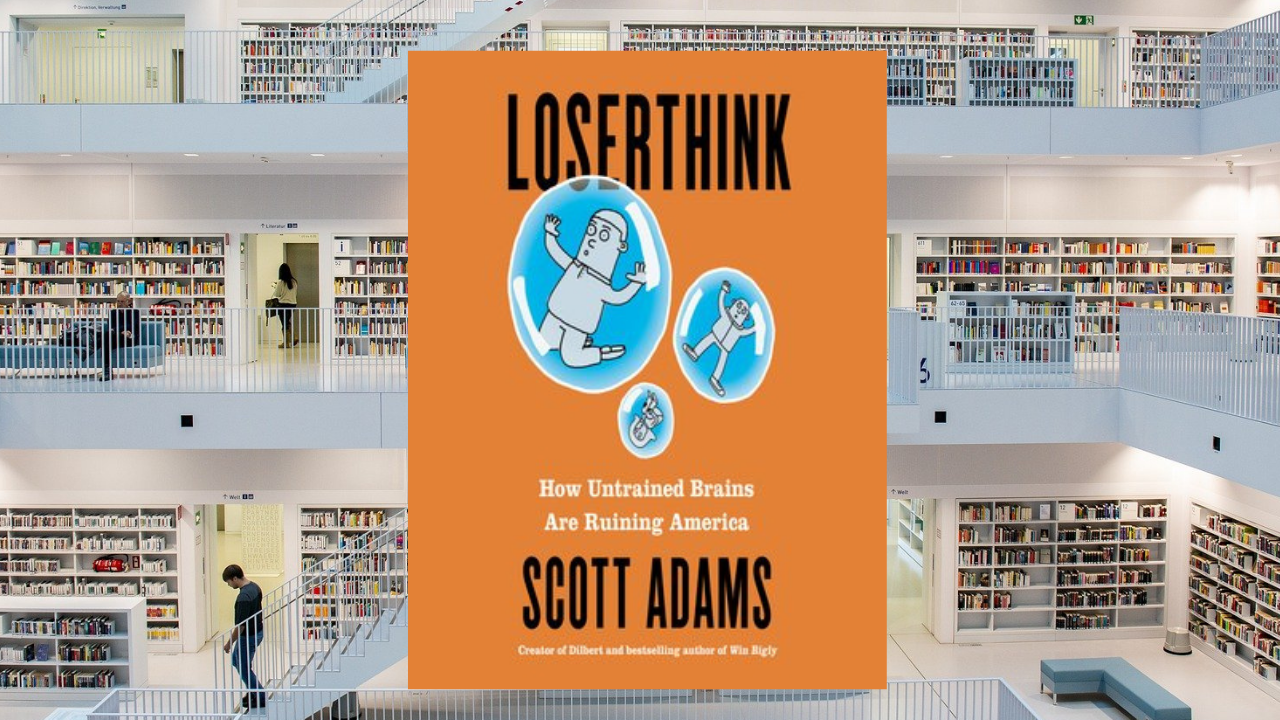
Loserthink, by Scott Adams:
Scott Adams never asks you to agree with everything he says, but he does ask that we examine our habitual patterns of thought and action, and examine our beliefs about our own infallible correctness.
“Loserthink” is a term he’s coined to signify unproductive, harmful habits of thought, and he repeatedly states that he’s not immune to it. But the fundamental distinction he makes is between saying that your opponent is stupid (probably not true) and that the quality of their thought processes is low (highly probable, for many of us, at least some of the time).
In this book, he shows us how we can all escape our own mental prisons and come together in a more productive, peaceful, and useful fashion.
“Don’t believe that every member of a group is as bad as its worst five percent. If you do, you’re probably among the worst five percent of whatever group you’re in.”
“Cultural gravity” is a term to describe all the forces of conformity that conspire to make you just like everyone else around you. This can be a good thing – like when you’re brought up around people with good manners – but it can also be devastating, in the case when the people around you don’t support the positive changes that you’re trying to make in your life. You have to realize when cultural gravity is dragging you down and pre-empting further progress.
Being right and being spectacularly wrong feels exactly the same in your mind. The feeling is indistinguishable, and having a lot of confidence in your opinion isn’t a reliable indicator of the correctness of your position.
This Book on Amazon: Loserthink, by Scott Adams
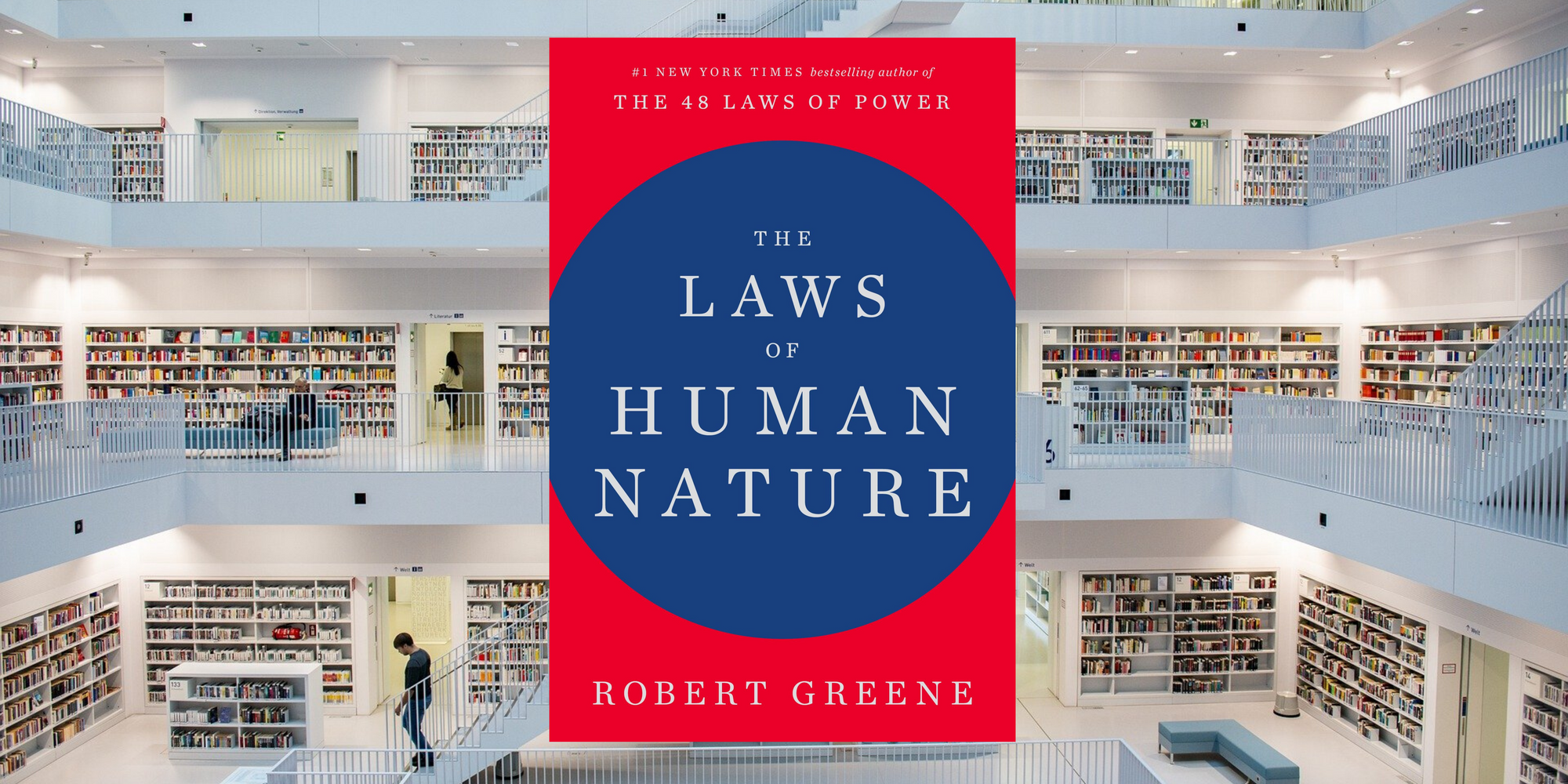
The Laws of Human Nature, by Robert Greene:
They say that all of philosophy is merely a footnote to Plato. Well, all of power, influence, and persuasion is basically an introduction to the work of Robert Greene.
He points out in this book that our very lives depend on our relationships with other people, and yet so few of us actually take the time and make the effort to look beneath surface appearances and really understand the nature of the 8 billion people we share the planet with. This stops today.
Understanding people and their deeper drives and motivations depends on developing greater empathy, a greater ability to move beyond the borders of one’s self, and getting to know other people on a deeper, more fundamental level. Again, this takes time and effort, but it’s so incredibly rewarding, both on the level of our social relationships and the attainment of our goals.
This book lets you look under the hood of the human psyche, past the shields, masks, and deceptions that hide the true nature of other people, and internalizing its lessons and wisdom will make you extraordinarily persuasive and powerful.
"Understand: Like everyone, you think you are rational but you are not."
"People are generally dealing with emotions and issues that have deep roots. They're experiencing some desires and disappointments that predate you by years and decades. You cross their path at a particular moment and become the convenient target of their anger or frustration. They're projecting onto you certain qualities they want to see. In most cases, they're not relating to you as an individual."
"You can enter the spirit of the other person. You absorb their mood deeply and reflect it back to them. You create a feeling of rapport. People secretly crave this emotional rapport in their daily lives, because they get it so rarely. It has a hypnotic effect and appeals to people's narcissism as you become their mirror."
Read the Full Breakdown: The Laws of Human Nature, by Robert Greene
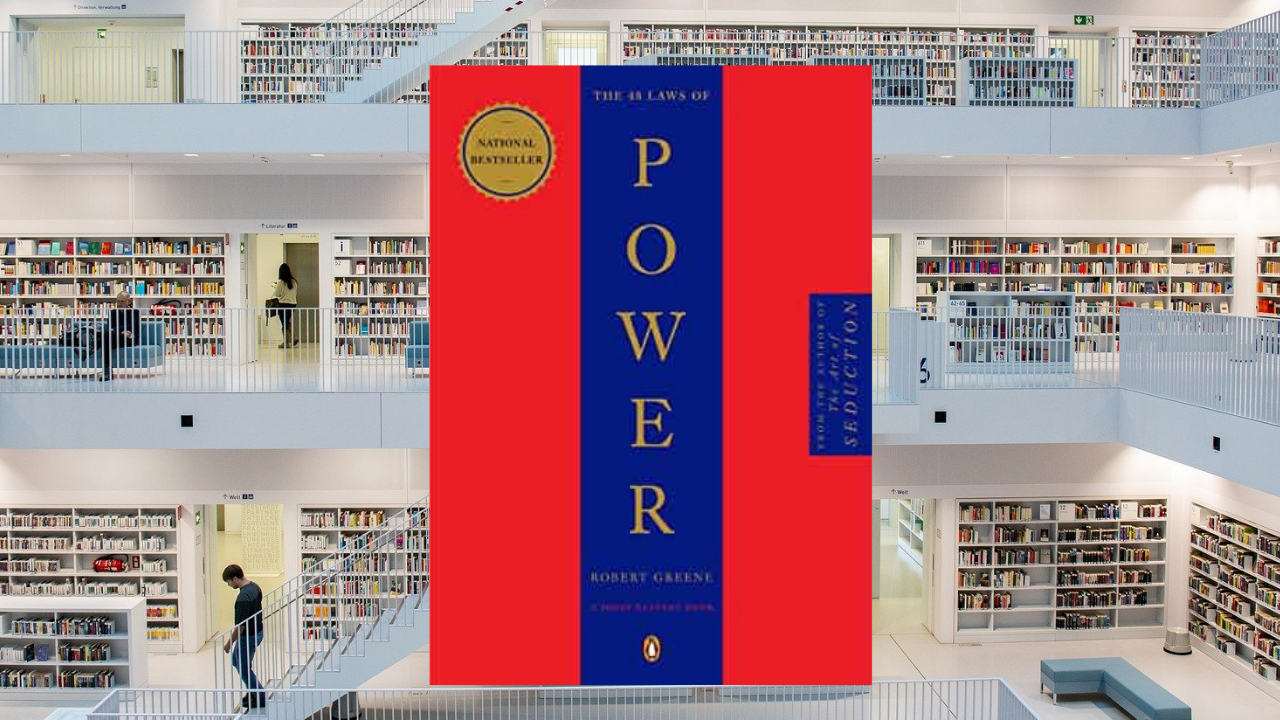
The 48 Laws of Power, by Robert Greene:
The 48 Laws of Power, interestingly enough, was once banned in all U.S. prisons, and it’s clear enough why. It is the definitive learning resource for anyone who wants to either gain power, or defend against its use, and everything in between.
Which is to say, you can use this book in two ways: either as a set of instructions to help you navigate the power relationships everpresent in society and advance your own interests, or an equally powerful set of instructions for protecting yourself from people who would use these principles against you.
Set against the backdrop of historical and more recent examples, each of the Laws concerns one principle that is indispensable for getting what you want, and for convincing other people to help you get it.
"When you are trying to impress people with words, the more you say, the more common you appear, and the less in control. Even if you are saying something banal, it will seem original if you make it vague, open-ended, and sphinxlike. Powerful people impress and intimidate by saying less. The more you say, the more likely you are to say something foolish.”
“Do not leave your reputation to chance or gossip; it is your life's artwork, and you must craft it, hone it, and display it with the care of an artist.”
"Appearing better than others is always dangerous, but most dangerous of all is to appear to have no faults or weaknesses. Envy creates silent enemies. It is smart to occasionally display defects, and admit to harmless vices, in order to deflect envy and appear more human and approachable. Only gods and the dead can seem perfect with impunity.”
This Book on Amazon: The 48 Laws of Power, by Robert Greene
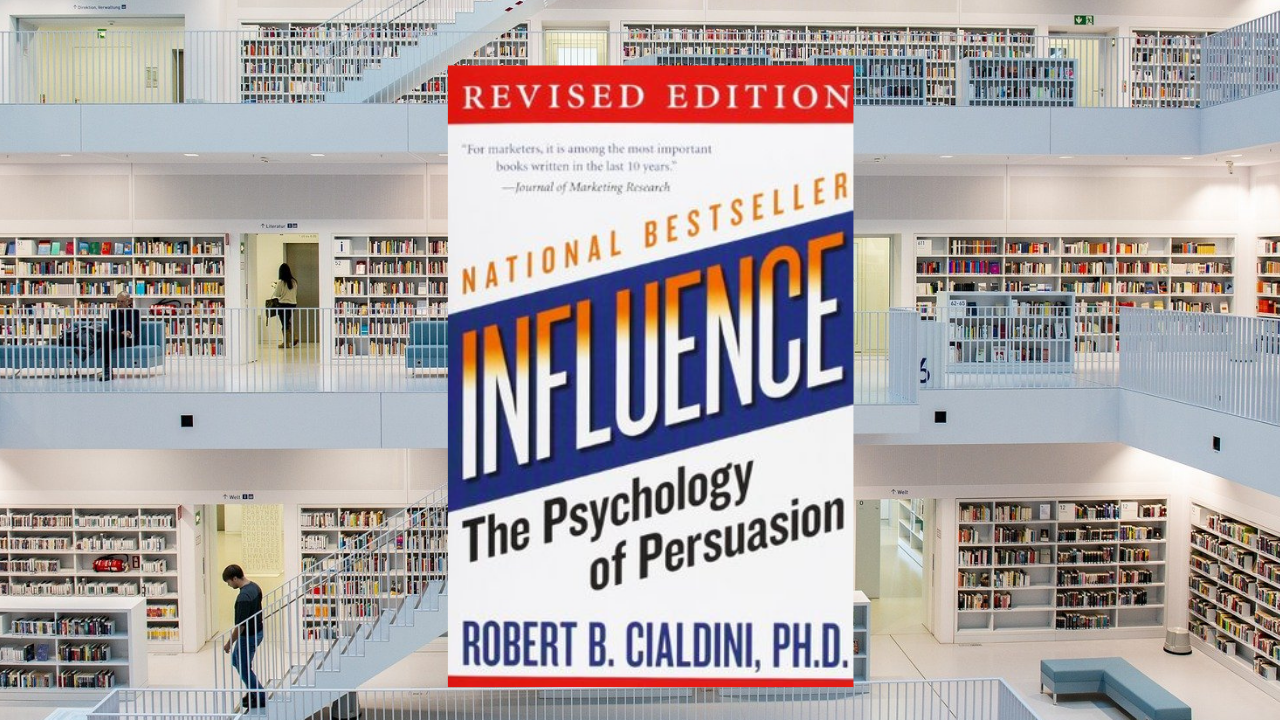
Influence, by Robert Cialdini:
This is one of the must-read classics of persuasion and it’s pretty much been the gold standard for books on that subject ever since it came out in 1984. I’m generally distrustful of new books from people who claim to have found a “new paradigm” or whatever when it comes to influence – save your time and your money and just buy this one classic book.
The six universal principles of persuasion that he covers in-depth are reciprocity, commitment, social proof, authority, liking, and scarcity, and once you have those covered, you have a decent idea of why people do pretty much anything and how you can influence their behavior to align with what you want them to do.
Influence, like The 48 Laws of Power, is amoral – meaning, it’s not the material itself but what you do with it. You could use it to become an evil genius, or you could use it to inspire positive change in both yourself and your community. The principles can be used either way. I’m just telling you that’s one of the best books on persuasion. The choice to read it, as always, is yours.
“A well-known principle of human behavior says that when we ask someone to do us a favor we will be more successful if we provide a reason. People simply like to have reasons for what they do.”
“Often we don’t realize that our attitude toward something has been influenced by the number of times we have been exposed to it in the past.”
“Persons who go through a great deal of trouble or pain to attain something tend to value it more highly than persons who attain the same thing with a minimum of effort.”
This Book on Amazon: Influence, by Robert Cialdini

The View from the Opposition:
No one's ideas are beyond questioning. In this section, I argue the case for the opposition and raise some points that you might wish to evaluate for yourself while reading this book.
#1: Scott Adams May Not Be So Impartial
Adams makes repeated claims that he's completely impartial and that he doesn't agree with Trump on XYZ issue, etc. But I'm honestly not so sure. Yes, it does seem as though he's more or less in awe of Trump as a persuader, but he also doesn't really bash Hilary in this book. She doesn't come across as all that persuasive - but that's kind of the point!
In the end, though, I'm not entirely convinced that we can believe Adams when he says that he has no special feelings for Trump. I mean, he was even invited to the Oval Office once, and presented with a "special gift." What does that mean?
So yea, just keep that in mind when you're reading the book, if you choose to do so. Adams literally wrote a book on persuasion, and he's asking you to believe that he's completely impartial in one of the most divisive political scenes imaginable? Right.
#2: Win Bigly Feels Very Self-Promotional
I actually like Scott Adams, which is kind of important to state up front, because I'm going to tear into him a bit in the next few sentences here. Large swaths of Win Bigly contain boasts about his superior knowledge of politics, human nature, and everything in between. Sometimes it goes on and on.
We're treated to a litany of references to his qualifications, to his large Twitter following - he even claims that he may be responsible for tipping the election, and that Robert Cialdini (see: Related Books, above) may have entered the fray in order to combat his influence.
Again, it's like, "Just keep that in mind." It honestly didn't bother me that much, but plenty of other people have said that that's what they hated most about it, so I just wanted to prepare you for that!
"The test of a first-rate intelligence is the ability to hold two opposed ideas in the mind at the same time and still retain the ability to function.”
-F. Scott Fitzgerald

Action Steps:
So you've finished reading. What do you do now?
Reading for pleasure is great, and I wholeheartedly support it. However, when I'm reading for a particular purpose, I am intensely practical. I want a result. I want to take what I've learned and apply it to my one and only life to make it better!
Because that's really what the Great Books all say. They all say: "You must change your life!" So here, below, are some suggestions for how you can apply the wisdom found in this breakdown to improve your actual life.
Please commit to taking massive action on this immediately! Acting on what you've learned here today will also help you solidify it in your long-term memory. So there's a double benefit! Let's begin...
#1: Study Junk Mail
I'm half serious! At least sign up to the free mailing lists of master marketers like Eben Pagan, Dan Kennedy, Russell Brunson, and others. For the price of your email address, every day you can get an education in persuasion sent right to your inbox.
Even I've signed up to their mailing lists, as well as the mailing lists of my competitors, just to see what they're up to and how I can out-compete! Naturally, you can study politicians as well, videos of famous speeches, etc. But the larger point is that you can reverse-engineer a lot of the marketing messages you receive each day and in so doing attend your own masterclass in persuasion.
#2: Look for the Hook
When you start to look for it, you'll notice that the most popular viral videos all contain a "hook" at the beginning to draw you in. In order to persuade, you first have to capture attention, and the best way to do this is with a strong hook.
For example, on YouTube, most thumbnails (the picture accompanying the video title) contain certain key elements. They'll either have a photo of a celebrity "What's Elon Musk doing with that hammer?", or some unusual object, or large text in a striking color. This is all to hook your attention, draw you in, and deliver their message.
#3: Simplify Your Communications
Simple works better than complicated when it comes to persuasion. All the best hooks are simple (don't require a lot of explanation), and all the most powerful messages are delivered clearly and directly.
Like Adams says, “A good argument in five sentences is better than a brilliant argument in a hundred sentences.” So keep your words shorter, simpler, and easier to understand, and you'll be more persuasive. Instead of trying to follow the meaning of a long, complicated sentence or thought, it'll be immediately apparent what you're getting at, and it'll hit 'em right in the brain stem.


About the Author:
Scott Raymond Adams is an American author and cartoonist. He is the creator of the Dilbert comic strip and the author of several nonfiction works of satire, commentary, and business.
Dilbert came to national prominence during the downsizing period in 1990s America, and by 2000, the comic was syndicated in more than 2,000 newspapers in 57 countries and 19 languages. He now hosts a podcast, Coffee with Scott Adams, and provides commentary on current events through the lens of persuasion and influence.
Additional Resources:
The 48 Best Books on Persuasion and Influence, According to Millions of Readers
This Book on Amazon:
If You Liked This Book:
How to Fail at Almost Everything and Still Win Big, by Scott Adams
The Laws of Human Nature, by Robert Greene
The 48 Laws of Power, by Robert Greene
The Art of Seduction, by Robert Greene
Pre-Suasion, by Robert Cialdini
Never Split the Difference, by Chris Voss