
Summary:
This Book is For:
- People who have struggled with habit-change in the past, and who are looking for a different, proven approach, taught by a knowledgeable and sympathetic expert.
- Fans of James Clear's book, Atomic Habits, who want to add another powerful habit-forming tool to their arsenal.
- Anyone who struggles with setting and enforcing boundaries.
- Fans of Jen Sincero's brand of supportive cheerleading and humor, who also want to learn more about the structure of habits and the power they have to change theirs for the better.
"Our thoughts become our words, our words become our beliefs, our beliefs become our habits, and our habits become our realities."
-Jen Sincero (paraphrasing Lao Tzu)
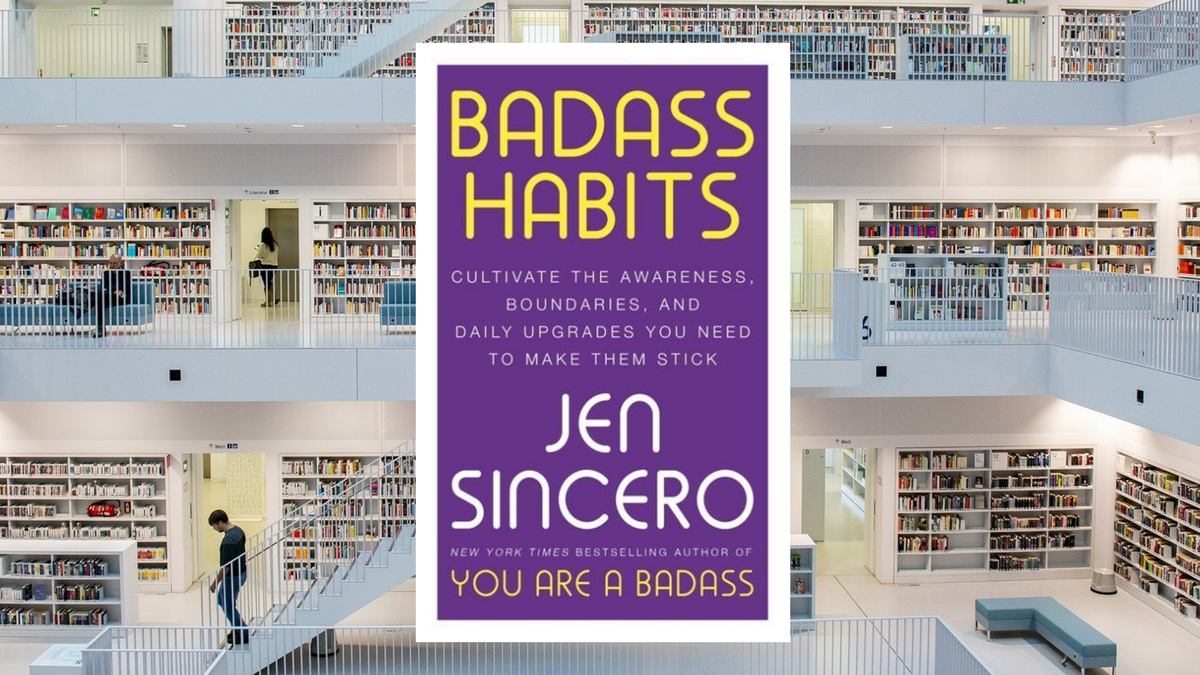
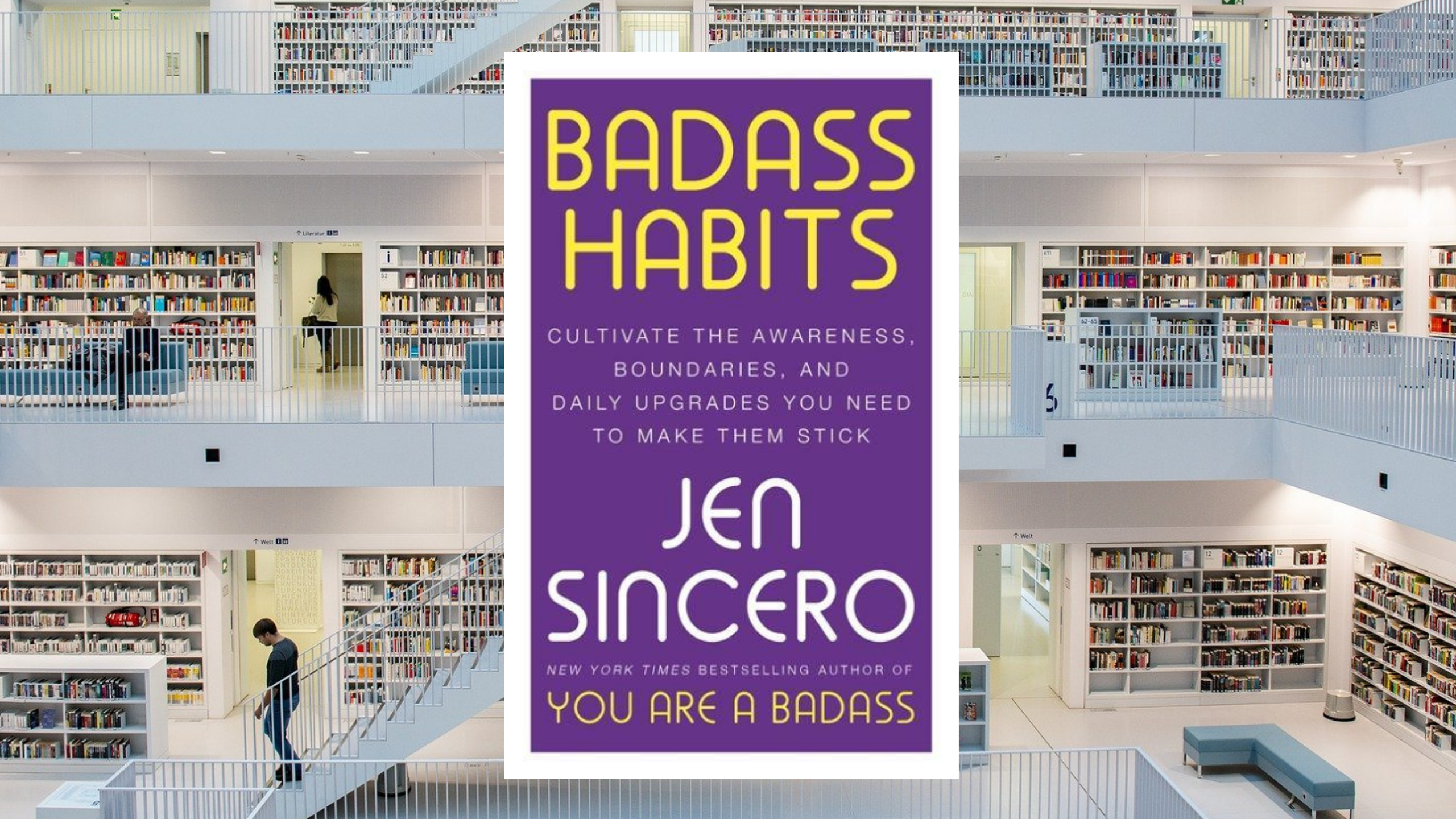
This book is one of the follow-ups to Jen Sincero's 5-million-copy bestseller, You Are a Badass, which came out of nowhere to become one of the books I find myself recommending quite often. Her style is warm and sincere, but there's no doubt that she fought to get to where she is today, and so there's also this hard-edged pragmatism alongside her earnest cheerleading, which lends her extra credibility.
One of the things she does quite well is work from first principles, meaning the most basic, foundational ideas (in this case, in the field of personal development), and then she builds everything on top of that.
Habits are so foundational to self-improvement, and if you're interested in making lasting changes in your life, it makes sense to focus your efforts where they'll have the most leverage, where they'll do the most good.
And when it comes to foundational, healthy habits, we have a thousands-of-years tradition of stressing their importance:
“We are what we repeatedly do. Excellence, then, is not an act, but a habit.”
– Aristotle
“The chains of habit are too weak to be felt until they are too strong to be broken.”
– Samuel Johnson
“We first make our habits, and then our habits make us.”
– John Dryden
Sure, you can compare different productivity systems and exercise routines and "life hacks," but that's all surface-level stuff compared to your habits and your belief system. That's where Jen Sincero focuses most of her efforts - especially in this book - and that's why the ideas found here are so effective.
She explains the psychology of habit formation, of course, but she also goes into an important discussion about boundaries, raising our level of self-awareness, and paying attention not only to our current habits but also to our unconscious beliefs and fears.
The book is also hilarious, with more than a few laugh out loud moments, even as she's ultra-committed to your eventual success. She's warm and supportive, but also wise and extremely practical.
Whereas James Clear’s phenomenal book, Atomic Habits, is what I would consider to be the definitive book on habits, I feel that it lacks the intimacy and care that’s present in Sincero’s work. That being said, Badass Habits lacks a lot of the best stuff in Clear’s book too.
Reading both – and applying both – will give you the benefits of both. Reading Badass Habits, you really feel that Sincero is on your side and that she has credibility as a fellow traveler on the path, just as James Clear gains credibility by virtue of the science-backed approach of his books.
I recommend reading both books, but anything you'll get out of either one of them is all to be found in the application of their ideas. You have to learn what to do, but then you have to go out and actually do it.
It will come with attention and awareness, and Jen will teach you how to cultivate both. She will give you the tools, tactics, and mindsets you need to be able to change, but will also lovingly remind you how powerful you already are:
“You are loved. Massively. Ferociously. Unconditionally. The Universe is totally freaking out about how awesome you are."

Key Ideas:
#1: The Mightiest Power You've Got
"When it comes to building great habits and ditching lame ones, your commitment to staying focused on who you're becoming regardless of where you are/who you are right now is the mightiest power you've got."
When it comes to any and all lasting personal change, it's attention and focus that's going to get you there. I wish there were a more glamorous or exciting answer than that, but there really isn't.
"How do I make the changes stick?" is a helluva tough question for a lot of people - so there's absolutely no shame if you're wondering the same thing yourself - but a big part of the answer is the ability to bring your mind back by the scruff of its neck whenever your attention, focus, and motivation flags or wavers.
You have to refuse to lose sight of the person you're becoming, but, crucially, it's an act of self-love to be supportive of where you are now. Keeping those two conflicting thoughts in your head at more or less the same time is the key. It's kind of like, "You're absolutely perfect just the way you are. And you could use a little bit of improvement."
Your current trajectory matters much more than your current results, however, so don't be discouraged if you're further away from your goal than you'd like to be. If you're still 30+ pounds overweight, but you're eating well and exercising regularly now, then that's good! You're on the path. You'll get there, given enough time.
Your trajectory is solid, it's just that your results haven't had a chance to catch up yet. This is where lots of people fall victim to "the dip," and slide off the path by letting their attention wander.
Don't do that! Not when it's virtually impossible to fail - just don't quit! If you do not quit, you cannot fail. Do whatever it takes to stay focused on the person you're becoming, all while being okay with where/who you are right now, and performing the daily actions that are going to get you where you want to go.
#2: The First Step is Always...
"The first step to making any major change in your life is always awareness. When it comes to matching your identity to the habits you want to form or free yourself from, you're going to want to start noticing the specifics of how you're behaving right now so you can change anything that's not in alignment with where you're heading."
Attention and awareness are the one-two punch of habit change. In order for you to focus on what you want to change, you have to be aware of what you're doing now. That's awareness; being cognizant of what your current habits are, your current triggers, and the ways that you're not showing up for yourself as powerfully as you could be.
In time management circles, they say that the best way to manage your time is to monitor where you're spending it now, and that's kind of the idea here as well! The first step is to notice the habits you have now, so you'll know what you're working with, what you're doing well, and where you need to direct the majority of your efforts.
It's hard to notice your habits though, almost by definition! They're habitual! You do them mostly without thinking, on autopilot, and without stopping to think. So awareness requires a conscious effort to notice, but once you start to look you'll start to see.
"Pulling back and taking stock of your habits, your beliefs, your thoughts, your identity, your words, and your actions is some of the most important work you can do, because it gets you out of victim mode and puts you in control of your life. And living a life on purpose is truly where the party's at."
#3: Who You Believe You Are is How You'll Behave
“Identities come equipped with matching habits.”
Whenever someone tells me that they're a smoker but they're trying to quit, I take it as a sad sign that they're not going to make it. Why? Because they're defining themselves AS a smoker!
That's their identity - a smoker - and it's virtually impossible to act differently than our own self-image, at least for long. Smokers are people who smoke, so if that's their self-image, and they're using those terms to describe themselves, then that's exactly what they're going to do, regardless of what they may say.
Habit change works on the level of identity change, and so whenever you're trying to change your habits, a big part of that is going to be about changing your identity.
Instead of a smoker who's trying to quit, you're now a former smoker, and you don't smoke anymore. Instead of an overweight person, you're now a runner. Instead of a broke person, you're now a businessperson. These are completely new identities, and they come with their own matching habits.
Just like Muhammad Ali said that "I am the greatest! I said that even before I knew I was," your identity will precede your results. To ensure lasting change, you have to say that you're a runner, meditator, bed maker, and show-up-on-timer even before you know you are. Keep saying it, repeat it until you believe it, act like the person you're becoming, and your habits will fall into line.
#4: Setting and Enforcing Boundaries
Your boundaries help lay the groundwork for all other habits. Jen Sincero explains that failures in the boundary department take place in three major categories, and they include: saying yes when you want to say no; saying no when you may be better served by saying yes; and when control issues flare up.
Saying yes too much: This happens to people who are predominantly people-pleasers, and who hate "letting people down," even at the expense of their own well-being.
These boundary issues occur when people say, "Yea, that's fine," when their boss tries to overload them with work, and "Sure, that's no problem," to people's requests even when it is a big problem, they're uncomfortable with it, and definitely do not want to do it.
Saying no too much: This also happens when people neglect their own needs, but in a slightly different way. In this case, it's more about not being seen as "needy," or "burdensome," so they don't ask for help, don't share their emotions and struggles, and don't recognize or respect when they should say "yes" and let other people in.
Both of these types of boundary issues can be partially solved by articulating your own needs - to yourself and to others - and by getting in the habit of saying yes or no, depending on how you really feel, not on how you "should" feel.
Too controlling: This happens when people don't respect the autonomy of others and attempt to, well, control everything about the situation and other people's behaviors. It's a failure to recognize that boundaries exist, and that you may be overstepping them.
This one is a little tougher to root out, but again, it starts with awareness. From there, it's surrender that's going to be a great help to you, and this is going to take practice. Change isn't always immediate.
You might also worry that you're going to push people away once you start asserting your autonomy and defending your boundaries; and you might, but you're not being mean to others by doing this, you're being kind to yourself.
It's actually a kindness to do this and to let other people know exactly where you stand. Instead of wondering and walking on eggshells trying to figure you out, people will know exactly where you stand, exactly what you find acceptable or not, and the majority of people will both respect your boundaries and respect you for having them.
#5: What Are You Participating in at the Moment?
"In every single moment there is an infinite number of ideas, sights, sounds, smells, opinions, and opportunities swirling around us, and what we choose to focus our attention on, and how we choose to think and speak about it, is based on the reality we're participating in at the moment."
Here's an exceptionally powerful idea: It's literally true that we see what we're looking for. If we're looking for negativity, we will not be disappointed; and conversely, if we look for the good, we're certain to find it.
Too many people just brush aside this simple idea when they first hear it, but its implications are staggering.
Negative news, horribly abusive people, awful stories of human beings behaving horribly towards one another - these things, unfortunately, are not rare. They're happening all over the world, and as long as it's profitable for news corporations to serve up these images for hungry viewers, you won't have to go far to find them.
But it works the same way in a positive direction too. There are so many positive role models all over the place - amazing, generous, kindhearted, fully-alive people all doing incredibly cool shit - but if you're not looking for them, you might miss them when they get drowned out by all the negative noise.
The important thing to remember here is that you control your awareness, and it's always firing at something - always. Your attention is directed at something specific each and every moment that you're alive, and for the most part, you get to decide what you look for.
You can choose something different: more empowering, more helpful, more human. You possess this power, and it's one of the last human freedoms that can never be taken away.
If you change your focus, you can change your reality, and like I said, the implications of this huge idea are just...staggering! We see what we're looking at, we can choose what to look at, and so you have to ask yourself, "Which reality are you participating in at the moment?"
#6: The Structure of Habits
Jen Sincero identifies several of the key elements involved in habit creation. There are six of them in total, and they are:
1. The Trigger: Triggers begin a chain reaction that leads to you performing the habit. There are innumerable triggers operating in our environment literally all the time, everything from "Pass a coffee shop --> Decide that you really want a coffee" to "Walk by the TV in the living room --> Decide to sit down for a few hours and binge some shows."
2. The Sequence: Habits work in sequences, starting with a trigger that causes you to identify a "need" such as for caffeine, which then leads to a response "making or buying a coffee," that leads to a "reward," which can be a feeling of well-being, feelings of happiness, etc.
3. Repetition: In your brain, the neurons that "fire together, wire together," and so whenever you repeat a habit, the mental grooves get smoother and stronger and over time, it'll be easier and easier to perform that habit. It works the other way too, in that once you stop performing a habit, those connections get weaker and weaker, until that habit is effectively broken.
4. Ease: Obviously, the things that are easier to do are more likely to be done. This goes double for habits, in that the easier you can make your good habits to do, and the harder you can make your bad habits to do, the better off you'll be. Practically, that means keeping your running shoes by the door so you don't have to go searching for them, and your TV remote in a locked drawer so you do have to go searching for the key.
5. Patience: Immediate gratification is rare when it comes to good habits. While sugar rushes and caffeine highs are generally instant, it may take a while for your good habits of running and meditating in the morning to show positive results. It's important to stick with it, though, even if it sometimes feels as though you're just moving pebbles across the yard one at a time.
6. Identity: We covered this in Key Idea #3, but habits come with matching identities - and vice versa. Smokers gonna smoke, and readers gonna read!
#7: Habits Take as Long as They Take
There are wildly different estimates out there concerning how long it actually takes to form a new habit - everything from 18 days all the way up to 254 days and beyond.
It depends on the habit, the person, the circumstances - everything - but most habits take about 66 days to really lock in. That being said, you can make excellent progress in far less time than that (18-21 days), and you can even start extremely small with atomic habits that take just 2 minutes.
Importantly, habit formation becomes a lot less complicated when you just resign yourself to the fact that the process is going to take exactly as long as it takes - no more, no less. And if you're still struggling after 365 days? Keep doing the habit on the 366th day! If you don't quit, it's impossible to fail; and eventually, you'll get there.
Again, it's all about attention, awareness, and consistency. You're also not in a race with anyone else - not even yourself - and so you can relax into the process and take it just one single day at a time.
#8: Never Miss Twice
I don't know a single person who hasn't missed at least one day, once in a while, when they were trying to install a new habit or remove a negative one. With the exception of people who, for instance, get "scared straight" by their doctor and never have another alcoholic drink for as long as they live, most of us will slip up occasionally. And you know what?
That's okay! Just remember an important rule: Never miss two days in a row. Never allow two full days to go by in the calendar without performing your new habit, and your chances of success go up exponentially.
Missing a day here and there is normal (even though you should try not to, of course), but two days tends to turn into three, which in turn tends to become, "Oh my god, how did I let this happen? I was doing so well for a while there!"
Personally, I try to shoot for 95% compliance with all my habits. It's a general rule that's worked out quite well for me, and which also combats that sense of "I can't believe I failed again! I can't stick to anything!" that can sometimes come up when you work really hard for something and still don't quite make it.
For example, if you drink enough water for 347 days a year, don't worry about those 18 full days where you maybe opted for soft drinks or coffee instead because you forgot your water bottle at home. Working out 3 days a week is 156 workouts a year, but don't stress if you only managed to fit in 148 of them. You can still make insane progress with 148 workouts a year. Even less than that! Just don't make a "habit" of missing water or workouts!
#9: There Ain't Enough Room Here for Both Habits
"Crowd out an old habit by creating a new behavior that doesn't allow the old behavior to coexist."
This right here is one of the most important things to understand about habits: a good habit and a bad habit usually cannot coexist within the same person or the same identity.
Although, yes, I've definitely seen people leaving the gym light up a cigarette once they get into the parking lot, it's rare. Former smokers go to the gym, and people who don't eat sugar don't even drive past KFC anymore.
This is easier to explain in the context of fitness, but the idea is generally applicable. Once you start to make one healthy, positive change, it becomes more likely that you're going to make all sorts of additional, equally positive changes, and they are going to stack on top of each other.
For me, when I was first getting into weight training, the only thing I was doing "right" was going to the gym, and even then I wasn't really training hard enough. But then I realized that it was kinda crazy to be putting forth effort in the gym if I wasn't also going to be backing myself up with a solid diet. So I got my diet in order. Then I thought, Man, it's crazy to eat this well and train this consistently if I'm not getting enough sleep at night to power through my workouts!
You can probably see where I'm going with this. Wherever and whenever you can, try to ensure that your new, positive habit leaves no space in your life for negative habits that you're trying to avoid, and use your new identity to shift you into making additional positive choices as well.
#10: Desires and Emotions Fuel Habits
"Focus your attention on the desires fueling the habit, not on the habit itself."
Freidrich Nietzsche is known for having said, "Those who have a strong enough why can bear almost any how." What he meant was that sufficient desire is necessary to overcome any and all external obstacles. If you don't have a strong enough reason why you want to make these changes in your life, then you're likely going to fold at the first hint of difficulty.
So you have to ask yourself, "How bad do you want it?" You also have to connect with your biggest desires surrounding your new habit, and exactly why you want to install this habit in the first place.
"I should probably watch less TV" is not nearly as compelling a desire as "If I want to connect more deeply with my children before they grow up and have lives of their own, I need to turn off the TV and make our time together my highest priority." Big difference!
I'm also going to mention another book breakdown here, MJ DeMarco's The Great Rat Race Escape. MJ talks about what he calls a "Fuck This Event", or FTE, which basically means a situation so intolerable and awful that you will do anything to get yourself out of it.
Human beings are motivated by pain and pleasure - we're always either motivated by moving towards or away from pain - and you can use this, have to use this, when you're working on your habits. In the case of an FTE, the pain of staying the same has to be greater than the temporary pain of making a change.
"Good habits are about who you decide to be, not what you decide to do, so get mighty clear and worked up over the image of yourself succeeding, and mighty uninterested and grossed out by the image of yourself staying stuck, and use these feelings and emotions to help you stay on course."
#11: Today is Another Day
“Every moment of every day you have the chance to start over with a clean slate.”
You are not the story you're telling yourself about who you are. Just because you were a certain type of person in the past doesn't necessarily mean you're chained to that identity for your entire life, and to a greater or lesser extent, that identity is malleable - you can start over today.
When you really think about it, who are you anyway? Are you your job or the words you use to describe yourself? Are you the people you surround yourself with, or the media you consume? Are you the thoughts in your head, or the bundle of sense perceptions that make up your daily reality?
You are all of these things and none of these things, and so you have to ask yourself, "Without these ideas and stories and descriptions, who are you?" Because, if you are what you do, then if you don't do it, you aren't. So who - or what are you?
This is a question you could ask again and again, every single day, for your entire life and still never get to the "end" of it - the answer is so elusive, strange, and...awesome!
One thing that is for sure, though, is that change begins now, in the present moment, and never "later." Later doesn't exist, and neither does the past. You have total freedom in this moment - and every moment to choose who you will be next, how you will show up for yourself, and what your future holds.
Book Notes:
"Our thoughts become our words, our words become our beliefs, our beliefs become our habits, and our habits become our realities."
"I couldn't wait to get crackin'. That is, until the following conversation with myself crawled up and sat on my chest:
Me: Habits! Of course! Why, they're the very sculptors of our realities! I'm going to write the fuck out of this book.
Me, enjoying a tower of onion rings, a few days after giving up fried food: Are we going to write about how to purchase a gym membership and never use it? Or how not to stop cursing? Because we could write the fuck out of that.
Then I realized, Oh look, I'm excelling at a habit right now, that most unsavory of human habits: focusing on the negative.
I'm blowing past the fact that I haven't touched a cigarette in over two decades even though I love smoking more than I love most people; that I'm a highly accomplished flosser, hydrater, gratituder, writer, bed maker, meditator, and show-up-on-timer; and that I'll take a backpack and a high alpine trail over a stinky gym any day.
Cursing and fried food, however - there's still work to be done around cursing and fried food."
"We all tend to sell ourselves short and focus on our failures instead of celebrating our victories. Even people who are successful beyond belief admit to occasionally letting negativity and feelings of inadequacy push them around."
"Contrary to popular belief, habits are more about who you're being than what you're doing."
"It's essential when building good habits to focus on the whole enchilada - your head, your heart, and your hands - otherwise the meditating stops; the fingernails start being bitten again; your calm, sober repose at yet another passive-aggressive family gathering turns into 'All right, I've had enough. Who wants to play Tequila Truth or Dare?!'"
"In every moment, you have the profound ability to make choices that will completely change your habits and your reality, either right away or over time."
"When you repeat something enough times, you establish new neural pathways in the brain that your habit flows through effortlessly and automatically, allowing you to literally fuggetaboutit."
"Changing your actions in order to form a new habit without also changing who you're being is like running into the wind: Yes, it's possible to put your head down, run as hard as you can, and gain some ground, but you're much more likely to give up and return to your old ways than if you run in the same direction as the wind."
“Having a reality that is solid means I feel secure in spite of the fact that I’m spinning around on a ball in infinite space, and that my impending death is actually the only thing I can be absolutely sure of.”
“There ain’t no shame in being human.”
“Habits define who you’re being at a certain moment in time; they’re not who you are.”
"Even if we'd love to make a change, we subconsciously fear that if we stop believing our stories about who we are and what's available to us, the foundation of our realities will disappear and we will disappear right along with it.
A tad dramatic, yes, but powerful enough to inspire people to spend entire lifetimes stuck in jobs they hate and abysmal relationships and to generally deny themselves the things and experiences that would have them leaping out of bed in toe-stubbing excitement each morning."
"The thrills from the little wins will keep you rolling toward victory."
"The people closest to you have the most to lose by losing you, so they are the most resistant to you changing."
“I don’t know about you, but I sometimes hear my mother’s words come flying out of my mouth with such hair-raising precision it’s like she’s hiding behind a bush feeding me lines.”
“The exercise of dismantling your fear is almost always very anticlimactic.”
“Saying yes when you want to say no is a habit like any other.”
“I’d hate to be a bird. You have to build your house with your face.”
“Saying yes is how you get in on life.”
“Life is much more enjoyable when lived fully.”
“Be grateful for all the ease and help and love and fun that yes will bring into your life and start cracking yourself open.”
“It’s inspiring to realize how many excellent habits you already have.”
"Research shows that in order for us to really stick to a habit, we have to believe in our ability to change. If you don't yet have evidence that you can transform whatever habit it is that you're working on, even if you have proof that you've tried to change and failed in the past, you have to believe that you can do it anyway - or else you will seriously half-ass creating this new habit, if you ass it at all."
"Realize that becoming the kind of person who does what you're setting out to do is an act of self-love and respect, that forming this habit means you believe in yourself, and that you're doing what it takes to give your awesome self everything you desire and deserve."
“Who will you be stuck being if you tell yourself that you can’t have what you want or that going after your desires isn’t worth the effort?”
“If you want to make a habit stick this time, do it differently this time.”
“You will experience whatever you believe. And you will believe whatever you repeatedly tell yourself is true.”
“I mean, complete idiots made money all the time, what the hell was my problem?”
“Picture all the people you will help by improving yourself.”
“What if you had the compassion for yourself that you tend to reserve for other people?”
“Get out of the way and into the flow.”
Important Insights from Related Books:
You Are a Badass, by Jen Sincero:
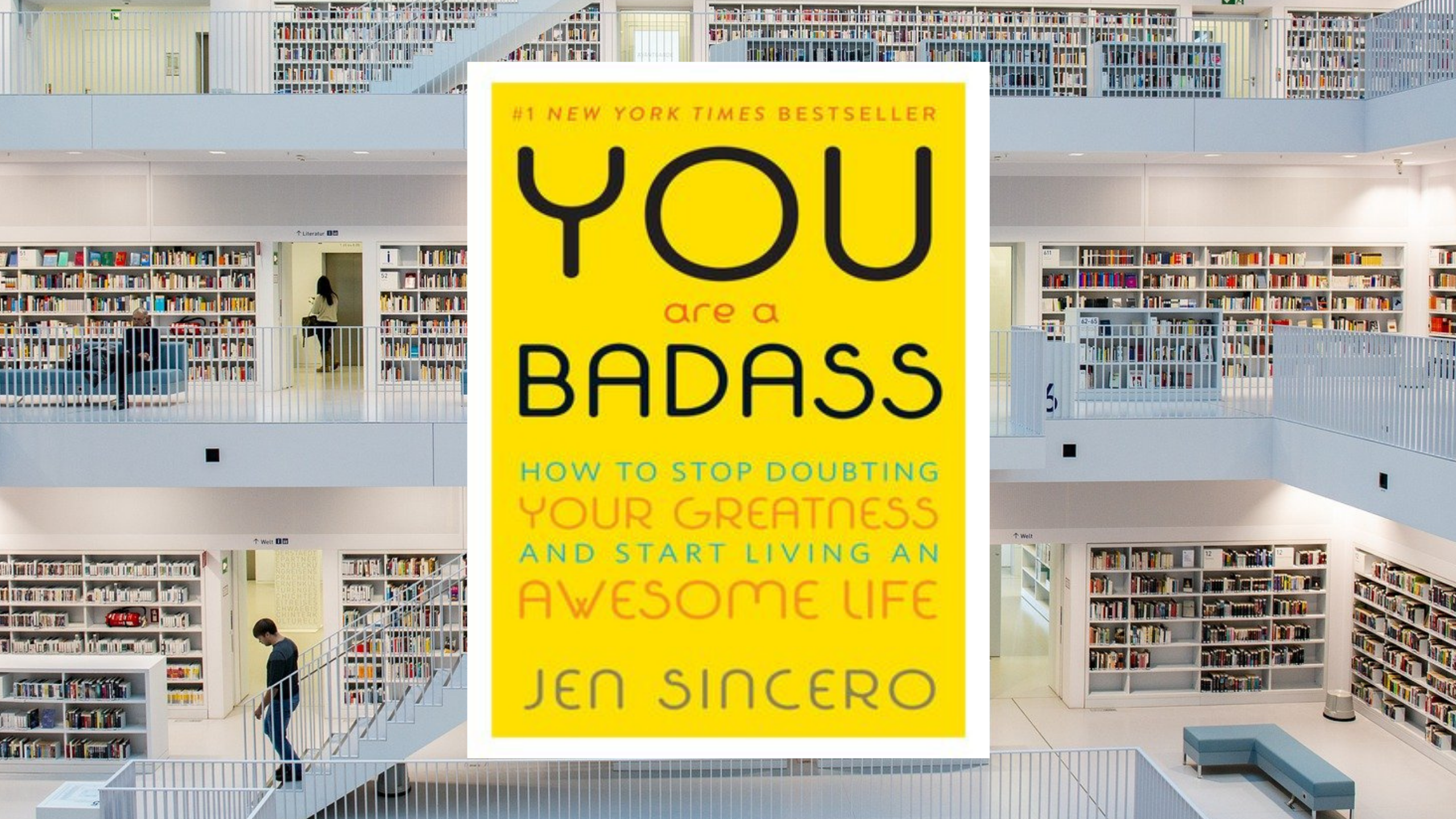
This book was my first introduction to Jen Sincero, and even though I'd hate to be caught reading it in public, she hooked me right from the start with her hard-won wisdom and her best-friend-style advice-giving approach.
Some of the words/language is a little too "woo-woo" for me (hey, that rhymes!), but the core message is an uplifting one, her advice is excellent and applicable, and you get the feeling throughout that she actually cares about your happiness and wants you to succeed.
I read the book, applied the lessons I found there, and then my life got better, which is pretty much the test of whether a book was worth reading or not. It's not going to appeal to everyone, but that's okay! That being said, there's a lot here to love and apply.
“If you’re serious about changing your life, you’ll find a way. If you’re not, you’ll find an excuse.”
“What other people think about you has nothing to do with you and everything to do with them.”
“You are loved. Massively. Ferociously. Unconditionally. The Universe is totally freaking out about how awesome you are. It’s got you wrapped in a warm gorilla hug of adoration. It wants to give you everything you desire. It wants you to be happy. It wants you to see what it sees in you.”
This Book on Amazon: You Are a Badass, by Jen Sincero
Atomic Habits, by James Clear:
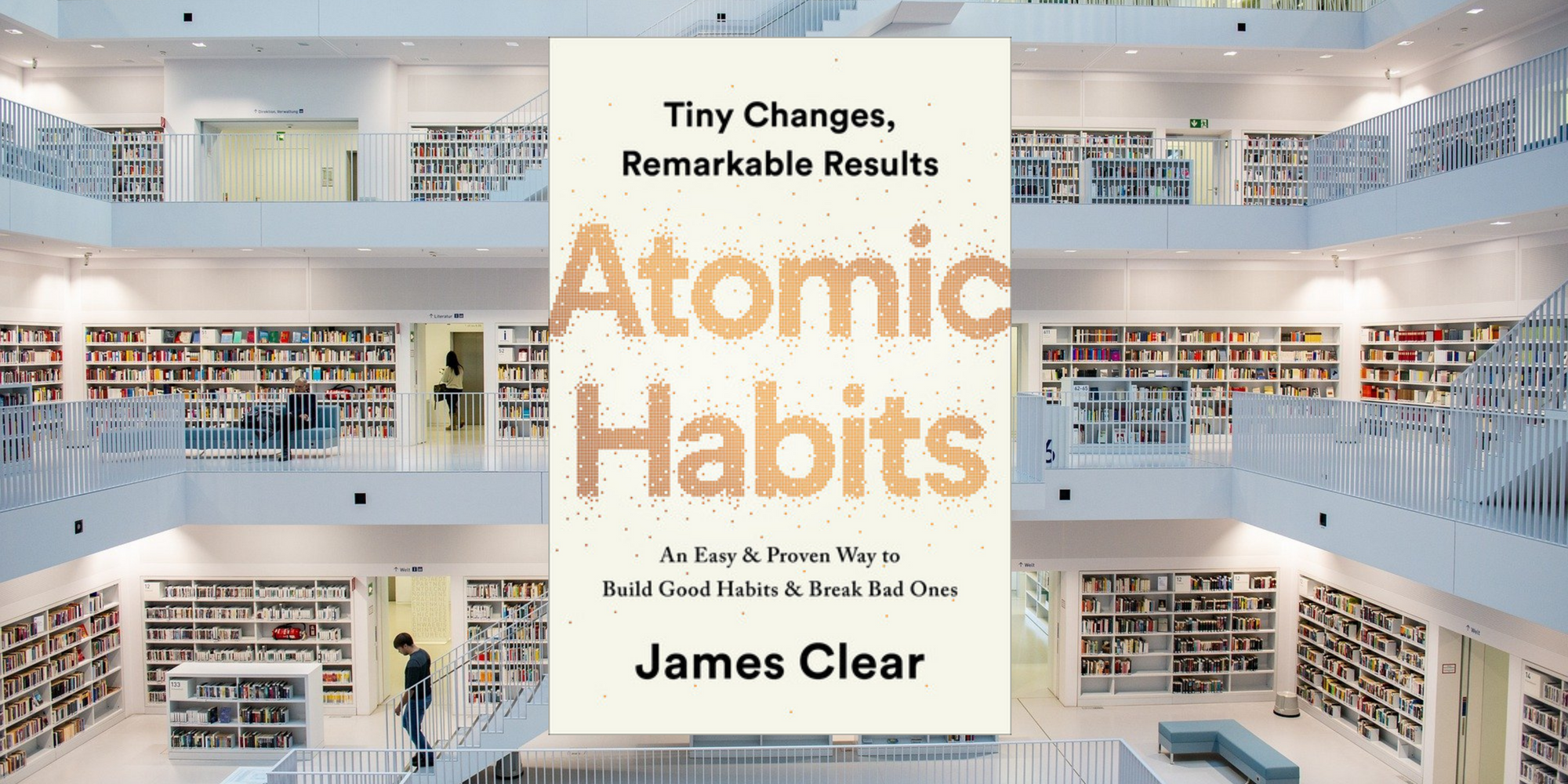
I would call Atomic Habits the definitive book on habits. It’s a 5-million-copy bestseller that I believe has lived up to all the hype, and I ended up with about 8 pages of notes, just three of which have been reproduced below. I mean, this thing is packed with everything you need to know in order to set yourself up for every kind of success in the future.
He’s spent years and years focusing on this question of what it takes to inspire lasting personal change; after reading, listening, learning, observing, and speaking with people who are killing it in life, he’s taken every single thing he’s learned and jammed it into this book.
“Every action you take is a vote for the type of person you wish to become. No single instance will transform your beliefs, but as the votes build up, so does the evidence of your new identity.”
“You do not rise to the level of your goals. You fall to the level of your systems.”
“You should be far more concerned with your current trajectory than with your current results.”
Read the Full Breakdown: Atomic Habits, by James Clear
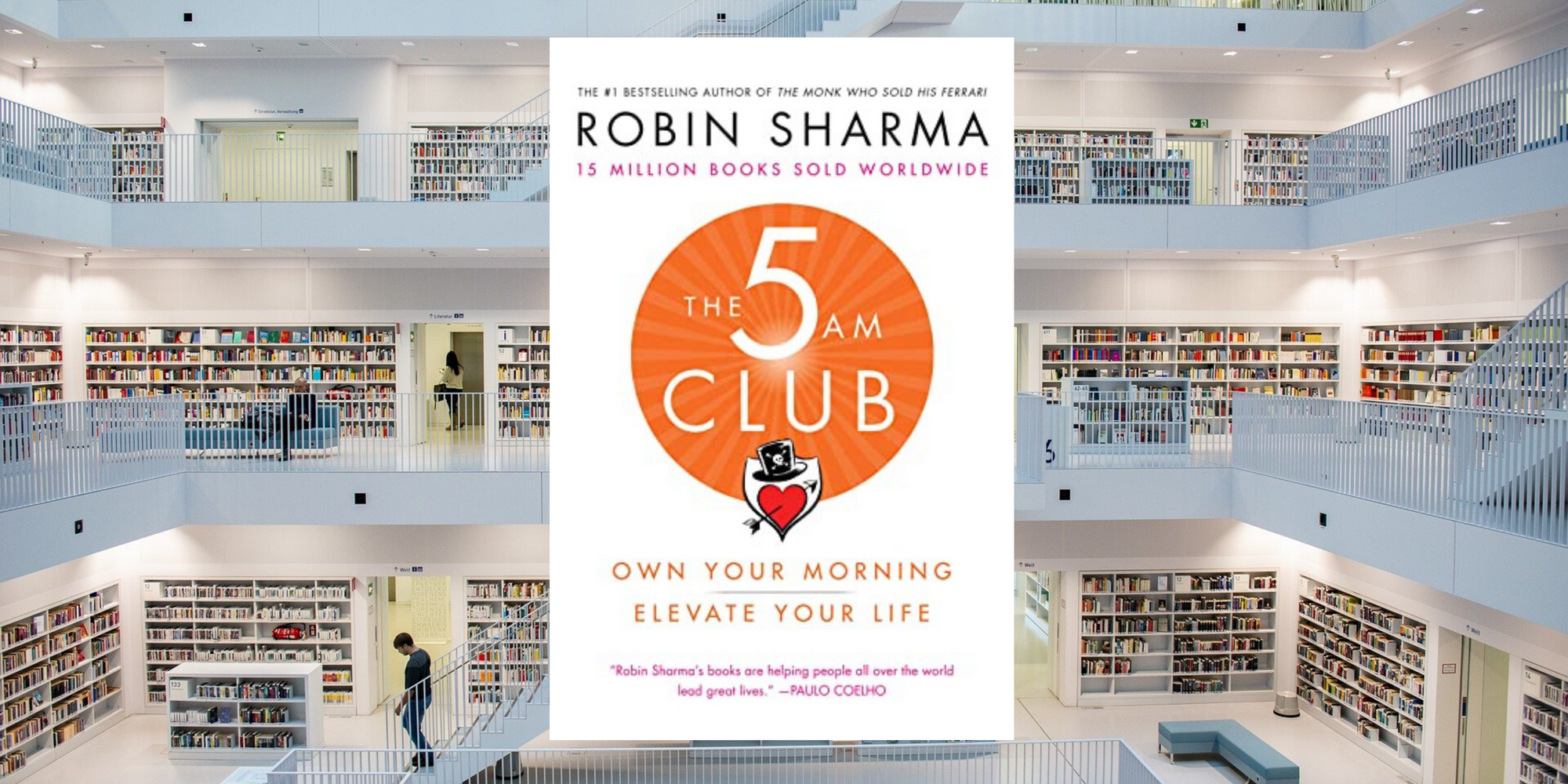
The 5 AM Club, by Robin Sharma:
Robin Sharma’s one of the “good guys” in the personal development space, and with over 15 million books sold, he’s one of the top leadership experts in the world. Sure, not everything popular is good, but for the most part, his ideas are rock solid, and you really can’t go wrong with his books.
Essentially, this is a book about going through life at “world-class.” It’s about not settling. With respect to your contentment, your relationships, your income, your health, your everything - the message is to always demand the best for yourself and to prove to yourself that you’re worth it and that you deserve it.
“A bad day for the ego is a great day for the soul.”
"These are the finest hours of your greatest days."
“Neglect your power for long enough and you’ll eventually come to believe that you don’t have any.”
Read the Full Breakdown: The 5 AM Club, by Robin Sharma
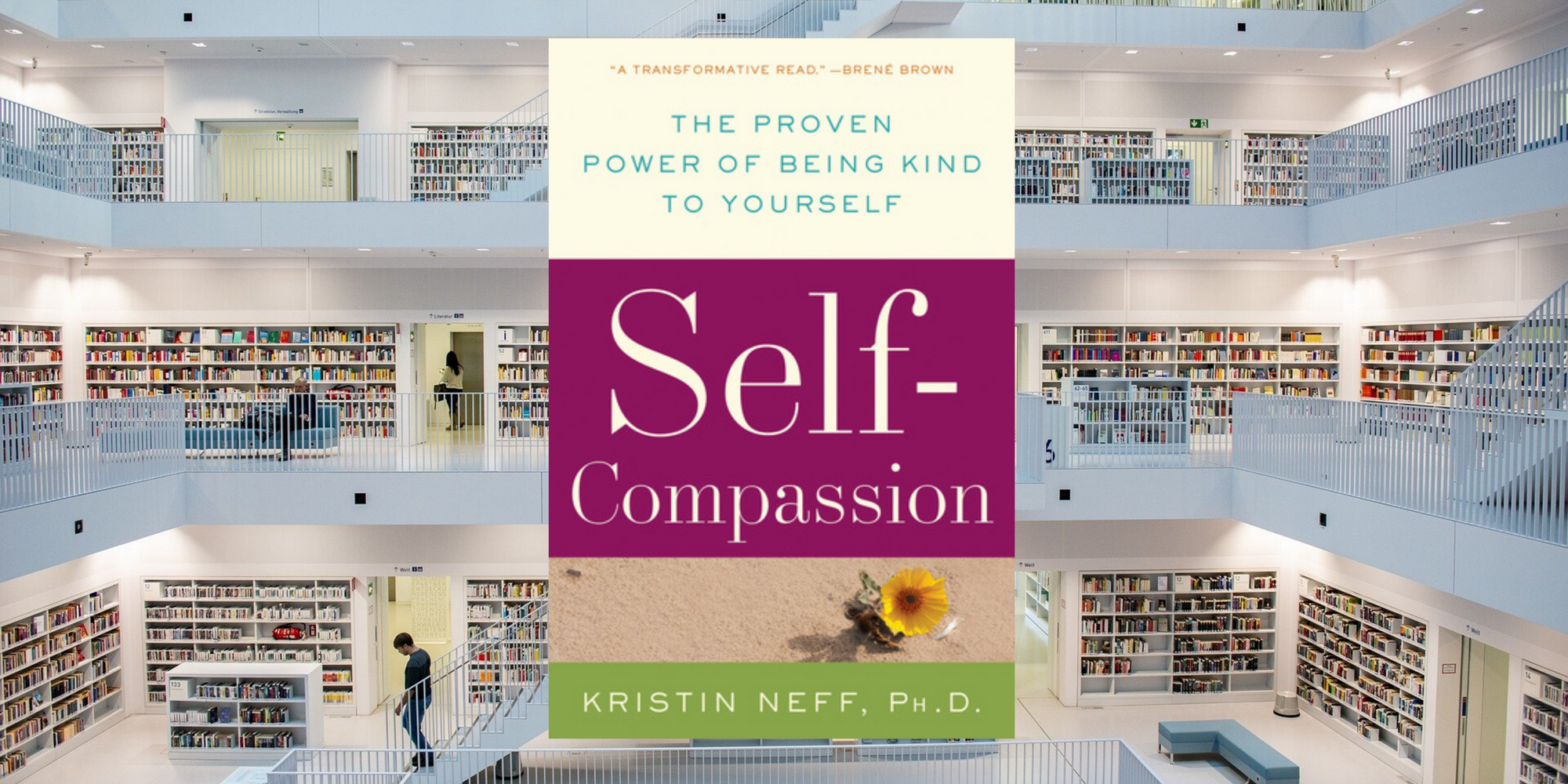
Self-Compassion, by Kristin Neff:
If you ever stumbled on someone treating another person the way you sometimes treat yourself, you’d probably call the police. And the fire department. Speaking for myself here, I’d be embarrassed if anyone were to witness me beating up on someone else in the same way that I sometimes go after myself. If you’re the same way, you may want to put this book higher up on your reading list.
Kristin Neff is an expert on compassion (imagine being able to introduce yourself like that at dinner parties) and she literally invented the operational definition of self-compassion, legitimizing the study of its effects and implications within the psychological research community.
Her underlying message is an important one too: It’s not that someday all our problems are going to go away and that we’ll never get down on ourselves ever again, but that being there for yourself - being in your own corner - is critical. We may not be able to stop the waves from crashing, but we can learn to surf.
“The beauty of self-compassion is that instead of replacing negative feelings with positive ones, new positive emotions are generated by embracing the negative ones."
“Psychologists have conducted a great deal of research on our ability to consciously suppress unwanted thoughts and emotions. Their findings are clear: we have no such ability."
“The good and the beautiful is all around us. And within us.”
Read the Full Breakdown: Self-Compassion, by Kristin Neff

The View from the Opposition:
No one's ideas are beyond questioning. In this section, I argue the case for the opposition and raise some points that you might wish to evaluate for yourself while reading this book.
#1: Reading Badass Habits is NOT a Substitute for Reading Atomic Habits (and Vice Versa)
Both of these books are great, but for different reasons. As I mentioned in the above summary, Atomic Habits is generally considered to be the definitive book on habit formation and that title is very well-deserved. However, that doesn't mean that you shouldn't read Badass Habits or that you need to read Atomic Habits.
For one thing, both authors' writing styles will appeal to different types of readers, with Sincero's being a closer, more intimate style, and Clear's being more of a "these are the facts - I spent half a lifetime researching them" type of writing style.
Each book contains elements that are absent from the other one, and it's not the worst idea to read both, thereby arming you with some of the most powerful habit-forming ideas ever put to paper!
"The test of a first-rate intelligence is the ability to hold two opposed ideas in the mind at the same time and still retain the ability to function.”
-F. Scott Fitzgerald
Action Steps:
So you've finished reading. What do you do now?
Reading for pleasure is great, and I wholeheartedly support it. However, when I'm reading for a particular purpose, I am intensely practical. I want a result. I want to take what I've learned and apply it to my one and only life to make it better!
Because that's really what the Great Books all have in common. They all say: "You must change your life!" So here, below, are some suggestions for how you can apply the wisdom found in this breakdown to improve your actual life.
Please commit to taking massive action on this immediately! Acting on what you've learned here today will also help you solidify it in your long-term memory. So there's a double benefit! Let's begin...
#1: Choose a Brand-New Identity
Habits come with matching identities, so it's important to put a ton of thought into who you wish to become, and what kinds of habits that person would engage in. Then, the next step is to act as your future self now.
One of the greatest freedoms in life is the ability that we all possess to determine our own future, and you exercise that freedom by claiming an empowering identity for yourself and "ditching your lame ones," as Jen would say.
For example, at any moment, you can choose to disidentify with being broke, and to see yourself as someone who is on their way to financial sustainability and wealth. What kinds of habits would that person have?
They'd probably read a lot of books, they'd probably try to learn as much as they could about how money works and aboutt the mindsets of wealthy people, and they'd probably take massive action to change their circumstances and become wealthier.
So inhabit that brand-new identity, make it your own, and see yourself as "that kind of person" now. Your actions - your habits - will follow suit, and they, in turn will mold your reality.
#2: Pick One Good Habit That You'd Like to Install - Then Do THIS
In order to develop a good habit, make it obvious (clear when and where you should do it), attractive (something you want to do), easy (simple and within your capabilities), and satisfying (something that makes you feel good for having done it). Get those elements in place, and you can install pretty much any habit your ambitious little heart desires.
For example (again with the fitness examples!), you could make the habit obvious by keeping your gym clothes by your bed, your running shoes by the door, and by posting motivational pictures and quotes where you can see them multiple times during the day.
You could make it attractive by replacing your gym membership with a membership at the rock-climbing place. Gyms aren't everyone's thing! Some people would rather be nibbled to death by ducks than spend an hour on the treadmill, but would gladly spend that same amount of time in nature, hiking up the side of a mountain. Choose whichever version of the habit is attractive to you, and go do that.
Making it easy is all about making the habit something that you could realistically do. Maybe you won't be able to stick to a plan that calls for doing 500 pull-ups a day, but you'd be able to do 3 pull-ups an hour, each hour that you're awake. Then, when that gets to be too easy, you can increase it to 4 pull-ups every hour, etc.
And finally, making it satisfying is all about the reward at the end - what you get from the habit to make it all worth it, and to help you remember that that particular habit is something you want to repeat in the future. Most people feel great after leaving the gym! You're moving, you're getting into the flow, and you recognize that you're doing something kind for yourself. It's rare for someone to leave the gym going, "Man, I wish I hadn't done that."
#3: Pick One Bad Habit You'd Like to Eliminate - Then Do THIS
This is basically the opposite of what we went through in the step above. In order to quit a bad habit, make it invisible (remove temptations), unattractive (remind yourself why you're quitting), difficult (inconvenient), and unsatisfying (something that makes you feel bad after doing it).
I'll use smoking as an easy example. You make it invisible by hiding your cigarettes, throwing away your lighter, taking down your Marlboro poster (why do you even have that?!), and avoiding the "smoker's corner" at work.
You make it unattractive by posting pictures of diseased lungs, hollowed out teeth, and orphan children whose parents died of cancer, and that will reinforce your reasons for quitting.
You make it difficult by telling your friends not to give you a cigarette if you ask for one, and by buying tobacco that you have to roll yourself, instead of ready-to-smoke cigarettes, if you even buy it at all.
And you make it unsatisfying, by - well, it's smoking! Your clothes smell, your teeth smell, you're killing yourself and depriving your family of your continued presence in their lives, etc. Lots of unsatisfying things about that!
#4: Schedule It!
If something's important to you, it's extremely effective to schedule that activity first, and then schedule everything else around it. Whatever else happens that day, you've blocked off that untouchable time where the performance of that particular habit is nonnegotiable.
As Annie Dillard points out, "A schedule defends from chaos and whim. It is a net for catching days." Put your important habits into your calendar, andthen treat that time as an appointment with yourself that you will never, ever break.
#5: Track Your Progress
Progress is one of the most motivating things ever. Seriously, when I look back at who and what I used to be, in some areas I barely even recognize myself. But, because progress happens so imperceptibly over time, it’s easy to miss. So do whatever you have to in order to record some kind of chronicle of your progress.
Daily physique updates on IG, a list of books you’ve read (like I have), a tracking system on your computer where you record all your numbers from things you’ve been tracking - whatever aligns with who you are and what's going to be easiest for you to maintain.
Get a calendar, or print some calendar pages from the internet (that’s what I do) and keep track of the habits you complete each day. Mark an “X” or something every day that you complete your habit, and don’t break the chain!
Keep it somewhere you can see it easily and often, and if you do mess up, never miss a second day! It’s better to “never put up a zero” but accidents do happen. Get back on it the very next day.
That way you can look back and see all this incredible progress you might never give yourself credit for otherwise. Be proud of what you’ve accomplished! Plus, seeing how far you’ve come will inspire you to keep going.


About the Author:
Jen Sincero is a #1 New York Times bestselling author, speaker, and motivational cattle prod who’s helped countless people transform their personal and professional lives via her products, speaking engagements, newsletters, seminars, and books.
Her #1 New York Times bestseller, You Are a Badass: How to Stop Doubting Your Greatness and Start Living an Awesome Life, has been on the NY Times bestseller list for over four and a half years, has sold over 5 million copies worldwide, is available in over 40 languages, and continues to grow in popularity around the globe.
Her follow-ups, You Are a Badass at Making Money: Master the Mindset of Wealth, also a NY Times bestseller, You Are a Badass Every Day, and Badass Habits, are written with the same "signature sass," down-to-earth humor, and blunt practicality that made You Are a Badass a beloved bestseller and Jen a celebrated voice in the world of self-development.
Additional Resources:
Jen Sincero - DIY Coaching Program
You Are a Badass at Habits: 21-Day Course
This Book on Amazon:
If You Liked This Book:
You Are a Badass, by Jen Sincero
You Are a Badass Every Day, by Jen Sincero
You Are a Badass at Making Money, by Jen Sincero
The 7 Habits of Highly Effective People, by Stephen R. Covey
The Power of Habit, by Charles Duhigg
The 5 AM Club, by Robin Sharma
Self-Compassion, by Kristin Neff
The Subtle Art of Not Giving a Fuck, by Mark Manson