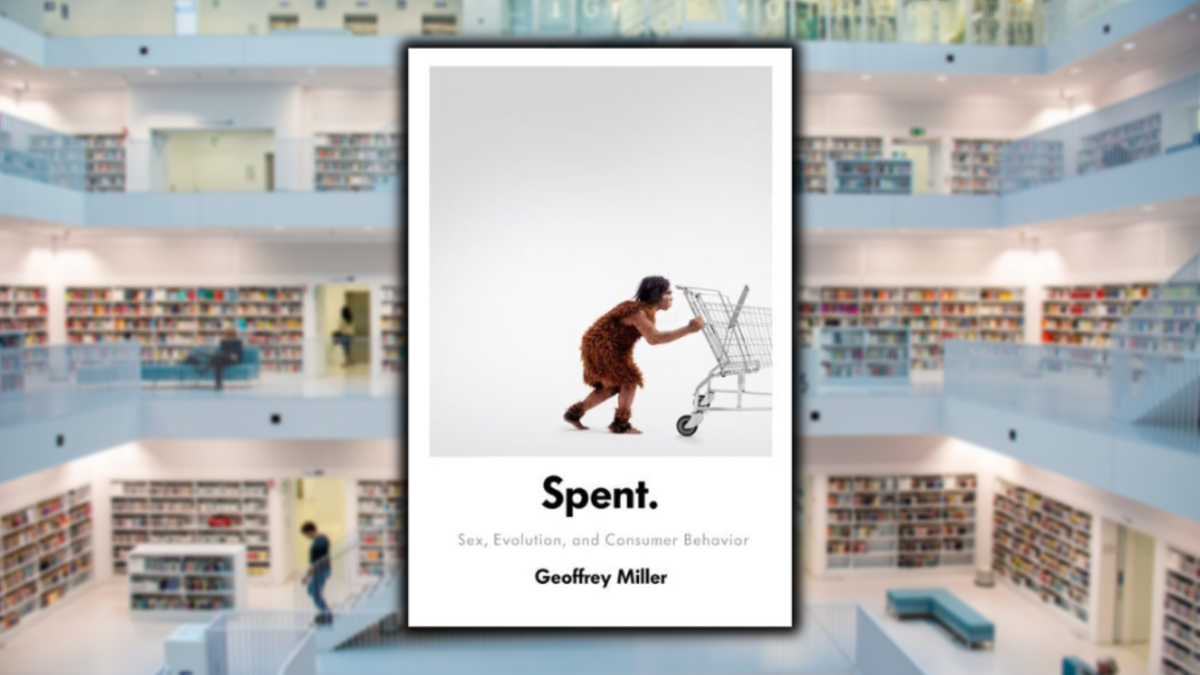

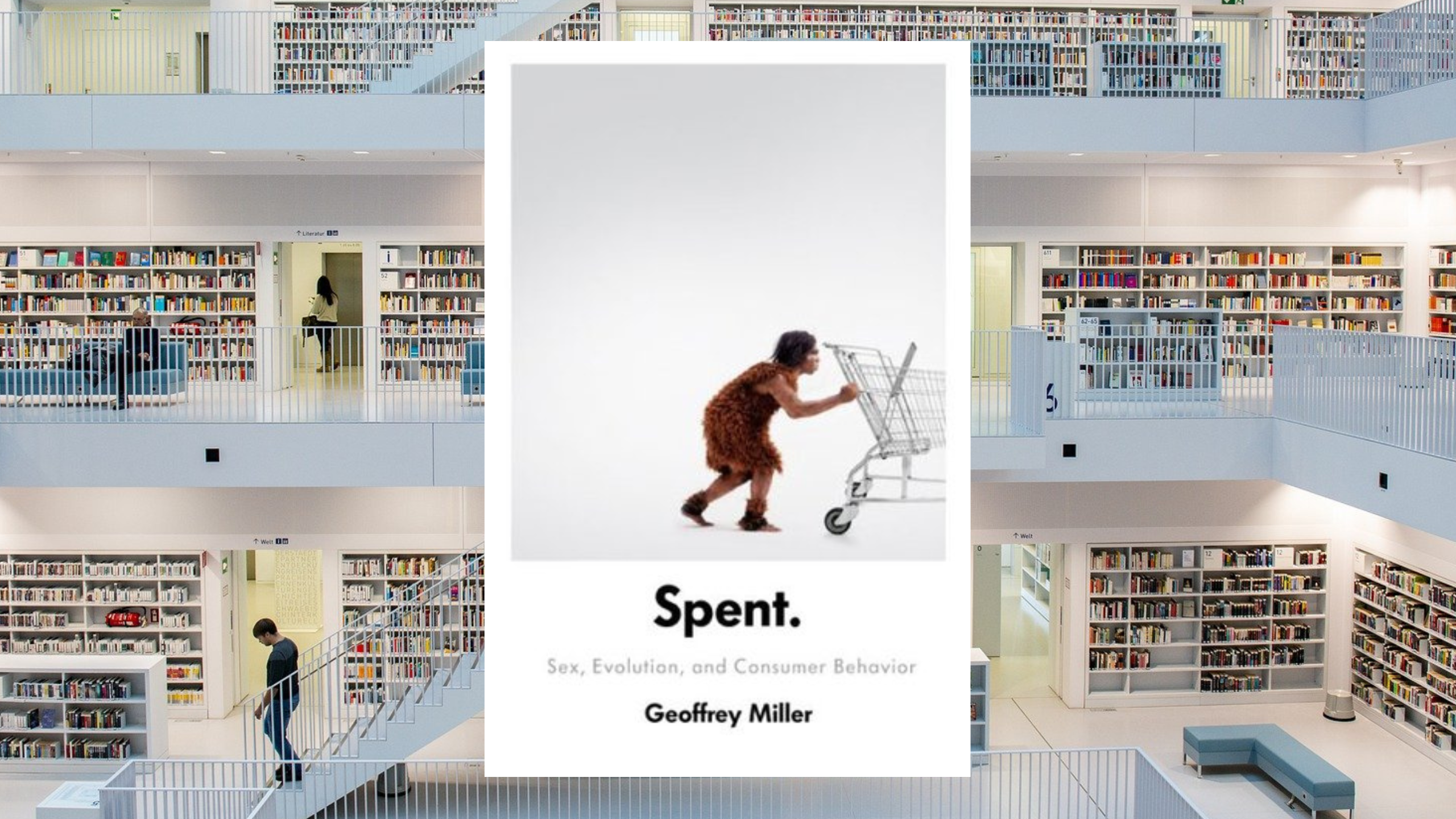
This Book is For:
*Anyone who wants to learn more about a different, more fundamentally human way of relating to one another that doesn't depend exclusively on the possession and showcasing of expensive products and luxury goods
*People interested in psychology - and especially evolutionary psychology - who want to learn more about the Big Five personality traits and their modes of expression in terms of modern dating, desire, and consumption
*Advertisers who want to increase the effectiveness of their marketing campaigns by tapping into what really motivates people to purchase specific goods and services rather than some other kind
*Single people who would like to enter into a relationship but who want their potential partner to fall in love with them, rather than some fictionalized representation of the person their contemporary society wishes they were
Summary:
“The standard self-display strategy in most developed societies is to seek the highest-paying full-time employment permitted by one’s intelligence and personality, and to use the resulting income to buy branded goods and services at full retail price. Weekdays are spent working; evenings and weekends are spent shopping.”
-Geoffrey Miller, Spent
Modern consumer capitalism is all about making us believe that we need something else - something that, by definition, we don't already have - to display our underlying traits and signal to others that we would make attractive mates and relationship partners.
In the book, Spent, Geoffrey Miller breaks down this whole dynamic and shows how and why we use the goods and services we buy to advertise ourselves, what's dangerous and pernicious about this arrangement, and how we can aim towards something better.
As he explains, almost every single human interaction is designed to answer one or more of the following questions:
"Can I trust this person?"
"Will I be able to get along with this person?"
"Will I be better off with this person in my life?"
"Is this person going to hurt me, either directly or by association?"
"Is it worth it to enter into a long-term, mutually-beneficial relationship with this person?"
These are wide, important questions, and with the accelerating pace of modern life, we're forced to rely on fast cues - mental shortcuts - to give us the answers. Marketers everywhere are all too quick to provide us with these cues...for a price.
Modern marketing, argues Miller, is based on the assumption that we can generate sufficient answers to these questions based on the products that we buy. We don't have to invest (waste) time figuring out the answers for ourselves, they say implicitly, because we can just look at the car they drive, the school they went to, or the books they read (or don't read), and that'll tell us everything we need to know about a person.
Spoiler Alert: Life is more complicated, nuanced, and elegant than that.
By "underlying traits," Miller means individual differences along the dimensions of the Big Five personality traits: Openness, Conscientiousness, Extraversion, Agreeableness, and Neuroticism (or, OCEAN).
Again, we're trying to get answers to these important questions:
"Is this person interesting (open) or boring?"
"Is this person reliable (conscientious) or scatterbrained?"
"Is this person friendly (agreeable) or hard to deal with?"
"Is this person balanced (stable) or off-center?"
"Is this person outgoing (extraverted) or more reserved?"
Depending on which social group you wish to be a part of, and whom you wish to date or enter into a relationship with, it's in our best interest to accentuate or downplay these traits in different situations. So it follows that we try to signal these traits by dressing, behaving, and speaking in a certain way.
Miller's point, however, is that buying and showing off products to signal these traits is the least effective way of signaling these underlying traits. As human beings, we already come equipped with one of the fastest, most powerful, and most accurate methods of trait assessment yet devised: conversation!
Through conversation, mutual exploration, and group dynamics, we’re already very good at determining whether someone we’re meeting for the first time is higher or lower on any of the Big Five personality traits (and also, importantly, General Intelligence, which you can think of as a sort of "meta-trait" that underlies everything else).
We don’t need to frantically buy "things" – and waste our vital powers doing so – in order to find the communities to which we most suitably belong.
The big lie of consumerism, according to Miller, is that above-average products and services can compensate for below-average traits and qualities, especially in the context of long-term relationships of mutual discovery and growth. And yet, we have this giant advertising machine working 24/7/365 trying to make us forget that we already have everything we need.
We rarely remember - or even think about - what other people buy and show off, and yet we think that everyone else is paying attention to what we buy and show off! It's a real circus out there!
There’s a ton of nuance in this book, and reasonable people may disagree with some of Miller’s conclusions, but he basically says that consumer capitalism is responsible for some of both the best and the worst features of modern societies.
The answer isn’t just to "dismantle" capitalism or adopt some new system – that's too simplistic, and in such an interconnected, highly-networked world, we can't predict the kind of second-order effects that such interventions could have.
Rather, it's about being mindful of our consumption patterns, recognizing that we are enough without all those extra "things," and challenging ourselves to find a better way forward. As Miller says in the book:
“We take wondrously adaptive capacities for human self-display – language, intelligence, kindness, creativity, and beauty – and then forget how to use them in making friends, attracting mates, and gaining prestige.
Instead, we rely on goods and services acquired through education, work, and consumption to advertise our personal traits to others. These costly signals are mostly redundant or misleading, so others usually ignore them. They prefer to judge us through natural face-to-face interaction.
We think our gilding dazzles them, though we ignore their own gilding when choosing our own friends and mates. This is an absurd way to live, but it’s never too late to come away from it.”

Key Ideas:
#1: Consumerism Makes Us Forget Who We Are
"From my perspective as an evolutionary psychologist, this is how consumerist capitalism really works: it makes us forget our natural adaptations for showing off desirable fitness-related traits.
It deludes us into thinking that artificial products work much better than they really do for showing off these traits.
It confuses us about the traits we are trying to display by harping on vague terms at the wrong levels of description (wealth, status, taste), and by obfuscating the most stable, heritable, and predictive traits discovered by individual differences research.
It hints coyly at the possible status and sexual payoffs for buying and displaying premium products, but refuses to make such claims explicit, lest consumer watchdogs find those claims empirically false, and lest significant others get upset by the personal motives they reveal.
The net result could be called the fundamental consumerist delusion — that other people care more about the artificial products you display through consumerist spending than about the natural traits you display through normal conversation, cooperation, and cuddling."
At a basic level, consumerism is mostly about displaying attractive traits, thereby signaling to potential relationship partners that we are desirable and attractive ourselves.
The trouble is, however, that the traits we're trying to display - mental health, physical health, intelligence, personality, etc. – are just as easily displayed in normal, face-to-face human interaction. We just don't need all that extra "stuff."
We’re already very good at assessing the traits of other people, and so the purchase of consumer goods in order to display these traits is largely unnecessary. And as we'll explore in the next Key Idea below, we already have everything we need to display our attractive qualities to potential partners.
What we're trying to do, basically, is to fit into our desired social group by advertising our level of status in terms of the Big Five personality traits, which are Openness, Conscientiousness, Extraversion, Agreeableness, and Neuroticism.
If your social milieu values the traits of Openness and Agreeableness, for example, you will be influenced to display those traits through your words and actions in social settings. But, as you make your way through the wider world, you'll also be pressured to display those traits through the products you buy and the services you use.
Different groups may value different traits more than others, but underlying all of the Big Five is intelligence, which is attractive to virtually everyone everywhere. All potential partners will select for intelligence, which is what our purchases are attempting to showcase.
In fact, Miller argues that diplomas from prestigious schools are basically "IQ guarantees," meaning that, since generally those universities only accept students with higher IQs, then that automatically includes you if you graduate from there. High-status jobs signal high conscientiousness as well, since if you didn't have that you'd have been fired by now.
All of our purchases are designed to map indirectly to measures of wealth, status, and taste, but consumption is actually a poor substitute for genuine, interpersonal interaction.
Miller also says that advertisers have monetary incentives to avoid pointing to these obvious truths, since many marriages could never survive the realization that the real reason why they were buying these things would be to make themselves more sexually attractive to other potential partners. So we pretend that it's about something else.
All of this basically leads to a ton of confusion about what actually matters, how genuine human relationships are really formed, and what our aims should be as individuals. As Miller says:
“The result is that we greatly overestimate how much attention others pay to our product displays, through which we are unconsciously striving to show off our key bodily and mental traits.”
#2: We Already Have Everything We Need
“This is a core message from evolutionary psychology: the most precious, complex, intricate, and wonderful things in life are the biological adaptations common across all humans – especially the adaptations that signal our individual differences so conspicuously.
We already have everything we could possibly need to impress our fellow humans, yet every major human ideology conspires to make us forget this fact – because every ideology seeks power by convincing us that we need something beyond our naked bodies and minds to be socially acceptable and sexually attractive.
Consumerism has become our most potent ideology because it so contemptuously dismisses our natural human modes of trait display, and it keeps us too busy – working, shopping, and product displaying – to remember what we can signal without all the products.”
Virtually every single social ritual we engage in is actually about accurate trait and personality assessment.
Between the unspoken rules that govern what you can and can't do at the office Christmas party, to the meeting of two people in a dance club and the things we do and don't do in the company of others, everything is part of the dance that uncovers the answer to these basic questions:
"Can I trust this person?"
"Will I be able to get along with this person?"
"Will I be better off with this person in my life?"
The thing is, as we discussed above, that during ordinary human interactions - even relatively short ones - we are able to come away with a fairly good idea of where people stand on the scale of Agreeableness, Extraversion, etc.
The cleanliness and posture of a person will tell you quite a bit about their level of conscientiousness; whether they make eye contact and how often will tell you about their level of extraversion, and so on. And if someone's talking to themselves in the middle of the grocery store and rambling on about alien abductions and government conspiracies, they probably score pretty high on neuroticism!
Not only that, but more of the truth will always emerge over a long enough time horizon. You can "trick" someone for a little while into believing you're quite the extravert, but eventually, they're going to find your well-worn library card!
And besides, you're constantly signaling your traits during your daily interactions anyway, and that's what most people who stick around for longer than a few minutes will come to associate with you. As we'll see later, a Porsche can't make up for two people's fundamental incompatibilities.
What Miller's arguing for is the recognition that we already display our individual differences in wonderful, pro-social ways inspired by real connection and that we're losing that depth of meaning by replacing it with some shortcut that can never take the place of the real thing.
Modern consumer culture is always trying to change people into something they're not - into something they think they should be; when, in reality, you are already enough. Who you are, how you treat others, and how you show up for yourself will always signal more about the real you than some car ever could.
#3: Costly Signaling
“Animals, including humans, often show off the most expensive signals they can afford, whether those signals are peacock tails or Hummer H1s. In each case, reliable signaling demands some sort of ‘conspicuous waste’ - a highly visible expenditure of resources that brings no material benefit, but that simply signals the expender’s ability and willingness to waste those resources.”
You can't fake a well-defined physique or an expertly performed guitar solo, and so these are honest signals of your conscientiousness and intelligence respectively.
Getting down to a low-enough body fat percentage for your abs to show, or practicing enough to develop the skill to perform a perfect guitar solo, is costly as well. You had to sacrifice something to get there; you can't just say, "Yea I have a six-pack, but I can't show it to you right now." That's why they say talk is cheap.
All of this helps to bring conspicuous consumption into greater clarity. If you say to yourself, "That person is so dumb! Don't they realize they'll never be able to live in all those houses at once?" you haven't quite understood yet. That person knows, at least unconsciously, that they'll never be able to drive all of their cars at once, or what have you - that's not the point. The point is that it's a signal, a grandiose claim about their desirability to potential partners, and that's why they do it.
Furthermore, Miller also explains that desirable products usually evince "precision," or "reputation" as well as waste. Precision goods, which can include things like expensive watches or certain vintages of wine, are meant to display good taste, attention to detail, an appreciation of craftsmanship, etc. Reputational goods, like a degree from a prestigious university, appeal to status-consciousness as well.
It's costly to hang a Harvard degree on your office wall (if you didn't actually go there, someone would probably notice eventually), whereas if you just told people, "Yea, I'm wicked-smart," you wouldn't be believed.
#4: Uncovering the Lies of Consumerism
“Trait-enhancing products can fool some of the people in the short term, but they can’t fool any of the people in the long term.”
One of the big lies of consumerism is that products can replace or make up for your underlying personality traits when it comes to entering into fulfilling, long-term relationships with the other human beings around you. Displaying certain traits through your consumer choices may work for a limited time, but never across any meaningful timescale.
The truth always comes out, and if you plan on being around the same people for any length of time, you'd better have more to offer than your Jaguar and your taste in Impressionist artwork.
In fact, you can rent a Lamborghini for as little as $1,000 a day, and doing that for 700 dates in a row is still cheaper than buying a new one. If you plan on spending that much time with someone, they're going to discover who you really are, and they're going to do it by utilizing one of the greatest powers we have for sizing each other up: conversation.
Eventually, it all comes back to your underlying personality structure, how well you can convey those traits through conversation and other forms of social interaction, and how well people will get along with you or how much they'd want to hang around you. Consumer capitalism, however, conspires to make us forget this, convincing us that we can compensate for below-average traits with above-average products.
#5: There's an Easier (And Cheaper) Way
“Basic survival goods are cheap, whereas narcissistic self-stimulation and social-display products are expensive. Living doesn’t cost much, but showing off does.”
The two most expensive types of products could be classified as self-stimulation products and social-display products. We're always spending the most money on either making ourselves feel good or making ourselves attractive to others.
That being said, when you really think about it (for like, a second), simply staying alive and being happy costs hardly anything. We need so little to live.
Costs of living vary according to location, obviously. I remember living in the mountains of India (such a gorgeous country!) and eating extremely well for about $10 a day in Canadian currency. Even just a cursory search of Airbnb reveals that I can live at a beautiful hotel in Manali for about $500 a month.
Clearly, it's going to be much more expensive in cities like, say, New York, but if you're not trying to impress anybody with where you live, your options expand considerably. Add in costs for a cell phone, maybe a car, a few nights out with friends...the average American salary amply covers all these expenses and more.
Now, I hear the objections already like, "But I want to start a family!" and, "Have you seen these latest gas prices?!"
And yes, you're right...providing for your children's future is never something you want to cheap out on, and economic times can be hard. But that's nothing compared to what we're goaded into spending by modern marketers when they promise us that if we buy their latest social-display gadget we'll be the envy of the whole town and attractive sexual partners will flock to us in droves.
Living just doesn't cost very much, and we can build an incredible life for ourselves and the people we care about without shoving each other out of the way to get the latest iPhone or trash-talking some stranger because they "only" live in a $2,000/month apartment.
But when the default is "more, more, more," we miss out on the simplest, most inexpensive pleasures, and the ordinary moments that we could fully enjoy if we weren't in such a rush to get somewhere else. It's true: if you can't be happy while simply washing the dishes, then you can't be happy.
#6: The 3 Pillars of Consumer Capitalism
“School, work, and credit – three pillars of consumer capitalism – are also, not coincidentally, the most reliable and conspicuous indicators of conscientiousness. All other consumer purchasing depends on these three pillars, so they are fundamental to conspicuous consumption.”
So we know that certain social displays are meant to be indicative of specific underlying personality traits like Openness and Agreeableness, etc.
Well, the three "pillars of consumer capitalism" all tend to display high Conscientiousness, as when, for example, a high credit score tells the world that you are someone who is adamant about paying their bills on time, keeping their spending under control, and all the rest of it.
Which school you went to is also meant to be an indicator of conscientiousness. Graduating from someplace like Yale isn't necessarily a guarantee of whether or not you've learned anything useful there, but rather a sort of "IQ guarantee," meant to display the fact that you were/are a conscientious student with the good grades, high intelligence, and efficient work habits to thrive in the Yale University environment.
Of course, the same is true for high-prestige jobs like "doctor" and "lawyer," which demonstrate the fact that your conscientiousness is high enough to enable you to make it through school and into work every day so you don't get fired. It's meant to display your abilities as a provider as well, and it's not such a stretch to compare the status of the most efficient hunter-gatherers of the past with the status of members of the high-prestige professions of today.
Where consumer capitalism comes in is that, in order to "buy, buy, buy," you need to have the economic capacity to do so, and to engage in the acts of conspicuous consumption that drive the markets forward. It's imperative, under this system, that you become like a good little worker bee and produce, consume, and display.
As I'm sure you've noticed by now, it's in association with these three pillars that the greatest craziness comes into play, with the runaway credentialism of the current university system, the feverish race to add cars to people's collections, and everything else that we just assume is normal about today.
#7: A Return to Nature Can Only Be a Partial Answer
“Each of these individuals and groups has exaggerated both the pros of primitive life and the cons of modern life. Each intuits correctly that a Cro-Magnon lifestyle was a more natural environment for the human body, mind, family, and clan.
Yet at the same time, each forgets that, stripped of romantic idealization, Cro-Magnon life was also ignorant, insular, violent, and unimaginably boring. I would not want to live without civilization’s key inventions – trade, currency, literacy, medicine, books, bicycles, films, duct tape, shipping containers, and computers.
Unlike many malcontents, I consider the three best inventions of all time to be money, markets, and media. Each has radically increased the social and material benefits of peaceful human cooperation. But together they don’t necessarily add up to consumerist capitalism in its current forms.”
All of the best and worst parts of modern life have been created or enabled in some way by the rise of consumer capitalism; that's Geoffrey Miller's assertion here. Yet, critics of our current consumption ideology are wrong to claim that we should give up the ground that we've gained since the Industrial Revolution.
"The good old days" never really existed, as Steven Pinker writes about in his book, Enlightenment Now. We're so quick to forget that without vaccines, the Spanish Flu and smallpox combined to kill hundreds of millions of people; the technological developments that we've made in order to get us into space have given us a huge array of technologies that also make our lives better here on earth; and efficient air travel and communication have opened up new channels to prosperity that are lifting people out of poverty at an astounding rate. To turn our back on all that progress and achievement is not the way forward.
That being said, we've created our current society through our collective decisions, actions, and patterns of thought and belief. Our society is one way, but it doesn't have to remain so; we've created society, and so we can also shift society to accommodate a more fruitful, more human, way of living.
It takes nuanced thought, something that David Foster Wallace called "advanced citizenship" to be able to acknowledge these dual forces of progress and repression and to do our part to address them.
The future is brighter than anyone in the early 20th century ever could have guessed, and we can't throw out everything just because humans aren't absolutely perfect yet. It's really only been a few thousand years when you think about it!
I'll give the last word here to Miller:
“I loathe malls, but I respect the free market as the most ingenious system yet devised for people to enjoy mutual gains from trade under conditions of peace, freedom, and autonomy. I hate the way that corporate lobbyists corrupt democracy, but I recognize that our quality of life in the developed world is a fragile, fortunate exception to the global historical norm of toil, oppression, poverty, disease, and death.”
#8: The Structure of Scientific Revolutions
“As the science historian Thomas Kuhn pointed out, once a science finds a winning formula – a way of making predictable, cumulative progress – it achieves the status of a ‘paradigm.’
When paradigms are chugging along happily, and normal science is being done, radical ‘paradigm shifts’ become less likely to succeed. This is as it should be: the more we know about some domain, the less likely it is that a random new idea about the domain will be correct.
The more complex the organism, the less likely it is that a random mutation will improve its fitness. The more complex the society, the less likely it is that a major political revolution will improve everyone’s welfare.”
The idea that Miller is talking about here comes from Kuhn's 1962 book, The Structure of Scientific Revolutions. The upshot of all this, for our purposes here, is to recognize that a radical dismantling of modern capitalism is unlikely to lead to a better world (much less some "utopia"), and instead is much more likely to end in mass catastrophe and death.
The world is more complicated and interconnected than it ever has been before, and with such a complicated system, a massive shakeup is unlikely to lead to anything productive. We're talking about the butterfly effect on steroids here, where, if you were to pull on the tiniest thread of the smallest facet of our society, you'd find that it was connected to the rest of the universe.
The bottom line is that in an interconnected, highly-networked society, everything you do matters. Everything! So the answer isn't "down with capitalism!" or, "communism is evil!" or anything like that, but rather it's now about radical change on the level of the individual. Our society is a reflection of what we are as individuals, and if we want to create a better world, we have to be better.

Book Notes:
“Human instincts for trying unconsciously to display certain desirable personal traits + current social norms for displaying those mental traits through certain kinds of credentials, jobs, goods, and services + current technological abilities and constraints + certain social institutions and ideologies + historical accident and cultural inertia = early twenty-first-century consumer capitalism.”
“Many products are signals first and material objects second.”
“At its heart, consumerist capitalism is not ‘materialistic’ but ‘semiotic.’”
“Consumerist capitalism produces almost everything that is distinctively exciting about modern life and almost everything that is appalling about it.”
“I started to see that marketing underlies everything in modern culture in the same way that evolution underlies everything in human nature.”
“Almost all advertisements appeal to status-seeking, pleasure-seeking, or both.”
“Only a few mental disorders are really hard to identify from superficial interaction: psychopathy, specific phobias, sexual disorders and dysfunctions, and some addictions. When it comes to judging people’s sanity, most experienced adults are rather accurate. We may not be able to diagnose each peculiarity using the current psychiatric terms, but the basic difference between normal and abnormal behavior is highly salient.”
“The accuracy of person perception tends to improve with age, as learn, gradually and painfully, which behavioral cues are the most reliable indicators of personality, intelligence, and moral virtues. We learn which situations reveal the most diagnostic information about someone’s true character. We learn how to see through first impressions.”
“These advances in gem production raise the possibility that in biological evolution, too, traits that began as fake alternatives to certain signals of quality may have evolved to be more useful and even more desirable than the original traits ever were.
For example, verbal humor may have originated as a way for subordinate youths to imitate and mock older, more physically dominant sexual rivals – until eventually, humor became even more attractive than dominance.”
“All ads effectively have two audiences: potential product buyers, and potential product viewers who will credit the product owners with various desirable traits. The more expensive and exclusive the product, the more the latter will outnumber the former.
Thus, most BMW ads are not really aimed so much at potential BMW buyers as they are at potential BMW coveters, to induce respect for the tiny minority who can afford the cars.
This explains why BMW sometimes advertises in mass-circulation magazines: it is an inefficient way to reach their target market of potential BMW buyers but it is a very efficient way to reach the BMW coveters who might respect the BMW buyers.
Their true target market recognizes this fact, because they, too, sometimes read mass-circulation magazines, and see that their less-successful peers are being educated to understand the semiotic power of the BMW 550i. This is how any signal bootstraps its way from an arbitrary association into common knowledge.”
“We’re seldom honest with ourselves about why we buy things, and advertising euphemisms don’t help. Which slogan sounds better:
‘L’Oreal: Because you’re worth it.’
Or:
‘L’Oreal: Because you want to look younger than the skanky Starbucks barista who’s always flirting with your husband'?
How about these:
‘The 2006 BMW 550i: Poised for performance.’
Or:
‘The 2006 BMW 550i: Poised to leave burning tire smoke in the spotty faces of those Subaru-WRX-driving punks who threaten your masculinity as a divorced 47-year-old orthodontist’?
“Men increase the conspicuousness of their consumption when they are most interested in mating.”
“The truth is, science sometimes hurts.”
“Half the work that is done in the world is to make things appear what they are not.”
“We all get to enjoy about 600 million breaths, then we die.”
“In the developed world, emotional stability predicts overall life satisfaction more strongly than does income or any of the other Central Six traits.”
“In the space of human personality traits, we have what statisticians call a multivariate normal distribution: each dimension is a bell curve with most people near the average, and each dimension is independent of the others.
Given our six independent dimensions, if we split each into just three levels (low, average, or high), then we’d have three to the sixth power possible combinations, or 729 different personality types – rather larger than the number of types typically posited in astrology, Jungian psychoanalysis, or most market segmentation.”
“You know some costly signaling is going on when thousands of teenagers spend three years each learning a long-dead language just so they’ll score better on an IQ test that pretends it’s not an IQ test, so they can spend four more years and a hundred thousand dollars to get a college degree that pretends it’s not an IQ guarantee.
Imagine if we tried to display a physical trait such as aerobic endurance in such a costly, indirect fashion. We could just run naked and barefoot along a five-mile dirt track while others timed us with an Accusplit Survivor II stopwatch ($8.93 retail). But that would be so gauche, so crude, so infra dig.
Much better for each person to spend twenty years building a three-hundred-foot-high ziggurat of imported marble, to show that they can run up and down it forty times within an hour – preferably while wearing embroidered silk robes and carrying a solid-gold torch, while a 250-piece marching band plays. This would preserve the rich cultural tradition of Ziggurat Ascension, with its medieval vestments, nostalgic anthems, and bittersweet Sisyphean symbolism.
Plus, it would be good for the economy. Parents would have to take out second mortgages to cover their kids’ ascension rites. The marble importers, vestment embroiderers, and band musicians would ferociously denounce any reductionistic attempts to measure aerobic capacity with mere dirt tracks and stopwatches.
While they might acknowledge that the ziggurat system had some inefficiencies, they would say that these could be reduced by progress in ergonomically optimized ziggurat stairs, lighter platinum torches, and trombone-playing robots.
Contemporary higher education is our ziggurat ascension: an absurdly expensive, time-consuming way to guarantee intellectual and personality traits that could be measured far more cheaply, easily, and reliably by other means.”
“More subtly, the iPod and the BMW 500i both contain the letter ‘i’ to suggest the intelligence of their users.”
“Very high openness is a dangerous game, with potentially high payoffs in creativity, but potentially catastrophic effects on mental health. In a complex, media-rich society, perhaps only people with very good mental health can tolerate a high degree of openness without losing their equilibrium.”
“These findings suggest a hypothesis that I admit is highly speculative, but that is nonetheless intriguing: people may use conspicuous displays of openness as a guarantee of their mental health – especially their resistance to developing schizotypy, schizophrenia, or other forms of psychosis.
If you’re a young woman, you want to avoid falling in love with a guy when he’s seventeen, having two children with him, and then seeing him develop debilitating schizophrenia when he’s twenty-three.
So, adolescents play with fire, exposing themselves to ideas, experiences, and drugs that would induce psychosis if they did not have good psychosis resistance. They test themselves to extremes, and though they sometimes misjudge and go psychotic, mostly they do not.”
“A person of limited intelligence but high conscientiousness can make a valuable employee; a person of higher intelligence but very low conscientiousness is almost unemployable.”
“The highest-status professions are those in which sustained conscientiousness is required for long-term career success, but in which there are minimal sticks, carrots, and bosses to motivate short-term performance.”
“Agreeableness is not just one of the Big Five personality traits. Construed more broadly as a personal capacity for empathy, kindness, and benevolence, and as a desire for egalitarianism and social justice, agreeableness is at the heart of human altruism and social progressivism.
It is the rare product of natural selection and sexual selection that makes our species seem to transcend the otherwise selfish imperatives of the evolutionary process. It is our last, best hope for the salvation of our species, but also our most persistent source of hypocrisy and runaway self-righteousness.”
“This could be called the centrifugal-soul effect: runaway consumerism leaves us feeling superficial and empty because we project ourselves outward to observers too promiscuously and desperately. We forget the virtues of restraint, reticence, and dignity. We lose our capacity for self-contained, self-sufficient self-judgment.”
“When you point out that consumerism is a really inefficient way to advertise personal traits, you can praise someone’s traits and tickle their vanity even as you’re cluster bombing the central ideology around which they’ve organized their education, career, leisure, identity, status-seeking, and mating strategy.
As well-trained consumer narcissists, we are such insecure, praise-starved flattery sluts that a little social validation goes a long way. A friend or lover can imply that we have wasted our lives chasing consumerist dream-worlds and status mirages, as long as he or she reassures us that we will appear intelligent, attractive, and virtuous. (Don’t forget to mention that, or people will cry.)”
“An evolutionary perspective gives us confidence that each new generation will find its own ways to turn new technologies into new trait-display modes and economic opportunities.
It makes us aware that something else will soon replace the current system of consumer capitalism and its key features: credentialism, workaholism, conspicuous consumption, single-family housing, fragmented kin and social networks, weak social norms, narrowly economic definitions of social progress and national status, and indirect democracy distorted by corporate interests and media conglomerates.
These seemingly natural features of contemporary society will seem as alien to our great-grandchildren as mammoth hunting, field plowing, and typewriting now seems to us.”
“Cultural evolution, like biological evolution, is much smarter than we are.”
“We take wondrously adaptive capacities for human self-display – language, intelligence, kindness, creativity, and beauty – and then forget how to use them in making friends, attracting mates, and gaining prestige.
Instead, we rely on goods and services acquired through education, work, and consumption to advertise our personal traits to others. These costly signals are mostly redundant or misleading, so others usually ignore them. They prefer to judge us through natural face-to-face interaction.
We think our gilding dazzles them, though we ignore their own gilding when choosing our own friends and mates. This is an absurd way to live, but it’s never too late to come away from it.”

Important Insights from Related Books:
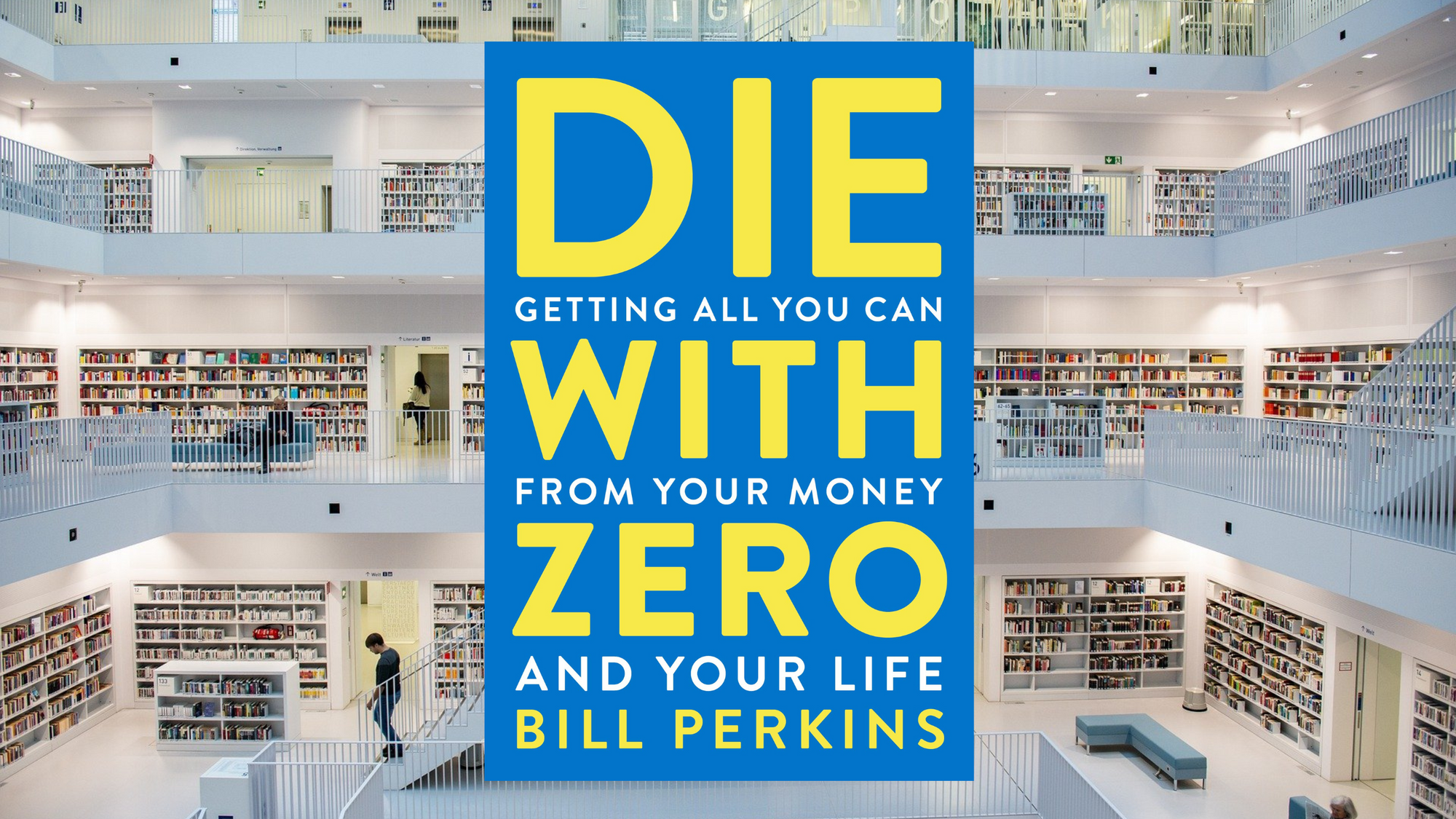
Die with Zero, by Bill Perkins:
Net worth is out; net fulfillment is in. Legendary energy trader Bill Perkins realized early on that it makes exactly zero sense working to make money that you'll never spend or enjoy, and that what matters most in life is to maximize your fulfillment from experiences, not stacking up wads of cash that you'll be too old and sick to spend.
Above a certain level of spending, anything more than that is at the very least wasteful, and even potentially damaging to happiness and fulfillment. We may think it helps us display attractive traits, but it's really making us miserable.
At the end of our lives, very little remains; but the last things you'll ever possess are your memories. It's extremely worthwhile to spend some time now to figure out how to build a life you'd be proud to look back on.
Sample Quotes from the Book:
“Maximizing your fulfillment from experiences – by planning how you will spend your time and money to achieve the biggest peaks you can with the resources you have – is how you maximize your life.”
“Think about the three basics people need to have to get the most out of life: health, free time, and money. The problem is that these things rarely all come together at once. Young people tend to have abundant health and a good deal of free time, but they don’t usually have a lot of money.”
“Just realize that time moves in only one direction and that as it passes it sweeps away opportunities for certain experiences forever. If you keep that in mind as you plan your future, you’ll be more likely to make the best use of every year of time in your life.”
Read the Full Breakdown: Die with Zero, by Bill Perkins
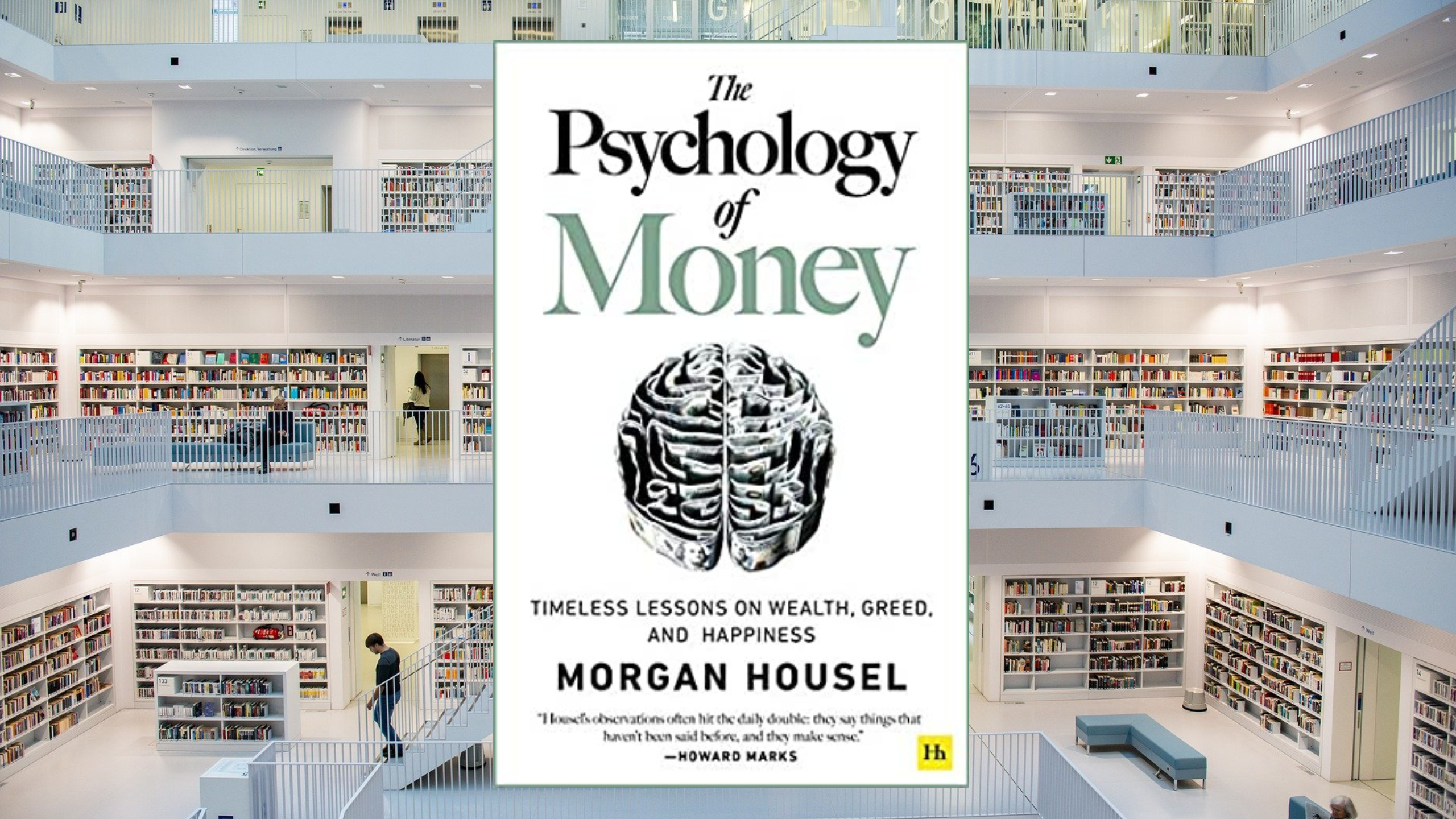
The Psychology of Money, by Morgan Housel:
Doing well with money has a little to do with how smart you are and a lot to do with how you behave. Exploring exactly how this plays out in real life is Morgan Housel's project here, and in this book, he covers 20 of the most important logical flaws, biases, and causes of bad behavior that do the most to make the world of money such a circus.
One of his greatest observations is that knowing what to do tells you nothing about what happens in your head when you actually try to do it, and he also explains why people make decisions with money that may seem crazy to us but actually make perfect sense to them.
No one is crazy, says Housel, it's just that we've each learned different lessons about money depending on our worldview, how we were brought up, and the individual experiences we've had. In the context of Spent, other people's choices actually seem a lot less bewildering.
Sample Quotes from the Book:
“The hardest financial skill is getting the goalpost to stop moving.”
“Money’s greatest intrinsic value - and this can't be overstated - is its ability to give you control over your time. To obtain, bit by bit, a level of independence and autonomy that comes from unspent assets that give you greater control over what you can do and when you can do it."
“Spending money to show people how much money you have is the fastest way to have less money.”
Read the Full Breakdown: The Psychology of Money, by Morgan Housel
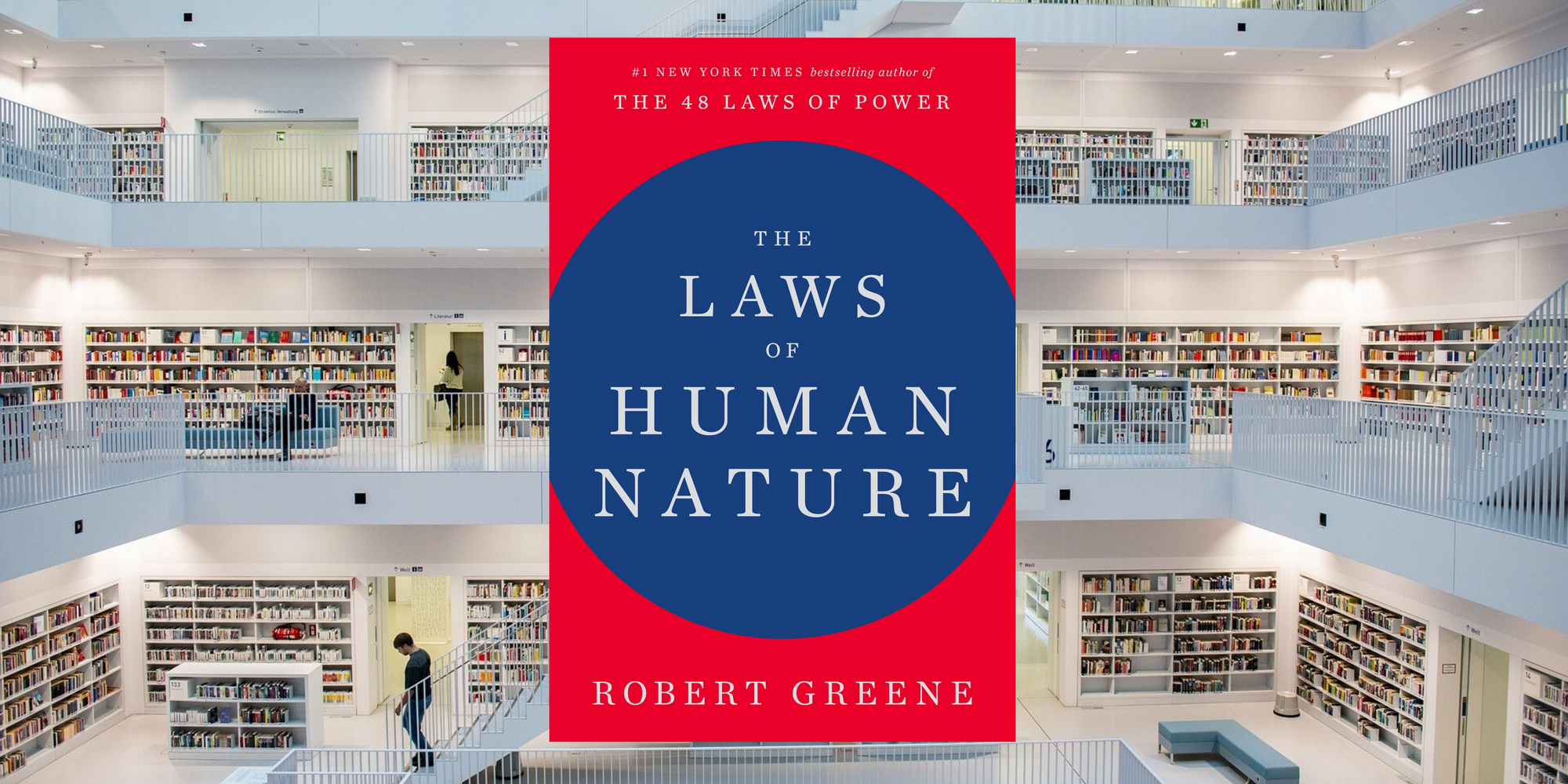
The Laws of Human Nature, by Robert Greene:
If I had had The Laws of Human Nature as a textbook in school, I would have learned something while I was there. Seriously, there is just so much here, and I doubt that anyone who has ever made a serious effort to absorb its lessons hasn't been fundamentally transformed by what Robert Greene has to teach.
We're speaking here in this book about human nature, one of the most expansive topics one could ever hope to cover in a single volume. So of course, you're not going to suddenly "understand people'' by reading it once through, but I would argue that there's not much else that could be a better use of your time.
Sample Quotes from the Book:
“Man will only become better when you make him see what he is like.”
"The people around you generally appear sane and in control of their lives. But put any of them in stressful circumstances, with the pressure rising, and you will see a different reality."
“The deepest principle of Human Nature is the craving to be appreciated.”
-William James
Read the Full Breakdown: The Laws of Human Nature, by Robert Greene

The Almanack of Naval Ravikant, by Eric Jorgenson:
Being rich and happy are learnable skills. As in certain propositions in physics, starting conditions are very important, but one of the greatest lessons you'll learn from reading books like this one is that where you start off doesn't have to be where you end up.
If there's a skill you lack, you can learn it; if there's a big scary problem looming over you, you can overcome it; if you want more out of life, you can have it.
But, there are traps along the way. These traps can take the form of pessimism and self-defeating behaviors; the creeping expansion of desire; bad advice from well-meaning people; and a lot more that The Almanack of Naval Ravikant can help you avoid.
Sample Quotes from the Book:
“What making money will do is solve your money problems. It will remove a set of things that could get in the way of being happy, but it is not going to make you happy. I know many very wealthy people who are unhappy.
Most of the time, the person you have to become to make money is a high-anxiety, high-stress, hard-working, competitive person.
When you have done that for twenty, thirty, forty, fifty years, and you suddenly make money, you can't turn it off. You've trained yourself to be a high-anxiety person. Then, you have to learn how to be happy."
“If all your beliefs line up into neat little bundles, you should be highly suspicious.”
“Today, the way we think you get peace is by resolving all your external problems. But there are unlimited external problems. The only way to actually get peace on the inside is by giving up this idea of problems."
Read the Full Breakdown: The Almanack of Naval Ravikant, by Eric Jorgenson

The View from the Opposition:
No one's ideas are beyond questioning. In this section, I argue the case for the opposition and raise some points that you might wish to evaluate for yourself while reading this book.
#1: You're Unlikely to Agree with Everything Here - And That's Perfectly Okay
Anything that has to do with status and consumption and mating and all the rest of it is bound to have some people up in arms. We're talking about the most fundamental aspects of who we are as individuals and what we should do with our lives and our money, and so Miller's suggestions aren't likely to go down with everyone. And you know what?
That's totally fine!
For example, some of his suggestions about segregating ourselves into communities comprising only like-minded individuals are going to strike some as hopelessly utopian. Others would say, rightly I think, that cutting ourselves off from people who live and think differently than we do is a step backward.
Miller's also an advocate of polyamory, which, although I have nothing against it, is going to make other people kind of shake their heads. So yes, read this book with an open mind, try on some different ideas, and develop some more Openness!
#2: A Consumption Tax Would Be HARD to Implement
Miller argues in the book for the implementation of greater consumption taxes, which is one of those things that's great in theory but also comes with more than a few problems.
Consumption taxes are taxes on the purchase of goods and services designed to tax individuals when they spend money rather than when they earn it. That's the basic definition. They're fairer and simpler than income taxes because it's easier to conceal one's income and all that, but it would make life more difficult for people on the lower rungs of the economic scale.
While I think it's wonderful to take into account the impact of one's purchases and the harm they do (reflected in the price you'd pay with excise taxes, a form of consumption tax), it's extremely difficult to imagine being able to charge hundreds of dollars for a case of bullets, as per one example. Again, I love the idea, but it's far from a perfect solution, and the new system could easily be gamed as well.
#3: Businesses Are Only Responding to the Demands of the Marketplace
It's tempting to point the finger at businesses in general and marketing in particular when it comes to rampant consumerism, but not only are legitimate businesses supporting the lives of billions of people by providing jobs and income, businesses really only exist because the demand exists for what they sell.
So I don't think the answer is to look askance at the arena of business as the source of all our current troubles, but to intelligently integrate our consumption with our other, more natural modes of trait display. It's not an either/or proposition.
"The test of a first-rate intelligence is the ability to hold two opposed ideas in the mind at the same time and still retain the ability to function.”
-F. Scott Fitzgerald

Questions to Stimulate Your Thinking:
#1: Do you think that you're immune to modern marketing and advertising practices?
#2: Do you ever really notice the person who's driving a really expensive car or are you just thinking about what other people would think if they saw you driving it?
#3: Is there a better way to display your intelligence and attractiveness than by telling people where you went to school or by showcasing your knowledge of vintage wines and 19th-century German literature?
#4: Which of the Big Five personality traits are most important to you when choosing a partner? How do you normally evaluate those traits when meeting someone new?
#5: Do you ever feel unseen or empty when someone willfully ignores your deeper qualities and assumes they know enough about you by noting the quality of your possessions?

Action Steps:
So you've finished reading. What do you do now?
Reading for pleasure is great, and I wholeheartedly support it. However, when I'm reading for a particular purpose, I am intensely practical. I want a result. I want to take what I've learned and apply it to my one and only life to make it better!
Because that's really what the Great Books all say. They all say: "You must change your life!" So here, below, are some suggestions for how you can apply the wisdom found in this breakdown to improve your actual life.
Please commit to taking massive action on this immediately! Acting on what you've learned here today will also help you solidify it in your long-term memory. So there's a double benefit! Let's begin...
#1: Decide Who You Want to Attract
At the end of the day, it's all about "finding your tribe," and surrounding yourself with the people that light your fire and lift you higher. Hey, that rhymes!
Anyway, it helps to figure out ahead of time which kinds of people bring out the best in you, and who you're most comfortable around. If you have an idea of your basic personality structure (spending time alone and reading great books will help you to do this), then you'll be in a better position to find those people.
So think about what kinds of people you want to spend time with, and start thinking about where they hang out, what they talk about, and how you might join them.
#2: Think of a Better Way to Display Your Attractive Traits
The default strategy of today is just to buy something that signals your worth and desirability. But, as we've seen, that's not only relatively ineffective, it's also boring. You're more inventive, creative, and interesting than that, and I'm sure you can figure out some other way - a better way - to show the people you'd like to be with who you really are.
So pick one of the Big Five personality traits - Openness, Conscientiousness, Extraversion, Agreeableness, and Neuroticism, and think of a better way to display yours. For example, good grooming practices say much more - and more quickly - than anything else about your conscientiousness, and this is a "low-hanging fruit" you can pick to display this trait.
#3: Reverse-Engineer the Next Advertisement You See
The next time anyone tries to get you to buy something or to think in a certain way, evaluate exactly how they're attempting to influence your state of mind.
For example, beer commercials never show some guy sitting alone writing a screenplay and sipping a cold one - no way! Invariably, they'll show some big, happy group of people (high in Extraversion) being gregarious and enjoying each other's company, usually at some big sporting event.
Once you start looking for these signals, you'll start seeing them everywhere.
#4: Get Rid of 100 Possessions
This one is pretty self-explanatory, but can also be fairly enlightening. For one thing, it's an interesting exercise just to count how many possessions you actually have! It's probably WAY more than a hundred, and it's almost certain to be more than you actually need.
It can get confusing at times (does a pair of socks count as two things???), but it's honestly worth counting!
Myself, I mostly just own books. I have a car, a toothbrush, a facecloth - alright, I'm not going to run down the whole list, but you get the idea. You don't have to count first, but you totally could.
Then, just start going through and getting rid of some stuff, either giving it away or throwing it out. Don't stop until you get to 100! And, if you get stuck, the following question can become a tiebreaker:
"If I didn't already own this, how much would I spend to acquire it?"
If the answer is $0, then it's safe to assume that you can just throw it out!


About the Author:
Geoffrey Miller is an evolutionary psychologist best known for his books The Mating Mind (2001), Mating Intelligence (2008), Spent (2009), Mate (2015), and Virtue Signaling (2019).
He has a B.A. in Biology and Psychology from Columbia University and a Ph.D. in Cognitive Psychology from Stanford University, and is a tenured associate professor at the University of New Mexico.
He has over 110 academic publications (cited over 14,000 times) addressing sexual selection, mate choice, signaling theory, fitness indicators, consumer behavior, marketing, intelligence, creativity, language, art, music, humor, emotions, personality, psychopathology, and behavior genetics.
He has also given over 200 talks in 16 countries, reviewed papers for over 50 journals, and also worked at NYU Stern Business School, UCLA, and the London School of Economics.
He is a Fellow of the Association for Psychological Science, and his research has been featured in Nature, Science, The New York Times, The Washington Post, New Scientist, and The Economist, on NPR and BBC radio, and in documentaries on CNN, PBS, Discovery Channel, National Geographic Channel, and BBC.
Miller has also consulted for a variety of Fortune 500 companies, governments, NGOs, advertising agencies, market research companies, and social media companies.
Additional Resources:
Geoffrey Miller's Main Website
Further Reading and Viewing for Spent
An Evolutionary Psychologist's Dating Advice
This Book on Amazon:
If You Liked This Book:
Virtue Signaling, by Geoffrey Miller
The Mating Mind, by Geoffrey Miller
What Women Want, by Geoffrey Miller and Tucker Max
The Status Game, by Will Storr
The Laws of Human Nature, by Robert Greene
The Denial of Death, by Ernest Becker
The Birth and Death of Meaning, by Ernest Becker
The Psychology of Money, by Morgan Housel